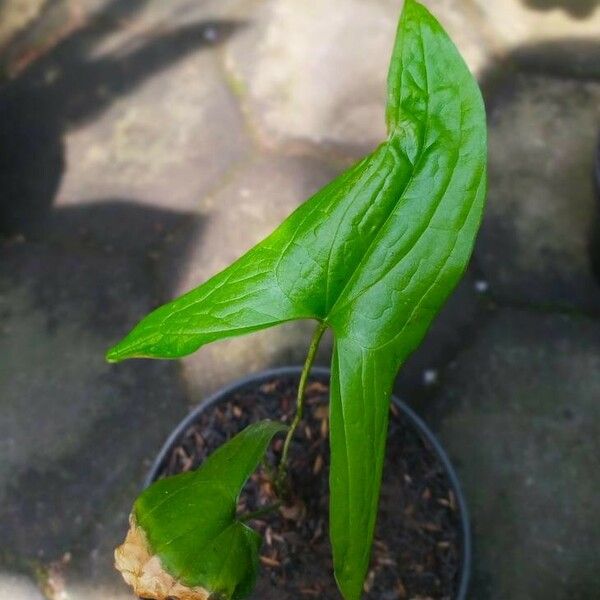
Plant Overview
Often mistaken for its cousin Lasia spinosa, the Podolasia stipitata is a hidden gem of Southeast Asian wetlands. Known for its distinctively "armored" appearance, this plant looks like something straight out of a prehistoric jungle. It is a prized specimen for serious aroid collectors who appreciate architectural foliage with a bit of a "bite."
🔍 How to Identify
- 🌵 Prickly Stems: The most striking feature is the "armed" petiole (leaf stalk), which is covered in sharp, woody prickles that help the plant scramble and protect it from herbivores.
- 🍃 Arrowhead Foliage: The leaves are elongated, leathery, and shaped like a slender arrowhead or a narrow triangle, often with a deep green, matte finish.
- 🕯️ Ghostly Bloom: It produces a slender, pale white to creamy-yellow spathe (a leaf-like hood) that wraps around a central spadix, rising elegantly from the base of the plant.
🏡 In Your Garden
- 💧 Swamp Vibes: Unlike your typical Monstera, this plant is a semi-aquatic "marsh lover." It thrives when its roots are kept consistently moist and prefers a substrate that mimics a muddy riverbank, such as a mix of peat, sand, and clay.
- ☁️ Humidity Hunter: To keep those leathery leaves from crisping at the edges, it requires very high humidity—ideally 70% or higher. It is an excellent candidate for a large indoor greenhouse or a warm, damp conservatory.
⚠️ Safety & Toxicity
- 🚫 Toxic if Ingested: Like most members of the Araceae family, it contains calcium oxalate crystals. Chewing or swallowing any part of the plant will cause intense burning and swelling of the mouth, tongue, and throat.
- 🐾 Physical Hazards: Keep this plant out of reach of curious pets and children. Not only is it chemically toxic, but the sharp thorns on the stems can cause painful scratches. Always wear gloves when repotting or pruning!
✨ Fun Fact
Podolasia stipitata is what botanists call a "monotypic" genus. This means it is the only recognized species in its entire genus, making it a truly unique and lonely branch on the evolutionary tree of life!

Detailed Care Instructions








