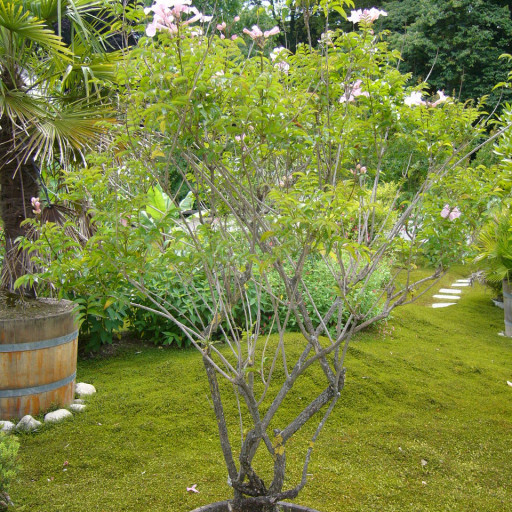
Plant Overview
Known as the "Port St. Johns Creeper" or the "Queen of Sheba," this South African native is a show-stopping climber that brings a touch of the tropics to any landscape. It drapes itself in a romantic veil of delicate pink trumpets that seem to glow against its dark, glossy foliage. Despite its regal nicknames and elegant appearance, it is a tough-as-nails survivor that can cover a fence or pergola in record time.
🔍 How to Identify
- 🌸 The Blooms: Large, bell-shaped flowers in shades of pale pink to lavender, featuring deep crimson or purple "nectar guide" stripes etched inside the throat.
- 🍃 The Foliage: Glossy, deep green compound leaves with slightly serrated (saw-toothed) edges that create a dense, lush screen even when the plant isn't in bloom.
- 🪜 The Habit: A vigorous, woody "scrambler" that lacks tendrils or suckers; it relies on its long, arching stems to lean on and weave through structures to reach the sun.
🏡 In Your Garden
- ☀️ Sun Seeker: This vine is a dedicated sun-worshiper; while it can grow in partial shade, the more light it receives, the more prolific the flowering will be. It thrives when its "head" is in the sun but its "feet" (the roots) are kept cool with a layer of mulch.
- ✂️ Space Management: Because it is such a rapid grower, it requires a sturdy support system like a heavy trellis or a stone wall. It is best to prune it back hard in late winter or early spring to maintain its shape and encourage a fresh explosion of flowers.
⚠️ Safety & Toxicity
- 🐾 Pet Friendly: The Pink Trumpet Vine is generally considered non-toxic to cats, dogs, and horses, making it an excellent choice for a worry-free family garden.
- 👐 Mild Irritation: While not poisonous, the sap from broken stems can occasionally cause mild skin irritation or redness for those with sensitive skin, so wearing gloves during heavy pruning is a smart precaution.
✨ Fun Fact
The genus name Podranea is actually an anagram of Pandorea, a closely related genus of vines from Australia! Botanists created the name by simply rearranging the letters when they realized this South African beauty was unique enough to deserve its own classification.

Detailed Care Instructions
| Humidity | Normal |
| Lighting | Full Sun |
| Difficulty | Easy |
| Hibernation | Cold Period |
| Hardiness Zones | 9 - 11 |
To grow Podranea Ricasoliana, commonly known as Pink Trumpet Vine or Port St. Johns Creeper, follow these steps:
- Climate: Ensure you live in a suitable climate for this plant, as it requires a warm, sunny environment. It is best suited for USDA hardiness zones 9 to 11.
- Soil: Choose well-draining soil with a slightly acidic to neutral pH level. Sandy or loamy soils are suitable. You can add organic matter, such as compost, to improve soil quality.
- Location: Select a location with full sun exposure, preferably near a sturdy support structure like a trellis or fence, as the plant is a vigorous climber.
- Planting: Dig a hole large enough to accommodate the plant's root ball. Place the plant in the hole, ensuring that the top of the root ball is level with or slightly above the ground. Backfill the hole with soil and gently pat it down to remove any air pockets.
- Watering: Initially, water the newly planted vine deeply and regularly, especially during the first growing season. Once established, it is relatively drought-tolerant but will still benefit from occasional watering during extended dry periods.
- Fertilizing: Apply a balanced fertilizer in spring to promote healthy growth and blooming. Follow the instructions on the fertilizer packaging for application rates. Additional feeding may be required during the growing season if the plant shows signs of nutrient deficiency.
- Pruning: Prune Podranea Ricasoliana in late winter or early spring to remove any dead or damaged branches. This plant blooms on new growth, so pruning stimulates new growth and more abundant flowering.
- Support: As the plant grows, guide its vines onto the support structure you provided. If necessary, tie the vines gently to the structure using soft plant ties or twine.
- Pest and Disease Control: Proper care and maintenance usually prevent serious pest or disease issues. However, keep an eye out for common pests such as aphids or spider mites. If necessary, treat pests with organic or chemical controls recommended for the specific pest.
- Overwintering (for colder climates): If you live in a region with colder winters, provide some protection for the plant during the winter months. Mulch around the base of the vine to insulate the roots and cover the plant with a frost blanket or burlap if frost or freezing temperatures are expected.
By following these guidelines, you can successfully grow and enjoy your Podranea Ricasoliana plant.

Place in a bright room that is sun drenched almost all day. Or directly in a south-facing window.

To water this plant, make sure to check the soil moisture before watering. Stick your finger into the soil up to the first knuckle to test if it is dry or moist. If the soil feels dry, give the plant a thorough watering, making sure to soak the soil evenly. Allow the excess water to drain out of the pot or the ground.
Be careful not to overwater the plant as it can lead to root rot. It is recommended to water once a week during the growing season and reduce watering in colder months. Consider using a moisture meter or placing the plant in a pot with drainage holes to prevent waterlogging.
To promote healthy growth of this plant, it is recommended to fertilize it once every month during the growing season (spring and summer). Use a balanced fertilizer with equal amounts of nitrogen, phosphorus, and potassium, such as a 10-10-10 or 20-20-20 fertilizer. Apply the fertilizer according to the package instructions, taking into account the size of the plant and the amount of soil in the pot. Water the plant thoroughly after fertilizing to help distribute the nutrients evenly throughout the soil. Avoid over-fertilizing as this can burn the roots and damage the plant.
When planting this particular plant species, it is recommended to choose a well-draining soil with good air permeability. Soils with compacted or heavy clay textures should be avoided as they can lead to waterlogging and root rot issues. A good alternative to such soils would be a sandy loam or even a mixture of sand, perlite, and peat moss. Additionally, adding some organic matter like compost or aged manure can provide the plant with essential nutrients and improve soil structure. It is also important to ensure that the soil pH level falls within the range of 6.0 to 7.0 for optimal growth and development.
To propagate this plant, you will need to start by selecting healthy stems that are around 10-15 cm in length. Cut the selected stems just below a node using clean and sharp pruning shears.
Remove the leaves from the lower 1/3 of the stem, leaving only a few leaves at the top.
Prepare a well-draining potting mix, which should be a mixture of perlite, vermiculite, and peat moss. Fill a small container with this mix and water it until the soil is moist but not waterlogged.
Make a hole in the center of the soil with a pencil or a stick and gently insert the stem into the hole. Firmly press the soil around the stem to secure it in place.
Cover the pot with a clear plastic bag or a plastic wrap to create a humid environment for the cutting to root.
Place the pot in a bright, indirect light location and maintain a consistent temperature between 20 to 25 degrees Celsius.
Check the soil regularly and water the plant only when the top inch of soil is dry. Be mindful not to overwater as it can cause the cutting to rot.
After 4-6 weeks, you should start to see new growth emerge from the stem. This indicates that the cutting has rooted successfully. At this point, you can remove the plastic bag and treat the plant as you would an adult Podranea Ricasoliana plant.
Common pests of the pink trumpet vine include Mealybugs, spider mites, aphids. Make a habit of checking your pink trumpet vine frequently for pests so that any infestations can be caught and managed early.








