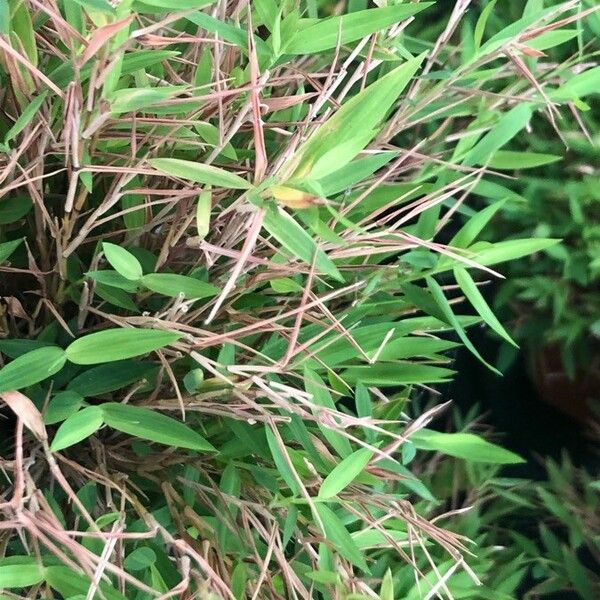
Plant Overview
Often called the "Miniature Bamboo" or "Baby Bamboo," this charming plant is actually a clever impostor. It isn't a bamboo at all, but rather a species of true grass that has evolved to mimic the woody, elegant look of its giant cousins. Native to the rocky streambanks of Asia, it creates a lush, miniature forest aesthetic that has made it a darling of the terrarium and bonsai worlds.
🔍 How to Identify
- 🌿 The Stems: Slender, wiry, and stiff stems that grow in dense, upright clumps, branching out to create a bushy appearance.
- 🍃 The Foliage: Tiny, lance-shaped leaves that are bright, grassy green and grow in a distinct alternate pattern along the stems.
- 🌾 The Form: It maintains a compact, mounded shape, rarely exceeding 12 to 20 inches in height, making it look like a "shrunken" bamboo grove.
🏡 In Your Garden
- 💧 The Thirst Factor: Because its ancestors lived on the edges of waterfalls and streams, this plant is an absolute "water-lover." It has zero tolerance for drought; if the soil dries out completely, the delicate leaves will turn brown and drop almost immediately.
- ☁️ Humidity & Light: It craves high humidity and bright, filtered light. It is an ideal candidate for a bathroom windowsill where the steam can keep its foliage supple, or as a centerpiece in a closed glass terrarium.
- 🌱 Root Sensitivity: It has a delicate root system that prefers to stay undisturbed. When repotting, it is best to move the entire root ball gently into a slightly larger container rather than trying to divide the clump.
⚠️ Safety & Toxicity
- ✅ Non-Toxic: This plant is generally considered safe and non-toxic for both humans and curious pets.
- 🐾 Pet Interaction: While it isn't poisonous, the grass-like leaves might be very tempting for cats to nibble on. While safe, eating large amounts of any grass can sometimes cause mild stomach upset in felines.
✨ Fun Fact
Despite its bamboo-like appearance and its "Baby Bamboo" nickname, Pogonatherum paniceum is actually more closely related to Sugarcane than it is to true Bamboo!

Detailed Care Instructions
To grow Pogonatherum paniceum (also known as baby's tears or pearl grass), you can follow these steps:
- Choose a suitable pot: Select a small pot with good drainage holes, as this plant prefers a moist environment. Make sure the pot is wide enough to accommodate the spreading nature of the plant.
- Soil and planting: Use a well-draining soil mix, such as a combination of potting soil and perlite or sand. Fill the pot with the soil mix, leaving sufficient space for the roots to spread.
- Propagation: You can propagate Pogonatherum paniceum through stem cuttings. Take a healthy cutting from the plant and remove the lower leaves. Plant the cutting in the soil, making sure at least one node is underneath the surface.
- Light requirements: Pogonatherum paniceum prefers bright, indirect light. Place it near a window where it can receive bright light but avoid direct sunlight, as it can scorch the delicate leaves.
- Watering: The plant thrives in moist soil, so water it regularly. Keep the soil consistently moist but not waterlogged, as this can lead to root rot. Check the moisture level by sticking your finger into the soil about an inch deep. If it feels dry, it's time to water.
- Humidity: Pogonatherum paniceum appreciates high humidity. You can increase humidity by misting the plant regularly or placing a tray of water near it. Another option is to group plants together, as they collectively release moisture into the air through transpiration.
- Temperature: This plant prefers temperatures between 60-75°F (15-24°C). Avoid exposing it to drastic temperature fluctuations or cold drafts.
- Fertilization: Feed the plant with a balanced liquid fertilizer diluted to half strength once a month during the growing season (spring to fall). Reduce or stop fertilizing during winter when growth slows down.
- Pruning: Pogonatherum paniceum tends to grow compact, but occasional pruning can help maintain its shape and encourage bushier growth. Trim back any leggy or overgrown stems to promote fuller growth.
- Pests and diseases: Keep an eye out for common houseplant pests like mealybugs or aphids. Treat infestations promptly with insecticidal soap or other appropriate remedies.
By following these care tips, you should be able to successfully grow Pogonatherum paniceum and enjoy its attractive and delicate foliage.

Place in a window with dappled sun or a spot in the middle of a room. Or directly in a window facing west or east.

To water this plant, you should first check the moisture level of the soil by inserting your finger about one inch deep into the soil. If the soil feels dry, it is time to water the plant. Use a watering can or a spray bottle to water the plant from the base, making sure to wet the entire root ball. Be careful not to overwater the plant, as this can lead to root rot. Allow the soil to dry out slightly between waterings. It is best to water this plant in the morning or evening, as watering during the hottest parts of the day can cause the water to evaporate too quickly.
To fertilize this plant, you should use a balanced fertilizer with equal amounts of nitrogen, phosphorus, and potassium. Apply the fertilizer every two to three months during the growing season, watering the plant well before and after fertilizing. Do not over-fertilize or allow the fertilizer to come into contact with the foliage.
The best soil to use with this plant is a well-draining soil that is rich in nutrients. It should have a slightly acidic to neutral pH level of around 6.5 to 7.5. A soil that is too alkaline can negatively affect the growth of this plant. It is also recommended to mix in some organic matter, such as compost, to improve the soil's structure and fertility. A soil mixture that is suitable for growing other similar plants, such as ferns or mosses, can also be suitable for Pogonatherum Paniceum. Regular watering and fertilizing will help ensure the plant's health and growth.
To propagate this plant, you will need to take a cutting from a mature plant. Look for a healthy stem that is at least 6 inches long with several leaves on it. Using a sharp pair of scissors or pruning shears, cut the stem at a 45-degree angle, making sure to avoid damaging the plant.
Next, remove the lower leaves from the stem, leaving only the top 2-3 leaves. Dip the cut end of the stem into rooting hormone, which will encourage the plant to grow roots.
Once the stem is coated in rooting hormone, plant it into a pot filled with a well-draining potting soil mix. Water the plant thoroughly and place it in a location with bright indirect sunlight.
Keep the soil moist but not waterlogged, and within a few weeks, you should see new growth emerging from the top of the stem. Once the plant has established roots and new growth, you can transplant it into a larger container or into your garden.
Common pests of the baby panda bamboo include Thrips. Make a habit of checking your baby panda bamboo frequently for pests so that any infestations can be caught and managed early.








