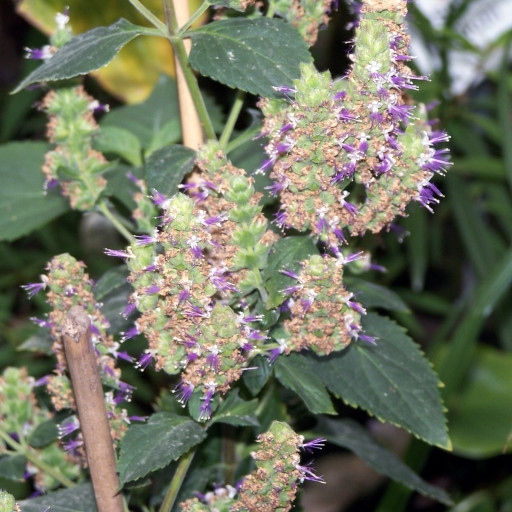
Plant Overview
Known across the globe as the "Scent of the Sixties," Patchouli is far more than just a vintage fragrance. This bushy herb from the mint family has been prized for centuries in Southeast Asia for its deep, earthy, and musky aroma that seems to get better with age. Beyond the perfume bottle, it is a lush, velvety addition to any indoor jungle or tropical garden.
🔍 How to Identify
- 🍃 The Foliage: Look for large, soft, and slightly "fuzzy" green leaves that grow in pairs. They are usually egg-shaped (ovate) with distinctively scalloped or jagged edges.
- 🌿 The Stem: Like most members of the mint family, Patchouli has a characteristic square-shaped stem. As the plant matures, the base can become quite woody.
- 🌸 The Blooms: While rare in home settings, it produces spikes of small, pale violet-to-white flowers that emerge from the top of the plant.
🏡 In Your Garden
- 💧 The Drama Queen: Patchouli is famous for "fainting." If the soil gets too dry, the leaves will dramatically wilt almost instantly. However, they usually perk right back up once given a deep drink.
- ☀️ Light & Humidity: This plant thrives in "dappled" light. It hates the harsh afternoon sun, which can scorch its velvety leaves. Because of its tropical roots, it craves high humidity—consider placing it near a humidifier or in a steamy bathroom.
- ✂️ Pruning: To keep it from getting "leggy" or thin, pinch off the tips of the branches regularly. This encourages the plant to grow outward into a dense, bushy shape.
⚠️ Safety & Toxicity
- 🟢 Status: Generally considered non-toxic to humans and pets.
- 🐾 Details: While the plant itself isn't known to be poisonous, the concentrated essential oil derived from it should never be ingested and should be kept away from cats and dogs, as their systems are more sensitive to strong botanical oils.
✨ Fun Fact
Patchouli owes its global fame to the Silk Road. In the 18th and 19th centuries, silk traders from China packed their precious fabrics with dried Patchouli leaves to repel moths. By the time the silk reached Europe, it carried that signature "exotic" scent, which soon became the ultimate hallmark of luxury and mystery.

Detailed Care Instructions
| Color | White, With Purple Tones |
| Soil Ph | Acid, Neutral, Alkaline |
| Humidity | Normal |
| Lighting | Part Sun |
| Soil Type | Moist But Well-Drained |
| Bloom Time | Fall |
| Difficulty | Medium |
| Plant Type | Perennial, Herb |
| Hibernation | Cold Period |
| Mature Size | Up To 5 Ft. Tall |
| Native Area | Asia |
| Sun Exposure | Partial Shade |
| Hardiness Zones | 9-11 |
To grow Pogostemon Cablin, also known as Patchouli plant, you can follow these steps:
- Choose a suitable location: Pogostemon Cablin prefers warm and tropical climates, so make sure you place it in an area with indirect or partial sunlight. It can also be grown indoors near a bright window.
- Prepare the soil: Use well-draining and fertile soil that is slightly acidic with a pH range of 6.5 to 7.5. A mixture of equal parts garden soil, compost, and cocopeat or perlite will work well.
- Start from seeds or cuttings: You can either sow seeds directly into the soil or start with stem cuttings. For seeds, sow them 1/4 inch deep into the soil and keep it moist until germination. For cuttings, take a healthy stem with at least two nodes and plant it in moist soil, keeping it in a warm and shaded area until it develops roots.
- Watering and moisture: Pogostemon Cablin prefers a consistently moist but not waterlogged soil. Water the plant when the top inch of soil feels dry. Avoid overwatering, as this can lead to root rot.
- Fertilization: Use a balanced liquid or slow-release fertilizer once every 2-4 weeks during the growing season (spring and summer). Follow the manufacturer's instructions for application rates.
- Pruning and maintenance: Regularly prune the plant to encourage bushy growth and maintain its shape. Pinch back the growing tips of the stems to promote branching. Remove any dead or yellow leaves.
- Pests and diseases: Keep an eye out for common pests like aphids, mealybugs, and spider mites. Treat them with organic insecticides or use neem oil. Pogostemon Cablin is generally resilient to diseases, but avoid overwatering to prevent root rot.
- Harvesting: Once the plant reaches maturity, usually after 3-4 months, you can harvest the leaves for various uses such as essential oil extraction, dried herbs, or for use in potpourri.
Remember to regularly monitor the plant's health, provide adequate sunlight and water, and maintain proper care to ensure its successful growth.

Place in a window with dappled sun or a spot in the middle of a room. Or directly in a window facing west or east.

To water this plant, it's best to check the moisture level of the soil with your finger before watering. If the soil feels dry about 1-2 inches below the surface, it's time to water. Use a gentle stream of room temperature water and water until it starts to drain out the bottom of the pot. Allow the plant to fully absorb the water before pouring out excess water from the saucer. Avoid letting the soil become completely dry or waterlogged, as this can harm the plant's health.
To fertilize this plant, you can use a balanced liquid fertilizer with equal amounts of nitrogen, phosphorus, and potassium. Be sure to dilute the fertilizer according to the instructions on the label. Fertilize every 2-4 weeks during the growing season. Avoid fertilizing during the winter months. To avoid fertilizer burn, always water the plant before applying the fertilizer, and avoid getting fertilizer on the leaves.
Pogostemon Cablin plants thrive in soil that is well-draining and rich in nutrients. It is best to use a soil mix that contains a balanced combination of organic and inorganic components, such as peat moss, perlite, and vermiculite. Additionally, a pH level of 6.0 to 7.5 is optimal for these plants. It is important to avoid using soil that is too heavy or compact, as this can impede proper root growth and lead to waterlogging. When planting Pogostemon Cablin, it is recommended to add a slow-release fertilizer to the soil to provide a steady source of nutrients over time. Regular watering is essential to keep the soil moist but not soggy. Overall, a high-quality, well-draining soil mix is key to successful growth and thriving of Pogostemon Cablin.
One way to propagate this plant is through stem cuttings. To do this, select a healthy stem with leaves and make a clean cut just below a node. Remove the lower leaves and place the cutting in water or moist soil. Keep the soil moist and the cutting in a warm, humid environment. Eventually, roots will form and new growth will emerge from the top of the stem. Another method is through division, where the plant is carefully dug up and separated into smaller sections, each with their own root system. The divisions can then be planted in separate containers or in the ground. Both methods can be successful with proper care and attention.
Common pests of the patchouli include Spider mites, whiteflies. Make a habit of checking your patchouli frequently for pests so that any infestations can be caught and managed early.








