Plant Overview
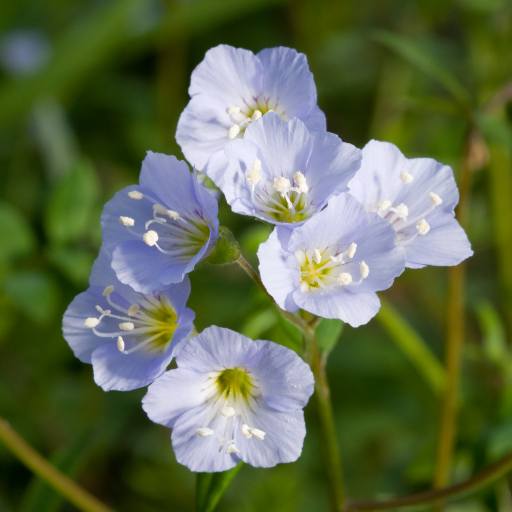
Known widely as Jacob’s Ladder, this charming North American native is a beloved staple of the woodland garden. Its delicate, fern-like foliage creates a soft texture that contrasts beautifully with broader garden neighbors like Hostas or Ferns. In late spring, it offers a serene display of sky-blue, bell-shaped blossoms that seem to glow in the dappled shade of a forest canopy.
🔍 How to Identify
- 🪜 The "Ladder" Leaves: The most distinct feature is the pinnate foliage, where small, oval leaflets are arranged in pairs along the stem, resembling the rungs of a ladder.
- 🔔 Bell-Shaped Blooms: Loose clusters of drooping, five-petaled flowers appear in shades of light blue to violet, often featuring bright white or yellow anthers at the center.
- 🌿 Low-Mounded Habit: It grows in tidy, lush clumps that rarely exceed 1 to 2 feet in height, making it an excellent choice for front-of-border planting.
🏡 In Your Garden
- 🌳 The Woodland Vibe: Because it originated on the forest floor, it thrives in dappled light. It is the perfect solution for those tricky "part-shade" spots where grass won't grow but you want a pop of color.
- 💧 Moisture is Key: Unlike some drought-tolerant natives, Jacob’s Ladder prefers consistently moist, well-draining soil. If the soil dries out too much in the summer, the delicate leaflets may brown at the edges or go dormant early.
- ✂️ Post-Bloom Refresh: Once the flowers fade, cutting the stems back to the base can often encourage a fresh flush of foliage that looks great until the first frost.
⚠️ Safety & Toxicity
- ✅ Generally Safe: Polemonium reptans is considered non-toxic to humans, cats, and dogs. It is a "friendly" addition to family gardens.
- 🦌 Deer Resistance: While no plant is truly "deer-proof," Jacob's Ladder is rarely a top choice for browsing deer and rabbits, making it a reliable pick for rural landscapes.
✨ Fun Fact
The name "Jacob’s Ladder" is a biblical reference to the dream of the patriarch Jacob, who saw a ladder reaching from earth to heaven. The botanical name reptans actually means "creeping," which is a bit of a historical mistake—the plant grows in clumps and doesn't actually creep across the ground!

Detailed Care Instructions
| Humidity | Normal |
| Difficulty | Medium |
| Temperature | 20°C - 26°C |
| Hardiness Zones | 3 - 8 |
To grow Polemonium reptans (commonly known as Jacob's ladder), follow these steps:
- Choose the right location: Jacob's ladder prefers a partially shaded to shaded spot in your garden. It can tolerate full sun, but it may need more moisture in such conditions.
- Prepare the soil: The plant prefers fertile, moist, and well-draining soil. Amend the soil with organic matter like compost to improve its fertility and drainage.
- Sow seeds or plant divisions: You can sow Jacob's ladder seeds in the early spring indoors, or directly sow them in the garden after the last frost. Alternatively, you can also plant divisions in early spring or fall.
- Planting depth: For seeds, plant them around ¼ inch deep in the soil. If planting divisions, place them at the same depth they were originally growing.
- Spacing: Space each plant or seedling approximately 12-18 inches apart to allow enough room for growth.
- Watering: Keep the soil consistently moist, especially during hot and dry periods. Provide a deep watering once a week, ensuring the soil doesn't become waterlogged.
- Mulching: Apply a layer of organic mulch around the plants to retain moisture, suppress weeds, and keep the roots cool.
- Fertilization: Apply a balanced, slow-release fertilizer once a year in early spring to provide extra nutrients to the plants. Avoid over-fertilizing as it may lead to leggy growth and reduced flowering.
- Pruning: Deadhead the spent flowers to encourage new growth and prolong blooming. Trim back any straggly or damaged stems to maintain a compact shape.
- Pests and diseases: Jacob's ladder is generally resistant to pests and diseases. However, keep an eye out for slug damage and treat accordingly. Proper spacing, good air circulation, and avoiding over-watering can help prevent diseases.
- Division: Every 3-4 years, you can divide mature Jacob's ladder plants in early spring or fall to control their size and encourage healthy growth.
- Winter care: Jacob's ladder is hardy in USDA zones 3-9. It doesn't typically require any special winter care, but a layer of mulch over the roots can provide extra protection in colder regions.
By following these steps, you should be able to successfully grow Polemonium reptans in your garden.

Place in a window with dappled sun or a spot in the middle of a room. Or directly in a window facing west or east.

When watering this particular plant, it is important to avoid over-watering or allowing the soil to become waterlogged, as this can lead to root rot and other damage. To properly water the plant, begin by checking the soil moisture level by inserting your finger into the soil to a depth of about one inch. If the soil feels dry to the touch, it may be time to water.
When watering, use a watering can or hose with a gentle spray nozzle to apply water evenly over the soil surface. Be sure to water the entire root zone of the plant, as this will help to ensure that the roots receive adequate moisture. Do not pour water directly onto the foliage, as this can promote fungal growth and disease.
In general, Polemonium Reptans plants prefer to be kept evenly moist but not wet, so monitor the soil moisture regularly and adjust your watering schedule as needed. During hot or dry periods, you may need to water more frequently to keep the soil moist. However, in cooler or more humid conditions, less frequent watering may be necessary to prevent waterlogged soil.
To fertilize this plant, use a balanced fertilizer with N-P-K ratio of 10-10-10. Fertilize in early spring and again in early summer with 2 tablespoons of fertilizer per plant. Scatter the fertilizer on the soil around the plant and water thoroughly afterward. Avoid over-fertilizing as it can damage the plant and lead to leaf burn.
The ideal soil for this plant is a well-draining, loamy soil with a pH range of 6.0 to 7.5. It prefers a soil that is rich in organic matter, such as compost or aged manure. Avoid heavy clay soils, as they can lead to root rot. Additionally, this plant prefers moist soil, but not waterlogged conditions, so ensure proper drainage. Amend the soil with a slow-release fertilizer before planting to provide the plant with necessary nutrients.
To propagate this plant, take cuttings from the stem that are around 5-6 inches long, making sure to choose healthy and disease-free stems. Then, remove the lower leaves of the cutting, leaving only two or three leaves at the top. Dip the cut end of the stem into a rooting hormone powder and plant it in a well-draining potting soil. Make sure to keep the soil moist and the cutting in a warm, humid place, such as under a clear plastic bag or in a propagating tray. Rooting should occur in around four to six weeks.
Common pests of the jacob's ladder include Aphids, larvae. Make a habit of checking your jacob's ladder frequently for pests so that any infestations can be caught and managed early.








