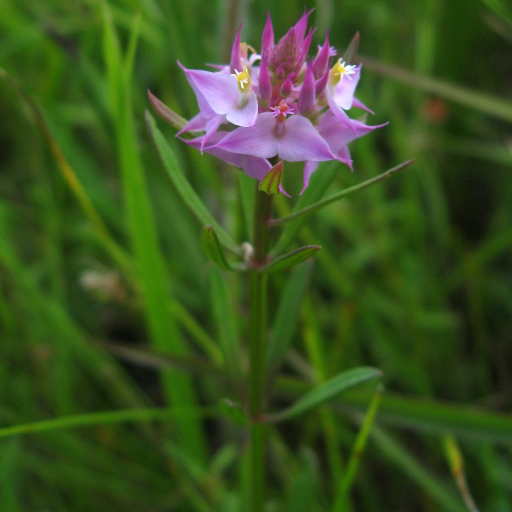
Plant Overview
Known affectionately as "Drumheads" for its unique, blunt flower clusters, the Polygala cruciata is a charming resident of North American wetlands. Its Latin name, cruciata, refers to its most distinguishing feature: leaves that grow in perfect crosses or whorls around the stem. Historically, its relatives were believed to help nursing mothers and livestock increase milk production, earning the entire genus the nickname "Milkwort."
🔍 How to Identify
- 🌸 The "Drumhead" Spike: The flowers grow in dense, thick, cylindrical clusters at the top of the stems, resembling tiny, fuzzy pink marshmallows or drumsticks.
- ➕ Crossed Leaves: Look closely at the stem; the leaves are arranged in distinct whorls of four, creating a "plus" or "cross" pattern that sets it apart from other milkworts.
- 🎨 Subtle Hues: The blossoms transition through a delicate palette of rosy-pink, magenta, and pale greenish-white, often appearing slightly translucent.
🏡 In Your Garden
- 💧 Soggy Feet Preferred: This isn't your average garden flower; it thrives in acidic, boggy soils and marshy meadows. If you are lucky enough to have a natural wetland on your property, it serves as a wonderful "wetland indicator" species.
- 🦋 Pollinator Support: It plays a vital role in its ecosystem by providing nectar to native bees and small butterflies that frequent damp, sunny habitats where other flowers might struggle to grow.
⚠️ Safety & Toxicity
- ✅ Low Risk: Polygala cruciata is not considered toxic to humans or common household pets like dogs and cats.
- 🌱 Conservation Mindset: While safe to touch, these plants have delicate root systems and are very sensitive to habitat changes. They are best enjoyed in the wild rather than being transplanted, as they rarely survive the move.
✨ Fun Fact
The name Polygala comes from the Greek words poly (much) and gala (milk). This stems from an ancient—though scientifically unproven—belief that cows grazing on these plants would produce a much higher volume of milk!

Detailed Care Instructions
To grow Polygala Cruciata plants, follow these steps:
- Select a suitable location: Choose a sunny spot in your garden with well-draining soil. The plant prefers full to partial sun exposure.
- Prepare the soil: Ensure the soil is fertile, rich in organic matter, and has good drainage. If the soil is heavy or clayey, amend it with compost or sand to improve drainage.
- Planting: Dig a hole slightly larger than the root ball of the Polygala Cruciata plant. Place the plant in the hole, making sure the top of the root ball is level with the soil surface. Fill the hole gently with soil, and firm it around the plant.
- Watering: Give the plant a good watering immediately after planting. Afterward, water regularly to keep the soil moist but not waterlogged. Avoid overwatering, as it may lead to root rot.
- Mulching: Apply a layer of organic mulch around the base of the plant to help retain soil moisture, suppress weed growth, and regulate soil temperature.
- Fertilization: Polygala Cruciata generally does not require much fertilizer. However, you can apply a balanced slow-release fertilizer once a year in spring to promote healthy growth. Follow the instructions on the fertilizer packaging for application amounts.
- Pruning: Regularly prune dead or damaged branches to maintain the plant's shape and overall health. Prune after flowering to encourage new growth and more blooms.
- Protect from extreme weather: In very hot climates, provide some shade during the hottest part of the day. If your area experiences frost, cover the plant or bring potted plants indoors to protect them.
- Pest and disease control: Polygala Cruciata plants are generally resistant to pests and diseases. However, you should still monitor them for any problems. If you notice any issues, consult with a local gardening expert for appropriate pest or disease control methods.
- Propagation: To propagate Polygala Cruciata, you can collect seed pods when they turn brown, or by taking cuttings in late spring or early summer. Sow the seeds in a well-draining seed starting mix or plant the cuttings in a potting mix. Keep them moist until they root or germinate.
With proper care and attention, your Polygala Cruciata plant should thrive and provide attractive blooms for you to enjoy.

Place in a bright room that is sun drenched almost all day. Or directly in a south-facing window.

1. Polygala Cruciata is a perennial plant native to certain regions and requires specific watering practices to ensure its health and growth.
2. Before watering, it is always advisable to check the moisture content of the soil. Insert your finger about an inch deep into the soil near the plant's base. If it feels dry, it is an indication that the plant requires watering.
3. Use a watering can or a gentle hose attachment to water the plant. Polygala Cruciata prefers a moderate watering routine, so avoid overwatering as it can lead to root rot and other issues. Aim to keep the soil slightly moist, but not waterlogged.
4. To water the plant effectively, target the base of the plant rather than spraying water all over its foliage. Direct the flow of water towards the roots to provide nourishment to the plant's vital parts.
5. As a general rule, water Polygala Cruciata thoroughly whenever you water it. Ensure that the water penetrates the soil and reaches the plant's root zone. This helps to encourage deep root growth and increases the plant's overall drought tolerance.
6. Monitor the weather and adjust your watering schedule accordingly. During hot summer months or periods of drought, you may need to increase the frequency of watering to prevent the soil from completely drying out. Conversely, during cooler or rainy seasons, water sparingly to avoid water accumulation and potential root issues.
7. To conserve moisture and reduce the frequency of watering, consider mulching around the base of the plant. Apply a layer of organic mulch, such as wood chips or compost, to help retain soil moisture, regulate temperature, and inhibit weed growth.
8. Regularly observe the plant's overall health and appearance. If the leaves appear wilted, it might indicate that the plant requires immediate watering. On the other hand, if you notice yellowing leaves or signs of root rot, it could indicate overwatering.
9. Pay attention to the specific environmental conditions in your region, as they can affect the plant's water requirements. Factors such as temperature, humidity, sunlight intensity, and wind can all impact how frequently you need to water Polygala Cruciata.
Remember, understanding the specific watering needs of Polygala Cruciata is crucial for maintaining its health and ensuring optimal growth.
To properly fertilize the Polygala Cruciata plant, follow these instructions:
- Choose a balanced, slow-release fertilizer that contains equal proportions of nitrogen (N), phosphorous (P), and potassium (K). A ratio of 10-10-10 or 14-14-14 is suitable.
- Apply the fertilizer evenly around the base of the plant, taking care not to let it come into direct contact with the stems or leaves.
- Use the recommended dosage mentioned on the fertilizer packaging as over-fertilizing can be harmful to the plant.
- Gently work the fertilizer into the top layer of soil using a hand trowel or rake.
- Water the plant thoroughly after applying the fertilizer to allow the nutrients to penetrate the root zone.
- Repeat the fertilization process every 4-6 weeks during the active growing season, typically from spring until early fall.
- Monitor the plant's response to the fertilizer, and adjust the frequency or dosage accordingly. Avoid fertilizing during periods of dormancy or extreme weather conditions.
- Regularly check the soil's moisture levels, ensuring it remains consistently moist but not waterlogged. Adjust watering frequency and duration as needed.
- Additionally, consider supplementing the fertilizer with organic alternatives such as compost or well-rotted manure to improve soil health and fertility.
- Regularly remove any weeds or competing plants around the Polygala Cruciata to reduce competition for nutrients and maximize its growth potential.
Remember to familiarize yourself with any specific requirements of the Polygala Cruciata species as variations may exist within the plant genus.
When cultivating the Polygala Cruciata plant, it is recommended to use a well-draining soil mixture that provides a balanced moisture level. This plant thrives best in soil that is slightly acidic to neutral, with a pH range between 6.0 and 7.0. Additionally, it prefers a soil composition that is rich in organic matter, which helps promote root health and nutrient absorption.
For optimum growth, a loamy soil texture is ideal, as it offers a good balance of moisture retention and drainage. Loam is a combination of sand, silt, and clay, providing adequate aeration to the roots while also retaining sufficient moisture. This soil texture allows for excellent water percolation, minimizing the risk of waterlogged conditions that could potentially damage the plant.
To further improve the soil quality, adding organic matter such as well-rotted compost or aged manure helps enhance its fertility and structure. This organic matter contributes to nutrient availability and moisture retention, ensuring the Polygala Cruciata plant receives adequate nourishment.
Overall, a well-draining, slightly acidic to neutral loamy soil enriched with organic matter is best suited for the cultivation of the Polygala Cruciata plant. Providing these soil conditions will support healthy root development, nutrient uptake, and overall plant vigor.
To propagate Polygala cruciata, you will need to follow these steps:
- Prepare the soil: Polygala cruciata prefers well-draining, sandy or loamy soil. Prepare the soil by removing any weeds and debris and ensuring it is loose and fertile.
- Collect seeds: Polygala cruciata produces small, rounded seeds. Wait for the plant to form seed pods, which will be small, green, and dry. Collect the pods when they have turned brown and are fully dry.
- Stratify the seeds: Polygala cruciata seeds have a hard outer coat, which can prevent germination. To overcome this, you'll need to stratify the seeds. This can be done by placing the seeds in a sealed plastic bag with a mixture of moist sand and peat moss. Refrigerate the bag for about 30-60 days. This process mimics the natural winter conditions the plant experiences and helps break the seed dormancy.
- Sow the seeds: After stratification, remove the seeds from the refrigerator and scatter them over the prepared soil. Gently press them into the soil, but do not cover them completely, as they require light to germinate.
- Watering: Keep the soil consistently moist until the seeds germinate. Avoid overwatering, as excessive moisture can lead to rotting.
- Provide appropriate sunlight: Polygala cruciata prefers full sun to partial shade. Place the seed trays or pots in an area where they will receive adequate sunlight.
- Maintain temperature: Polygala cruciata thrives in warm temperatures between 60-80°F (15-27°C). Ensure the propagation area maintains a suitable temperature throughout the process.
- Monitor and care: Keep an eye on the seeds for germination, which can take anywhere from a few weeks to a few months. Once the seedlings emerge, provide them with regular water, but be cautious not to overwater. Additionally, protect the young plants from strong winds or extreme weather conditions.
- Transplanting: Once the seedlings have grown to a suitable size, typically when they have developed their second or third set of true leaves, you can transplant them into their final growing locations. Choose a spot in your garden with similar soil conditions and appropriate sunlight.
By following these steps, you can successfully propagate Polygala cruciata without relying on its common names.








