Plant Overview
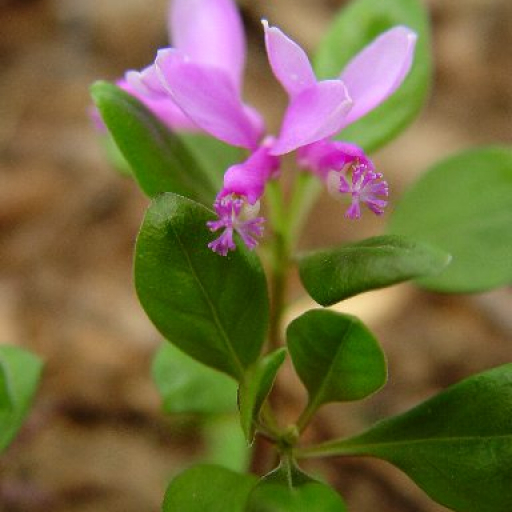
Often called "Gaywings" because of its striking resemblance to a tiny purple bird in flight, Polygala paucifolia is a delicate woodland treasure. While its intricate blossoms look remarkably like orchids, it is actually a member of the Milkwort family. These low-growing perennials are masters of the forest floor, often appearing in late spring to signal the true arrival of the growing season.
🔍 How to Identify
- 🌸 The "Wings": The most striking feature is its two large, petal-like sepals that flare out to the sides, creating the illusion of a bird or a plane in mid-flight.
- 🪶 Fringed Keel: A central tube-like petal ends in a delicate, feathery fringe. This acts as a specialized landing platform for visiting bumblebees.
- 🍃 Wintergreen Leaves: The oval, leathery leaves are concentrated at the top of the short stem. They are deep green but often take on a bronze or reddish-purple tint in early spring.
🏡 In Your Garden
- 🌲 Woodland Preference: This plant is a "specialist" that thrives in the dappled shade of cool, moist forests. It is most at home tucked under the shade of evergreens or birches where the soil is naturally acidic.
- 🛑 The Root Dilemma: Gaywings is notoriously difficult to transplant. It grows via a complex network of underground runners (rhizomes) and has a sensitive root system that hates being disturbed. If you are lucky enough to have it on your property, it is best to leave it exactly where it has chosen to grow.
- 🍂 Leaf Litter: In a garden setting, it requires a thick mulch of pine needles or leaf mold to mimic the forest floor and keep its shallow roots cool and moist.
⚠️ Safety & Toxicity
- ✅ General Status: Polygala paucifolia is generally considered non-toxic and is safe for hikers and gardeners to handle.
- 🐾 Pets & Kids: There are no documented reports of severe toxicity to cats, dogs, or humans. However, many plants in the Polygala genus contain saponins, which can cause mild stomach irritation if consumed. It is always best to keep curious pets from snacking on wild flora.
✨ Fun Fact
Gaywings is a "hedger of bets." While it produces showy purple flowers for bees to find, it also grows tiny, inconspicuous flowers near its roots that never open. These "cleistogamous" flowers self-pollinate underground, ensuring the plant can produce seeds even if the weather is too cold for bees to fly!

Detailed Care Instructions
To grow Polygala paucifolia, commonly known as Gaywings or Fringed Polygala, you can follow these steps:
- Choose the right location: Polygala paucifolia prefers partly shaded areas, such as the edges of deciduous forests or under the canopy of larger trees. It does well in well-drained, humus-rich soils.
- Prepare the soil: Remove any weeds or grass from the planting area, and amend the soil with organic matter such as compost or peat moss to improve drainage and nutrient content.
- Propagation: You can propagate Polygala paucifolia from seeds or by dividing established plants. If using seeds, sow them in a seed tray in early spring and cover lightly with soil. Keep the tray in a cool location with consistent moisture until germination occurs. Transplant the seedlings into individual pots or into the garden when they are large enough to handle.
- Planting: If planting divisions, gently dig up an established plant and divide it into smaller sections, ensuring that each section has both roots and shoots. Plant the divisions at the same depth they were growing previously, spacing them about 6-12 inches apart.
- Watering: Polygala paucifolia prefers moist but not waterlogged soil. Water regularly, especially during dry periods, and ensure adequate drainage to prevent rotting.
- Mulching: Apply a layer of organic mulch around the plant to help retain moisture, suppress weed growth, and protect the roots during extreme temperatures.
- Care: Polygala paucifolia is a low-maintenance plant. Avoid over-fertilizing, as it can lead to excessive foliage growth at the expense of flower production. Simply remove any dead or damaged growth as needed.
- Blooming: The plant typically blooms in late spring to early summer, producing delicate clusters of pink, purple, or white fringed flowers. Enjoy the unique beauty of the blossoms.
By following these steps, you can successfully grow Polygala paucifolia and enjoy its charming flowers in your garden.
The best way to water this plant is to ensure that the soil remains consistently moist but not waterlogged. This can be achieved by watering the plant deeply once or twice a week, or as needed, depending on the rate of soil moisture evaporation and the degree of plant transpiration. It is important to avoid wetting the leaves or flowers when watering, as this can promote the spread of fungal diseases. Additionally, it is important to use well-draining soil and pots with sufficient drainage holes to prevent waterlogging.
To fertilize this plant, choose a balanced fertilizer with equal amounts of nitrogen, phosphorus, and potassium. Apply the fertilizer in early spring just before new growth appears, and again in midsummer. Mix the fertilizer with water according to the package instructions, and apply it around the base of the plant, being careful not to get any on the foliage or flowers. Water the plant well after fertilizing. Avoid over-fertilizing, as this can be harmful to the plant.
Polygala Paucifolia is a plant that requires well-draining soil that is rich in organic matter and nutrients. The ideal soil type for this plant is a loamy mix of sand, silt, and clay that has a pH range of 5.5 to 6.5. The soil should be moist but not waterlogged, as the plant does not tolerate waterlogged conditions well. The addition of compost or well-rotted manure to the soil will provide the plant with the necessary nutrients to grow and thrive. It is also important to ensure that the soil is free of weeds and other plants that may compete with the Polygala Paucifolia for nutrients and water. When planting, it is recommended to place the plant in an area that receives partial to full sunlight and to water it regularly until it becomes established.
Polygala paucifolia is a herbaceous perennial plant that can be propagated using either seeds or cuttings.
Propagation by seeds:
- Gather seeds from mature flowers of the Polygala paucifolia plant in the fall or early winter.
- Clean and dry the seeds thoroughly before planting.
- Fill a seed tray with a soilless growing medium, and sprinkle the seeds over the surface evenly.
- Cover the seeds with a thin layer of the growing medium, and water gently.
- Keep the seed tray in a bright location, but avoid direct sunlight. Maintain a temperature of 65-75°F.
- Water the seeds regularly to keep the soil moist, but not waterlogged.
- The seeds should germinate in 2-4 weeks, and can be transplanted outdoors in the spring.
Propagation by cuttings:
- Select a healthy and mature Polygala paucifolia plant, and take a stem cutting that is 4-6 inches long.
- Remove the bottom leaves of the cutting, and dip the cut end into rooting hormone powder.
- Insert the cutting into a pot filled with a well-draining soil mix, and water well.
- Cover the pot with a plastic bag to create a humid environment, and keep it in a bright, indirect light.
- Maintain the soil moisture by watering when necessary, but be careful not to overwater.
- After a few weeks, the cutting should have developed roots and can be transplanted outdoors.








