Plant Overview
Often called the Purple Broom or Broom-leaf Milkwort, this South African native is a showstopper for those who love architectural drama in the garden. It is a slender, upright shrub that seems to erupt in a fountain of violet-purple flowers, making it a favorite for adding height and vibrant color to sunny borders. In its native fynbos habitat, it is celebrated as a resilient survivor of wind and coastal spray.
🔍 How to Identify
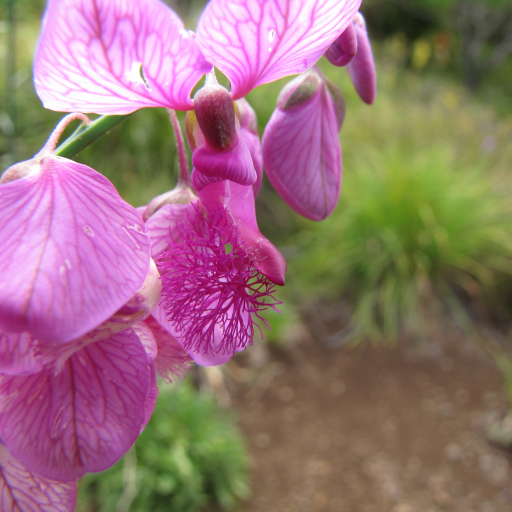
- 🌸 The Bloom: Vibrant magenta to deep purple flowers that resemble pea blossoms. They hang in long, drooping clusters at the ends of the branches, often featuring a delicate, feathery "brush" on the lower petal.
- 🌿 The Foliage: Sparse, narrow, dark-green leaves that are lance-shaped. Because the leaves are so thin and spaced out, the plant has an airy, "see-through" quality.
- 🎋 The Form: An upright, "virgate" (wand-like) growth habit. It typically grows as a single or multi-stemmed shrub that can reach up to 2.5 meters tall, with branches that weep gracefully under the weight of the flowers.
🏡 In Your Garden
- ☀️ Sun Seeker: This plant craves full sun to produce its iconic purple wands. If tucked into a shady corner, it will become leggy, sparse, and lose its structural charm.
- 🚫 Root Sensitivity: It develops a deep, sensitive taproot. It notoriously hates being moved once established, so choose its "forever home" carefully; transplanting an adult Polygala virgata often results in the plant failing.
- ✂️ Pruning Needs: It is a relatively short-lived shrub (usually 5–7 years). To keep it from becoming "top-heavy" or woody, it’s best to tip-prune it while young to encourage a bushier base.
⚠️ Safety & Toxicity
- 🐾 Pet Safety: Polygala virgata is generally considered non-toxic to cats and dogs, making it a safe choice for pet-friendly landscapes.
- 👶 General Caution: While not categorized as a "poisonous plant," it contains saponins. If large quantities are ingested by children, it may cause mild stomach upset or a scratchy throat.
✨ Fun Fact
The genus name Polygala comes from the Greek words "poly" (much) and "gala" (milk). In ancient times, it was a common folklore belief that if cows grazed on these plants, their milk production would increase significantly!

Detailed Care Instructions
To grow a Polygala Virgata plant, also known as the Purple Broom or Flowering Pea, follow these steps:
- Choose the right location: Select a spot that receives full sun to partial shade. The plant prefers well-drained soil that is slightly acidic to neutral.
- Prepare the soil: Before planting, make sure the soil is loose and well-draining. If the soil is heavy clay or compacted, add organic matter like compost to improve drainage and nutrient content.
- Planting time: In most regions, it is best to plant Polygala Virgata in the spring after the last frost date. However, check your local climate to ensure it's the right time for planting in your area.
- Dig the hole: Dig a hole slightly wider than the root ball of the plant. The depth should be about the same as the root ball.
- Planting: Gently remove the plant from its container, loosen the roots, and place it in the hole. Ensure that the soil level of the plant matches the surrounding ground level.
- Watering: After planting, water the plant thoroughly to settle the soil around the roots. Maintain regular watering during the establishment period, keeping the soil moist but not waterlogged.
- Mulching: Apply a layer of organic mulch around the plant to conserve moisture, suppress weeds, and regulate soil temperature. Make sure to keep the mulch a few inches away from the plant stem to prevent rotting.
- Pruning: Prune the plant regularly to maintain its shape and encourage branching. Trim any dead or damaged branches using sharp, sterile pruning shears. You can also trim the plant after it finishes blooming to promote more compact growth.
- Fertilizing: Polygala Virgata generally doesn't require much fertilization. However, you can apply a balanced slow-release fertilizer in the spring to encourage healthy growth. Follow the instructions on the fertilizer packaging for proper application and dosage.
- Pests and diseases: This plant is generally resistant to pests and diseases. However, keep an eye out for common garden pests like aphids, spider mites, or scale insects. If an infestation occurs, treat it with appropriate organic or chemical controls.
- Winter care: Polygala Virgata is hardy in USDA hardiness zones 8 to 11. In colder regions, where the temperatures drop below freezing, cover the plant with a layer of mulch or use a frost blanket during winter to protect it from cold damage.
Remember to consult local nurseries or gardening experts for specific recommendations based on your climate and growing conditions.

Place in a bright room that is sun drenched almost all day. Or directly in a south-facing window.

Polygala Virgata is a plant that requires regular watering to maintain its health. When watering this plant, ensure that the soil is evenly moist, but not waterlogged. This can be achieved by watering deeply and allowing any excess water to drain away.
It is always important to check the moisture level of the soil before watering. A good rule is to water the plant when the top inch of soil feels dry to the touch. During hot weather, the plant may require more frequent watering.
When watering, avoid getting water on the leaves as this can cause damage or diseases. Instead, aim to water directly on the soil around the plant. Watering in the morning or evening also helps to prevent excess evaporation.
In addition to regular watering, it is important to provide proper drainage for the plant. Ensure that the soil and pot have sufficient drainage holes to allow excess water to escape.
By following these watering guidelines, Polygala Virgata can thrive and produce beautiful blooms.
To fertilize this plant, use a balanced granular fertilizer with equal parts nitrogen (N), phosphorus (P), and potassium (K), applied in early spring. Apply the fertilizer evenly around the base of the plant, taking care not to let it come into direct contact with the foliage. Water thoroughly after application to help the fertilizer penetrate the soil and reach the roots. If the plant shows signs of nutrient deficiency, such as yellowing leaves or stunted growth, consider applying a foliar spray of a water-soluble fertilizer that is high in nitrogen.
The ideal soil for Polygala Virgata is a well-draining type with a neutral pH that is rich in organic matter. It should be composed of a mixture of sand, loam, and compost, with a pH range of 6.0 to 7.5. The soil should also have good aeration and moisture retention properties, ensuring adequate drainage and root development. Avoid using heavy clay soils or those prone to waterlogging, as they can lead to root rot and other soil-borne diseases. Additionally, adding a layer of mulch around the base of the plant can help retain moisture and improve soil quality over time.
Polygala Virgata is a plant that can be propagated by seed or by taking stem cuttings. Here is a step-by-step guide on how to propagate this plant through stem cuttings:
- Take cuttings from the parent plant: Use a clean, sharp pair of shears or scissors to take a cutting from the parent plant. Cuttings should be approximately 4-6 inches long and should be taken from the top of the plant.
- Remove lower leaves: Remove any leaves that are located near the bottom of the cutting. This will prevent them from getting in the way when you plant the cutting.
- Prepare the cuttings: Dip the bottom of the cutting in rooting hormone. This will help the cutting develop roots more quickly.
- Plant the cuttings: Fill a pot with a good quality potting soil. Make a hole in the soil and plant the cutting, making sure that the planting depth is at least 2-3 inches. Firm the soil around the cutting to ensure good contact between the soil and the stem.
- Water the cuttings: Water the cuttings thoroughly, making sure that the soil is moist but not waterlogged.
- Place the cuttings in a bright, warm location: Polygala Virgata cuttings need bright, indirect sunlight and warm temperatures to grow properly. You can place them in a bright windowsill or under grow lights.
- Monitor the cuttings: Keep an eye on the cuttings over the next few weeks. Water them when the soil feels dry to the touch and keep them out of direct sunlight.
- Transplant the cuttings: Once the cuttings have developed roots and new growth, they can be transplanted into their permanent location.








