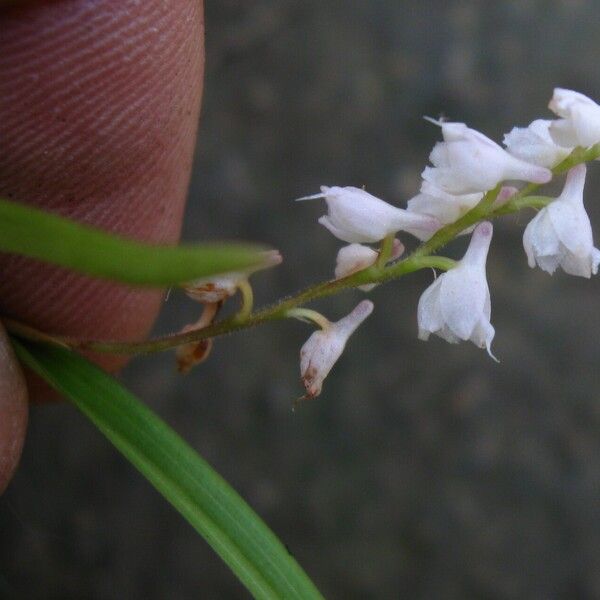
Plant Overview
The Polystachya hastata is a subtle gem of the African wilderness, often referred to by orchid enthusiasts as the Spear-lipped Polystachya. Unlike the flashy, oversized orchids found in supermarkets, this species carries an air of mystery, hailing from the humid tropical forests of West and Central Africa. Its name "hastata" comes from the Latin word for spear, a nod to the unique, pointed shape of its delicate flower lip.
🔍 How to Identify
- 🌸 Inverted Blooms: Like most members of its genus, the flowers are "non-resupinate," meaning they appear to be upside down compared to other orchids, with the lip pointing toward the sky.
- 🗡️ Spear-Shaped Lip: The most distinct feature is the central "lip" (labellum) of the flower, which is sharply pointed and shaped like a miniature spearhead.
- 🌿 Clumping Pseudobulbs: It grows from small, pear-shaped or cylindrical bulbs that store water, often appearing in tight clusters with glossy, strap-like leaves.
- 🎨 Subtle Palette: The flowers are usually a blend of lime green, creamy yellow, or soft browns, often featuring tiny, intricate purple spotting or veining.
🏡 In Your Garden
- 🌬️ The Breath of Life: Being an epiphyte (a plant that grows on trees), it despises stagnant air. It thrives when mounted on cork bark or tucked into a very loose, chunky orchid mix where its roots can "breathe."
- 💧 The "Wet-Dry" Dance: In its native habitat, it experiences a distinct rainy and dry season. It loves frequent misting and high humidity, but its roots must dry out quickly to avoid rot—think of it as a plant that likes a shower, not a bath.
- ☀️ Dappled Dreams: It prefers "bright shade," mimicking the sunlight that filters through a jungle canopy. Direct midday sun will scorch its leaves, but too much shade will prevent it from blooming.
⚠️ Safety & Toxicity
- 🛡️ Non-Toxic Status: Polystachya hastata is generally considered non-toxic to humans and common household pets.
- 🐾 Pet Protection: While it won't poison your cat or dog, its leaves are fibrous and can cause mild stomach upset or vomiting if ingested in large quantities. It’s always best to keep delicate orchids out of reach of curious paws.
✨ Fun Fact
Most orchids "twist" their flower buds 180 degrees as they open so the lip serves as a landing pad for insects. Polystachya hastata is a rebel—it skips this twist entirely, forcing its pollinators to approach the flower from a completely different angle than they would with a Cattleya or Phalaenopsis!

Detailed Care Instructions








