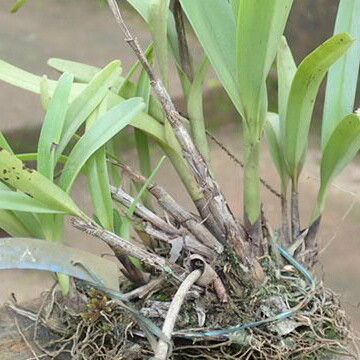
Plant Overview
Often called the Many-Bristled Polystachya, this resilient little orchid is a tropical African gem that hides a fascinating secret in plain sight. Unlike most orchids that twist their flowers to face "upright" (a process called resupination), this species keeps its blooms "upside-down," making it a must-have for collectors of the strange and beautiful. It is a hardy epiphyte that brings the untamed spirit of the Congolese rainforest to your windowsill.
🔍 How to Identify
- 🌸 Upside-Down Blooms: The most striking feature is that the lip (labellum) of the flower points upward, giving the blossoms a distinct, "rebellious" appearance compared to standard orchids.
- 🌿 Pear-Shaped Pseudobulbs: At the base of the plant, look for small, slightly flattened, pear-shaped stems that store water for the plant during drier spells.
- 🍃 Lance-Like Leaves: It features narrow, leathery, bright green leaves that grow in pairs or small clusters, framing the central flower spike.
🏡 In Your Garden
- 💨 Airflow is Vital: In the wild, these orchids cling to high tree branches. They absolutely crave "breezy" conditions; stagnant air is their greatest enemy and can lead to crown rot.
- 🪵 Mounting vs. Potting: Because they are epiphytic, they prefer being mounted on a piece of cork or kept in a very coarse bark mix. They hate "wet feet," so ensure the roots can dry out quickly after watering.
⚠️ Safety & Toxicity
- 🐾 Pet-Friendly: Polystachya polychaete is generally considered non-toxic to cats, dogs, and horses, making it a safe choice for pet-loving households.
- 🚫 Handle with Care: While not poisonous, the delicate roots and flower spikes are easily snapped. Keep it out of reach of curious toddlers to ensure the plant remains healthy and stress-free.
✨ Fun Fact
The name Polystachya is derived from the Greek words poly (many) and stachys (ear of grain or spike). This refers to the dense, multi-flowered spikes that, from a distance, look like tiny golden heads of wheat swaying in the jungle breeze!

Detailed Care Instructions








