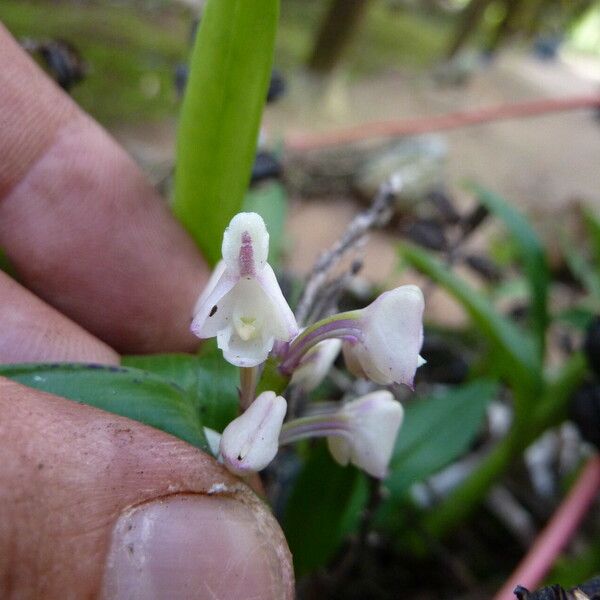
Plant Overview
Known to collectors as the "Awl-Leaved Polystachya," this dainty orchid is a master of the African highlands. Unlike the showy, oversized orchids found in grocery stores, this species is a "miniature" favorite, prized for its architectural foliage and strange, inverted flowers. In the wild, it clings to mossy trees or rocky outcrops, catching morning mists in its narrow, needle-like leaves.
🔍 How to Identify
- 🌵 The Foliage: Its leaves are "subulate," meaning they are shaped like an awl—long, narrow, and tapering to a sharp, needle-like point.
- 🙃 The Flowers: The tiny yellow-green or brownish blooms are "non-resupinate," which means they grow "upside down" compared to most orchids, with the flower's lip positioned at the top.
- 🌿 Growth Habit: It grows in tight, organized clumps of small, cylindrical pseudobulbs that act as tiny water reservoirs for drier days.
🏡 In Your Garden
- 💨 Air Flow is Key: Because this plant is an epiphyte (a "tree-dweller"), it hates stagnant air. It thrives when mounted on cork bark or tucked into a very airy orchid mix that allows oxygen to swirl around its roots.
- 🚿 Humidity Nuance: It mimics the cool, misty African montane forests. While it likes to stay hydrated, it prefers "high humidity" over "wet feet." Misting the air around the plant is often more effective than soaking the pot.
⚠️ Safety & Toxicity
- ✅ Safe for All: This orchid is generally considered non-toxic to humans, cats, and dogs, making it a worry-free addition to a busy household.
- 🤲 Handle with Care: Though not poisonous, its fine root system is incredibly sensitive. It "hates" being moved, so avoid repotting unless the growing medium has completely broken down.
✨ Fun Fact
The name subulata comes from the Latin word subula, which refers to a sharp-pointed tool used by shoemakers to punch holes in leather—a perfect description of those distinctive, pointed leaves!

Detailed Care Instructions








