Plant Overview
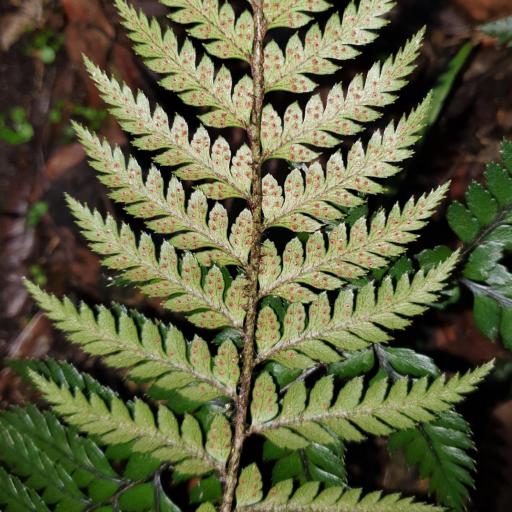
Known affectionately as the New Zealand Shield Fern or Common Shield Fern, this hardy evergreen is a staple of the lush, temperate rainforests of Aotearoa. Often found carpeting the forest floor beneath towering Totara or Rimu trees, it is celebrated by gardeners for its architectural symmetry and its ability to thrive where other plants might falter. Its name comes from the shield-like membrane that protects its developing spores, acting like a tiny umbrella for the next generation.
🔍 How to Identify
- 🌿 The Fronds: These are leathery, dark green, and lance-shaped. They have a slightly glossy finish that helps them shed excess rainwater in damp environments.
- 🕷️ Scaly Stems: One of its most distinct features is the "stipe" (the leaf stalk), which is densely covered in dark brown or blackish scales, giving the base of the plant a textured, almost fuzzy appearance.
- 🛡️ The "Shields": On the underside of mature leaves, you will find neat rows of circular sori (spore clusters) covered by a round, shield-shaped flap called an indusium.
🏡 In Your Garden
- 🍂 Forest Floor Mimicry: This fern thrives when you mimic its natural home. It loves soil rich in organic matter—think leaf mold and compost—and appreciates a cool root zone tucked away from the midday sun.
- 🌬️ Coastal Toughness: Unlike many delicate ferns, Polystichum neozelandicum is surprisingly resilient. It can handle light frosts and even the salty breezes of coastal gardens, provided it has enough shelter from direct wind.
- 💧 Hydration Balance: While it enjoys consistent moisture, its leathery leaves make it more drought-tolerant than the flimsy Maidenhair fern. It hates "wet feet," so ensure your pot or garden bed drains well.
⚠️ Safety & Toxicity
- ✅ Status: Generally considered non-toxic.
- 🐾 Details: This fern is safe for homes with curious cats and dogs. It is not known to be poisonous to humans, though as with any ornamental plant, it is best kept off the dinner plate to avoid digestive upset.
✨ Fun Fact
The "Shield Fern" group is so successful that various species of Polystichum can be found on every continent except Antarctica. They are true botanical survivors that have changed very little since the time of the dinosaurs!

Detailed Care Instructions

Place in a dark room with little light, like a dark bedroom or a spot far away from a window or directly in a north-facing window.

Polystichum Neozelandicum plant prefers a consistent level of moisture in its soil. It is recommended to water the plant regularly to keep the soil moist but not waterlogged. Check the soil's moisture level by touching the top layer of soil with your fingers before watering. If it feels dry, it is time to water the plant.
When watering, ensure that the water reaches the roots and doesn't just wet the surface. Avoid splashing water on the fronds as this can lead to fungal diseases. You can water the plant from the top or bottom. To water from the bottom, pour water in the tray or container below the pot and let the plant absorb the water for about an hour before draining the excess water.
In case of overwatering or waterlogging, you may notice yellowing or wilting leaves, and the soil may have a sour smell. In such cases, reduce the watering frequency and improve the soil's drainage by adding sand, perlite, or vermiculite.
During the plant's dormant period, you can reduce the watering frequency, allowing the soil to dry out slightly before watering. Likewise, during the growing season, you may need to water more frequently to keep the soil moist.
It's essential to remember that the specific watering needs of Polystichum Neozelandicum may vary depending on factors such as humidity, temperature, and light. Therefore, it's best to monitor the plant regularly and adjust your watering accordingly.
These plant needs regular fertilizing during growing seasons. Fertilizing your plants in dormant state during the winter, might result in scorching or browning of the leaf tips. If mature plants display signs of nutrient insufficiency, fertilizer administration is necessary to restore the plant to its previous state.
You may use All Purpose Plant Food or Green Plant Food for your Black Shield Fern
The Polystichum Neozelandicum plant prefers a well-draining soil that is rich in organic matter. It is best to use a slightly acidic soil with a pH range of 5.5 to 7.5. A good soil mixture to use would be one part peat moss, one part sand, and two parts loam or humus. The plant prefers moist but not waterlogged soil, so make sure to provide adequate drainage. The addition of fertilizer can be beneficial for growth, but be careful not to over-fertilize as this can damage the roots. Avoid using heavy clay soils as they can retain too much moisture and cause root rot.








