Plant Overview
Often called the Indian Beech or Karanja tree, Pongamia pinnata is a resilient tropical beauty known for its dense, glossy canopy and incredible versatility. In its native India and Southeast Asia, it is often regarded as a "tree of life," providing everything from medicinal oils to cooling shade for tired travelers. It is a favorite for reforestation projects because it thrives in harsh conditions where other trees might struggle.
🔍 How to Identify
- 🌿 Lush Foliage: The leaves are "pinnate" (resembling a feather), featuring 5 to 7 glossy, oval leaflets that emerge as a soft burgundy before maturing into a deep, waxy emerald green.
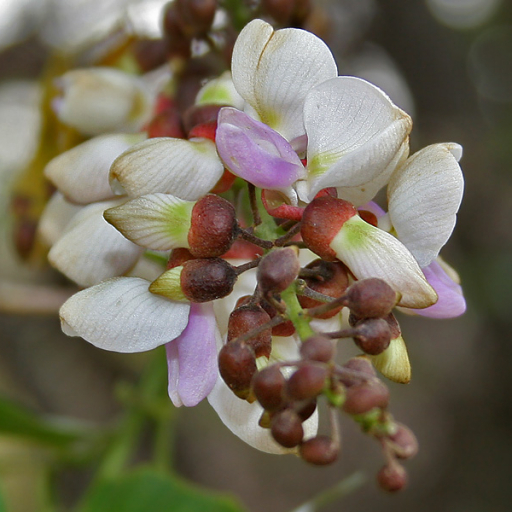
- 🌸 Pea-Like Blooms: It produces pendulous clusters of small, fragrant flowers that range from white to pale lavender or pink, looking much like miniature sweet peas.
- 🥜 Woody Pods: After flowering, the tree produces thick, flattened, and smooth seed pods that look like oversized almond shells, each containing a single, oil-rich seed.
🏡 In Your Garden
- 🌳 The Soil Builder: As a member of the legume family, this tree has a "superpower"—it fixes nitrogen in the soil through its roots, acting as a natural fertilizer for the grass and plants surrounding it.
- ☀️ Drought Warrior: It is incredibly hardy against heat and can survive long dry spells once established, making it an excellent choice for low-maintenance shade or windbreaks in coastal and tropical climates.
⚠️ Safety & Toxicity
- 🚫 Harmful if Ingested: While the oil extracted from the seeds has many traditional medicinal uses, the raw seeds, roots, and bark contain bitter compounds (like karanjin) that are toxic if eaten.
- 🐾 Pet Warning: Keep curious dogs away from the fallen seed pods. Ingesting them can cause significant gastrointestinal distress, including vomiting and lethargy.
✨ Fun Fact
The oil from Karanja seeds is so potent and energy-dense that it is currently being used as a sustainable source of biodiesel! It can literally help power tractor engines and machinery with much lower emissions than traditional fossil fuels.

Detailed Care Instructions
| Humidity | Dry |
| Lighting | Full Sun |
| Toxicity | Poisonous |
| Difficulty | Easy |
| Hibernation | Cold Period |
| Temperature | 27°C - 38°C |
| Hardiness Zones | 10 - 12 |
To grow a Pongamia pinnata plant, also known as the Indian Beech or Pongam Tree, follow these steps:
- Obtain seeds or saplings: You can either buy Pongamia pinnata seeds or saplings from a nursery or collect them from mature trees, if available in your area.
- Select a suitable location: Pongamia pinnata grows well in tropical and subtropical regions. Choose a location that receives full sun for at least 6-8 hours a day.
- Prepare the soil: Pongamia pinnata prefers well-draining soil with a pH level between 6.0 and 7.5. Add organic matter, such as compost or well-rotted manure, to improve soil fertility and drainage.
- Planting seeds or saplings:
- Seeds: Soak the seeds overnight in water before planting. Sow the soaked seeds directly in the ground at a depth of about 1 inch (2.5 cm). Water lightly after planting to ensure good seed-soil contact.
- Saplings: Dig a hole slightly larger than the root ball of the sapling. Place the sapling in the hole, making sure the top of the root ball is level with or slightly above the soil surface. Backfill the hole with soil, gently firming it around the roots. Water thoroughly after planting.
- Seeds: Soak the seeds overnight in water before planting. Sow the soaked seeds directly in the ground at a depth of about 1 inch (2.5 cm). Water lightly after planting to ensure good seed-soil contact.
- Watering: Keep the soil consistently moist but not waterlogged during the early stages of growth. Once established, Pongamia pinnata is relatively drought-tolerant and does not require frequent watering.
- Mulching: Apply a layer of organic mulch around the base of the plant to help conserve moisture, suppress weed growth, and improve overall soil health.
- Pruning and maintenance: Prune Pongamia pinnata annually to maintain its shape and remove dead or damaged branches. This will help promote healthy growth.
- Protect from pests and diseases: Pongamia pinnata is generally resistant to most pests and diseases. However, it is still important to monitor for any potential issues and take appropriate measures to control them.
- Harvesting: Pongamia pinnata produces seeds that can be harvested once they turn brown and fall from the tree. These seeds can be used to extract Pongam oil, which has various applications.
By following these steps, you can successfully grow and cultivate Pongamia pinnata. Remember to provide proper care and maintenance to ensure its healthy growth.

Place in a bright room that is sun drenched almost all day. Or directly in a south-facing window.

Watering this plant requires careful consideration of its soil drainage, humidity levels, and sunlight exposure. Before watering, it is important to check the moisture level of the soil in the plant's pot, as overwatering can lead to root rot.
When watering, it is recommended to use room temperature water and to avoid getting water on the leaves or foliage of the plant. You may choose to water the plant deeply once a week or more frequently if the soil appears dry.
It is important to note that this plant prefers soil that is well-draining, so excess water should be allowed to drain away from the pot. Additionally, avoiding water stagnation is crucial in order to prevent fungal growth.
In addition to watering, maintaining the appropriate humidity levels and ensuring adequate sunlight exposure are important factors in the growth of this plant. Proper care will lead to healthy growth and a thriving Pongamia Pinnata plant.
For optimal growth, provide the plant with a balanced fertilizer containing nitrogen, phosphorus, and potassium. Use a slow-release fertilizer at a rate of 3-4 pounds per 100 square feet. Apply fertilizer evenly around the plant and water thoroughly after application. Avoid over-fertilization as it may harm the plant. Fertilize once in the spring before new growth begins and once in the fall before the plant goes dormant.
For planting Pongamia Pinnata, you should use a well-draining soil that is rich in nutrients and organic matter. The soil should be slightly acidic to neutral, with a pH range between 5.5 and 7.5. A sandy loam soil is best for this plant, as it offers good drainage while retaining enough moisture to support healthy growth. Additionally, add a slow-release organic fertilizer to the soil at the time of planting Pongamia Pinnata. Alternatively, you can amend the soil with compost or other organic matter to improve its fertility and texture. Avoid using heavy clay soils or those that are very alkaline or acidic, as they may adversely impact the growth and health of the plant.
To propagate this plant, you will need to collect mature seeds from a healthy plant. Once you have collected the seeds, soak them in water for 24 hours to soften the outer shell. After soaking, remove the outer shell and plant the seeds in a well-draining soil mixture. Keep the soil moist but not waterlogged and place the pot or container in a shaded area. Germination will take approximately 2-4 weeks. Once the seedlings have grown to a size of 4-6 inches, they can be transplanted into larger containers or directly into the ground. Ensure that the planting site has well-draining soil and receives adequate sunlight. Water the plant regularly and provide it with fertilizer every 3-4 months during the growing season. With the right care, your Pongamia Pinnata plant will grow to become a beautiful and valuable addition to your garden or landscape.








