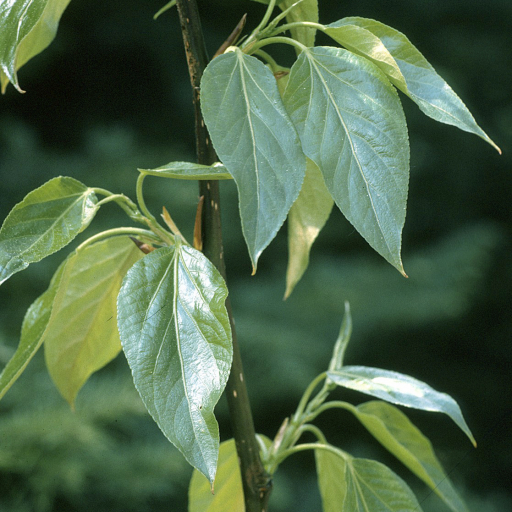
Plant Overview
Known as the "Balsam Poplar" or the source of the legendary "Balm of Gilead," this tree is the sweet-smelling giant of the North. In early spring, its sticky buds release a rich, honey-like fragrance that can perfume an entire forest even before the leaves appear. It is a hardy pioneer species, often the first to reclaim land and stabilize soil after a disturbance.
🔍 How to Identify
- 🍃 Bi-colored Leaves: Look for ovate, pointed leaves that are dark, shiny green on top but strikingly pale—almost silvery—underneath, often marked with rusty orange resin blotches.
- 🍯 Sticky Buds: The most iconic feature; large, pointed winter buds are coated in a thick, yellowish resin that is highly fragrant and incredibly sticky to the touch.
- 🌳 Bark Evolution: Younger trees sport smooth, greenish-gray bark, while older specimens develop thick, deeply furrowed gray ridges that provide deep texture.
🏡 In Your Garden
- 💧 Thirsty Roots: This tree is a "water-seeker." It thrives near riverbanks, ponds, or low-lying areas where the soil stays consistently moist. Because its roots are aggressive in their search for water, keep it far away from septic lines or home foundations.
- 🏃 Fast-Paced Growth: The Balsam Poplar grows incredibly fast to reach the sunlight. This rapid growth results in relatively soft, brittle wood; it is best planted in large open spaces where falling branches during heavy snow or wind won't cause damage.
⚠️ Safety & Toxicity
- 🌿 Safe Status: Generally considered non-toxic to humans and common household pets. In fact, the resin has a long history of use in traditional salves.
- 💊 Aspirin Connection: The bark and buds contain salicin (a precursor to aspirin). While not dangerous to touch, individuals with aspirin sensitivities should be cautious when handling the sticky resin for long periods, as it can cause mild skin irritation in rare cases.
✨ Fun Fact
Bees are huge fans of this tree! They collect the sticky resin from the buds and use it to create propolis, a "bee glue" they use to seal gaps in their hives and protect the colony from bacteria and fungi.

Detailed Care Instructions
To grow Populus Balsamifera, also known as the Balsam poplar or black cottonwood, follow these steps:
- Site selection: Choose a location that receives full sun to partial shade. Balsam poplars prefer moist soil conditions and can thrive in wet or swampy areas, but they can also tolerate well-drained soil.
- Soil preparation: Ensure the soil is fertile and well-drained. If the soil is heavy or compacted, consider incorporating organic matter, such as compost, to improve its structure and drainage.
- Propagation: Balsam poplars can be propagated through seeds or cuttings. If using seeds, collect them from mature trees in the fall, as they have a short shelf life. Stratify the seeds by placing them in a moist, cool environment for several weeks to mimic winter conditions. This process helps break seed dormancy. If using cuttings, take semi-hardwood or hardwood cuttings from healthy, young branches during late summer or early fall.
- Planting: Dig a hole that is slightly larger than the root ball if planting container-grown seedlings. Otherwise, plant seeds or cuttings directly in the prepared soil. Ensure the planting hole is deep enough to accommodate the root system. Space multiple trees at least 10-15 feet apart to allow for proper growth.
- Watering: Keep the soil consistently moist but not waterlogged, especially during the first year of growth. Balsam poplars require regular watering, especially during dry periods.
- Mulching: Apply a layer of organic mulch, such as wood chips or straw, around the base of the tree to retain moisture and suppress weed growth. Avoid piling mulch directly against the trunk, as it can promote rot.
- Pruning: Prune balsam poplars during the dormant season to remove dead, damaged, or crossing branches. This can help improve the tree's overall health and appearance.
- Fertilization: Balsam poplars typically do not require frequent fertilization. However, if growth appears stunted or leaves appear yellow, a balanced tree fertilizer can be applied following the manufacturer's instructions.
- Pest and disease control: Monitor the tree for common pests, such as aphids or caterpillars, and treat as necessary. Watch for signs of diseases such as leaf spot or cankers, which may require proper identification and treatment.
- Winter care: Balsam poplars are hardy trees, but young plants may benefit from additional protection during harsh winters. Apply a layer of mulch around the base of the tree and wrap the trunk with burlap to prevent cold injury.
Remember to check with local gardening experts or extension services for region-specific advice and to ensure that the balsam poplar is suitable for your specific climate and conditions.

Place in a bright room that is sun drenched almost all day. Or directly in a south-facing window.

To water this plant, it is important to consider its soil type and the climate it is growing in. Although it can tolerate moist soils, it does not like waterlogged soil. Therefore, it is important to ensure good drainage in its planting area. During dry periods, the plant should be watered deeply, ensuring that the water reaches the roots. It is better to water deeply and less frequently, rather than giving the plant frequent, shallow waterings. During the hot summer months, it may need twice weekly watering. However, it is important to avoid overwatering as it can cause root rot and other plant diseases. A good rule of thumb is to allow the top 2 inches of soil to dry out before watering again.
To fertilize this plant, use a slow-release nitrogen fertilizer in early spring before new growth appears. Apply the fertilizer evenly around the base of the plant, following the manufacturer's instructions for the appropriate amount. Water deeply after fertilizing to help the nutrients reach the roots. Avoid fertilizing in late summer or fall as this can stimulate new growth that may not have time to harden off before winter. Repeat this process annually to promote healthy growth and development.
The ideal soil for Populus Balsamifera plant would be a well-draining loam or sandy loam soil. The pH of the soil should be slightly acidic to neutral, ranging from 5.5-7.0. The soil should also be rich in nutrients, particularly nitrogen and potassium, as the plant has a high demand for these nutrients. Additionally, the soil should be kept consistently moist, but not waterlogged, as this can cause root rot and other issues. It is also important to avoid using heavy clay soils, as these can limit root growth and lead to poor plant health. Proper soil preparation and selection are important for ensuring the health and vitality of your Populus Balsamifera plant.
To propagate this plant, you can take softwood or hardwood cuttings. For softwood cuttings, take a 6-inch cutting from green shoots in the spring or early summer. For hardwood cuttings, take a 12-inch cutting from mature wood in the autumn or winter.
Remove all the leaves except for the top ones and dip the cut end into rooting hormone powder. Then plant the cutting into a pot with moist soil and put a plastic bag over it to create a humid environment. Keep the soil moist and place the cutting in a bright, warm spot out of direct sunlight.
After a few weeks, check for roots by gently tugging on the cutting. If there is resistance, it means the roots have started to grow. At this point, you can remove the plastic bag and allow the plant to grow. Transplant it into a larger pot or into the ground once it has established a good root system.
Common pests of the balsam poplar include Spider mites, aphids, larvae. Make a habit of checking your balsam poplar frequently for pests so that any infestations can be caught and managed early.








