Plant Overview
🌳 The Shimmering Titan of the Plains
Known widely as the Eastern Cottonwood or the "Pioneer Tree," Populus deltoides is a majestic giant that defines the riverbanks and open landscapes of North America. It is famous for its "summer snow"—the fluffy white seeds that blanket the ground in June—and its unique leaves that seem to "applaud" or shimmer in the slightest breeze. In folklore, the rustling of a Cottonwood was often said to be the tree whispering secrets of the coming weather.
🔍 How to Identify
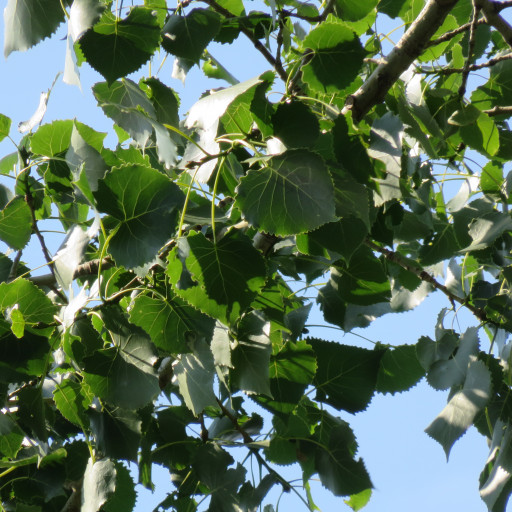
- 🍃 The Delta Shape: The leaves are famously triangular (deltoid) with a flat base and a pointed tip. The edges are lined with large, curved teeth that look like miniature saw blades.
- 🌿 Flattened Petioles: The leaf stalks are uniquely flattened rather than round. This structural quirk is what allows the leaves to pivot and quake, creating that iconic rustling sound.
- 🪵 Rugged Bark: While young trees have smooth, silvery-yellow bark, mature specimens develop deep, corky furrows and thick, ash-grey ridges that can withstand harsh elements.
🏡 In Your Garden
- 🏗️ The Space Requirement: This is not a tree for small suburban yards or tight spaces. It is one of the fastest-growing trees in North America and possesses an aggressive, shallow root system that can easily lift sidewalks or invade sewer pipes if planted too close to home.
- 💧 Thirst for Life: Naturally a "riparian" species, it thrives near water sources. Because it puts all its energy into rapid growth, its wood is relatively soft and brittle; it may drop branches during heavy wind or ice storms, so it is best enjoyed at a distance from the house.
⚠️ Safety & Toxicity
- ✅ Generally Safe: The Eastern Cottonwood is considered non-toxic to dogs, cats, and horses. It is a safe giant for a farmhouse or large acreage.
- 🤧 Allergy Alert: While not "poisonous," the male trees release significant amounts of pollen in the spring. Furthermore, the "cotton" produced by female trees can be a major nuisance for people with respiratory sensitivities or those who dislike cleaning seeds out of window screens and pool filters.
✨ Fun Fact
🍭 Natural Treat: Early pioneers and Native American tribes would often peel back the bark of young Cottonwood branches to reach the sweet, succulent inner layer (the cambium). It was used as a survival food and even as a sweet "chewing gum" for children on the trail.

Detailed Care Instructions
To grow Populus deltoides, also known as Eastern Cottonwood, follow these steps:
- Climate: Ensure that your climate is suitable for growing Eastern Cottonwood trees. They prefer a temperate climate with cool winters and hot summers.
- Site selection: Find a suitable spot with plenty of space for the tree to grow. Populus deltoides requires full sun and moist, well-drained soil. Avoid planting near structures or power lines, as they can reach heights of 60-100 feet (18-30 meters).
- Seed collection: You can collect seeds from mature Eastern Cottonwood trees in the fall when the seeds are released from the cottony substance surrounding them. Store the seeds in a cool, dry place until planting.
- Stratification: Eastern Cottonwood seeds require a period of cold stratification to break seed dormancy. To achieve this, place the seeds in a moist, sealed plastic bag and refrigerate for 30-60 days before sowing.
- Sowing seeds: Plant the stratified seeds in early spring when the soil is workable. Sow the seeds ¼ to ½ inch (6-13 mm) deep and space them about 18-24 inches (45-60 cm) apart.
- Soil preparation: Before planting, prepare the soil by loosening it with a garden fork or tiller. Mix in organic matter to improve the soil's fertility and drainage.
- Watering and care: Keep the soil consistently moist but not overly saturated. Water the seedlings regularly, especially during dry spells. Mulch the base of the tree to conserve moisture and suppress weed growth.
- Pruning: Once the tree is established and starts growing vigorously, you may need to prune it to shape it or remove dead or damaged branches. Prune during late winter or early spring before new growth begins.
- Protection from pests: Monitor the tree for any signs of pest infestation, such as aphids or caterpillars. Use organic or chemical insecticides as necessary to control pest populations.
- Patience: Growing a Populus deltoides tree from seed can take several years before it reaches maturity. Be patient and nurture the tree as it grows, and eventually, you will have a beautiful Eastern Cottonwood tree.
Remember to check with your local agricultural extension office or nursery for any specific recommendations or guidelines for growing Populus deltoides in your specific area.

Place in a bright room that is sun drenched almost all day. Or directly in a south-facing window.

Populus Deltoides is a deciduous tree that is part of the Salicaceae family. It requires regular watering, particularly during the establishment period, to ensure ample growth and vitality. When watering, it is important to give the tree deep, thorough soakings rather than light, frequent watering.
To water the Populus Deltoides tree effectively, begin by digging a trench around the base of the tree that is roughly 3-4 inches deep and 3-4 feet in diameter. This will help to contain and direct the water towards the roots. Slowly fill this trench with water, allowing the water to penetrate deeply into the soil. Repeat this process several times to ensure that the soil is fully saturated.
It is important not to allow the soil to become completely waterlogged, as this can lead to root rot and other problems. Instead, allow the soil to dry out slightly between waterings, and avoid watering during periods of heavy rain or high humidity.
When irrigating your Populus Deltoides tree, it is also important to pay attention to the specific needs of your tree. Factors such as soil type, climate, and sun exposure can all impact the amount of water your tree requires. Additionally, it is important to monitor your tree for signs of stress, such as yellowing leaves or wilting, as these can indicate that your tree is not receiving enough water. By providing regular, deep watering, you can help to ensure that your Populus Deltoides tree grows and thrives for years to come.
To fertilize this plant, use a slow-release nitrogen fertilizer in early spring before new growth appears. Apply the fertilizer evenly around the base of the plant, at a rate of one pound per inch of trunk diameter. Water the plant immediately after fertilizing to encourage nutrient absorption. Avoid fertilizing in late summer and fall, as this can lead to winter damage.
For best results when planting Populus Deltoides, it is recommended to use a specific type of soil that is well-draining and rich in nutrients. This type of soil should be able to retain moisture while also allowing excess water to drain away.
One option for this is a loamy soil that contains a mixture of sand, silt, and clay. This type of soil provides a good balance of drainage and moisture retention, which is important for Populus Deltoides to properly grow.
Another option is to mix organic matter, such as compost or peat moss, into the soil before planting. This helps to add nutrients and improve the soil structure, making it easier for the plant to grow healthy roots and absorb water and nutrients.
Regardless of the soil type used, it is important to ensure that it is well-draining and not too compacted. This will help to prevent waterlogged soil, which can lead to root rot and other problems that can harm Populus Deltoides.
Populus deltoides can be propagated through several methods, including seed propagation, stem cuttings, and root cuttings.
Seed Propagation: Collect mature seeds from the parent plant and soak them in water for 24 hours. Sow the seeds in a seed tray containing a well-draining soil mixture. Keep the soil moist, and the seeds should germinate within 2-3 weeks.
Stem Cuttings: Take a 4-6 inch cutting from an established plant. Remove the lower leaves and dip the cut end into rooting hormone. Insert the cutting into a well-draining potting soil mix and water it thoroughly. Keep the soil moist and in indirect sunlight until roots develop in 2-3 weeks.
Root Cuttings: Take a 1-2 inch section of the root from an established plant, and plant it in a potting mixture. Keep the soil moist and in indirect sunlight until roots develop.
After propagation, transplant the new plants into larger pots or outdoor locations with fertile soil and regular watering for optimal growth.
Common pests of the eastern cottonwood include Spider mites, aphids, larvae. Make a habit of checking your eastern cottonwood frequently for pests so that any infestations can be caught and managed early.








