Plant Overview
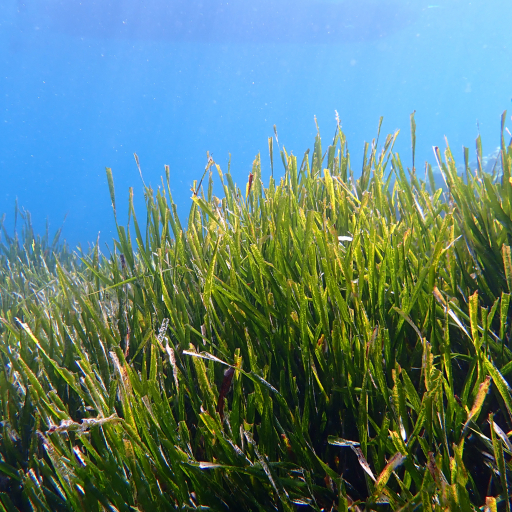
Known as "Neptune Grass," Posidonia oceanica is not a seaweed, but a true flowering plant that returned to the sea millions of years ago. It forms vast, emerald-green underwater meadows that act as the "Lungs of the Mediterranean." These ancient meadows are so vital that they are often referred to as the foundation of the entire Mediterranean ecosystem, providing oxygen, food, and shelter to thousands of marine species.
🔍 How to Identify
- 🍃 The Leaves: Long, ribbon-like green straps that can grow up to 3-5 feet (1.5 meters) long. They grow in fan-shaped bundles from a central base.
- 🎾 Sea Balls (Egagropili): On Mediterranean beaches, you will often find fuzzy, brown, egg-shaped balls. These are actually the fibrous remains of dead Posidonia leaves, rolled into shapes by the action of the waves.
- 🌳 The Mattes: Under the sand, the plant develops thick, woody rhizomes (underground stems) that build up over centuries into massive, reef-like structures called "mattes."
🌊 Habitat & Ecology
- 🐟 A Marine Nursery: These meadows are the "cradle" of the sea, serving as a safe haven where juvenile fish, seahorses, and crustaceans can hide from predators and find food.
- 🌍 Carbon Champion: Posidonia is an incredible carbon sink. It can store significantly more carbon per square kilometer than a tropical rainforest, making it a critical ally in the fight against climate change.
- 🛡️ Coastal Protector: The dense leaves slow down wave energy, while the massive root systems anchor the seafloor, preventing beach erosion and keeping the coastal waters crystal clear.
⚠️ Safety & Toxicity
- ✅ Status: Completely non-toxic. It poses no threat to swimmers, divers, or pets that might sniff the "sea balls" on the beach.
- 🚫 Environmental Sensitivity: While it isn't "dangerous" to you, humans are dangerous to it. Because it grows only about one centimeter per year, damage from boat anchors or pollution can take centuries to repair. In many regions, it is strictly illegal to anchor in Posidonia meadows.
✨ Fun Fact
Scientists discovered a patch of Posidonia oceanica near the Balearic Islands that is estimated to be over 100,000 years old. This makes it one of the oldest living organisms currently known to science!

Detailed Care Instructions
Growing Posidonia oceanica, also known as Neptune grass or Mediterranean seagrass, may pose a challenge as it is a marine plant and highly specialized for its natural habitat. However, if you have access to the necessary resources, you can attempt to grow it following these steps:
- Obtain a water tank or large aquarium: Posidonia oceanica requires a saltwater environment to grow. Set up a tank or aquarium with enough space to accommodate the plant and provide proper water circulation.
- Create the right water conditions: Fill the tank with saltwater, preferably from an ocean or sea, as tap water contains chemicals that may harm the plant. Maintain a specific gravity of around 1.024-1.027, which is the salt concentration preferred by Posidonia oceanica.
- Provide appropriate lighting: Posidonia oceanica requires ample light to carry out photosynthesis. Use strong aquarium lighting or position the tank near a sunny window, ensuring the plant receives 8-12 hours of light each day.
- Add a substrate: Posidonia oceanica typically grows in sandy or muddy areas. You can create a suitable substrate by adding a layer of sand or a mixture of sand and mud at the bottom of the tank.
- Mimic sea currents: Posidonia oceanica requires gentle water movement for optimal growth. Create a gentle current in the tank using a wave-maker or a similar device. This will help distribute nutrients and oxygen throughout the tank.
- Maintain water temperature: Posidonia oceanica thrives in water temperatures between 18-26°C (64-79°F). Use an aquarium heater and thermometer to maintain the water within this range.
- Monitor and maintain water quality: Posidonia oceanica is sensitive to water pollution. Regularly test the water for ammonia, nitrate, and nitrite levels using appropriate test kits. Perform partial water changes as needed to maintain optimal water quality.
- Consider supplemental nutrition: Posidonia oceanica derives nutrients primarily from the ocean, so replicating these conditions may be challenging. You may consider adding marine nutrients or special fertilizers designed for marine plants, but be cautious not to over-fertilize as it can harm the plant.
- Patiently observe and maintain: Growing Posidonia oceanica can be a long process and may require patience. Regularly observe the plant for signs of growth, health, and any potential issues. Adjust lighting, water movement, and other factors if needed to maintain optimal conditions.
Note: Growing Posidonia oceanica in a home aquarium is not commonly practiced due to the complexity and specialized requirements of marine plants. Consider checking with local marine research institutions or organizations that specialize in marine plant conservation for guidance and appropriate permits.

Place in a bright room that is sun drenched almost all day. Or directly in a south-facing window.

Posidonia Oceanica is an aquatic plant that grows in the ocean. To water this plant, you will need to be in the water with it. Some common methods used to water this plant include gently pouring water over the plant or using a watering can or hose. You should be careful not to disturb the plant or its surrounding environment while watering. It is essential to provide the plant with the right amount of water, as too much or too little water can harm it. Typically, this plant thrives in clean and clear seawater with a stable salinity level. Therefore, you may need to monitor the water quality regularly to ensure its optimal growth and health.
To fertilize this plant, you should apply a slow-release fertilizer that is specifically designed for aquatic plants. It is important to apply the fertilizer according to the manufacturer's instructions, as too much fertilizer can harm the plant. Additionally, it is recommended to fertilize the plant during the growing season, which typically lasts from spring to fall. Be mindful not to over-fertilize, as this can lead to increased algae growth and water quality issues.
The ideal soil for Posidonia Oceanica plant should have a neutral to alkaline pH, be well-draining, and have a good amount of organic matter. It should also contain essential nutrients such as nitrogen, phosphorus, and potassium, as well as trace minerals. The soil should be free from contaminants such as heavy metals, pesticides, and other pollutants that can harm the plant. The texture of the soil should be loamy or sandy, with good water holding capacity to ensure adequate moisture for the roots. Additionally, the soil should have good aeration to promote healthy root development and prevent waterlogging. Clays soils are not suitable as they do not drain easily, whereas rocky soils can be used if they have enough organic matter.
Posidonia Oceanica is a type of plant that grows in the ocean. To propagate this plant, you will need to collect the seeds or plant cuttings. The seeds or cuttings can be planted in a container with sandy soil and seawater. They should be kept in a warm, sunny location and watered daily. After a few weeks, the seeds or cuttings should begin to sprout. Once they have developed roots, they can be transplanted into a larger container or directly into the ocean. It is important to monitor the plants regularly and provide them with the proper nutrients and sunlight to ensure they thrive.








