Plant Overview
Often called the Large-leaf Pondweed or affectionately known by anglers as "Muskie Weed," this aquatic perennial is a true underwater architect. Native to the clear lakes and slow-moving rivers of North America, it is famous for creating dense, submerged "forests." These lush patches are vital to freshwater ecosystems, acting as both a pantry and a fortress for various fish and aquatic life.
🔍 How to Identify
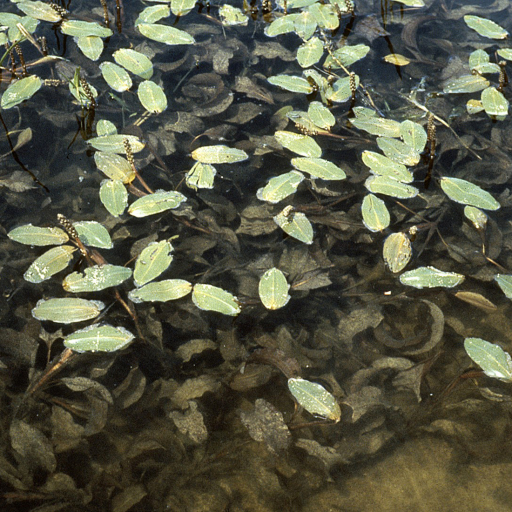
- 🍃 Submerged Leaves: These are the plant's most striking feature—unusually large, broad, and "wavy" (undulate). They are often translucent and brownish-green, looking like ruffled ribbons underwater.
- 🛶 Floating Leaves: When the plant reaches the surface, it grows leathery, oval leaves that sit flat on the water. These are much smaller and tougher than the delicate leaves hidden below.
- 🌾 Flower Spikes: In mid-summer, the plant sends up thick, brownish-green cylindrical spikes that emerge just an inch or two above the surface to release pollen into the wind.
🏡 In Your Garden & Pond
- 💧 Water Clarity Specialist: This pondweed is a bit of a "snob" regarding water quality; it prefers clear, cool, and relatively deep water. If your pond is too murky, the large submerged leaves can’t get the light they need to survive.
- 🐟 The Ultimate Fish Nursery: If you are managing a natural pond, this is one of the best species for biodiversity. It provides the perfect shaded "ambush" spots for Large-mouth Bass and Muskies, while the broad leaves offer a safe place for snails and insects to thrive.
- 🌱 Stable Foundations: It spreads through thick, creeping rhizomes (underground stems). Because it anchors itself deeply into the sediment, it is excellent at preventing bottom-soil erosion in moving water.
⚠️ Safety & Toxicity
- ✅ Non-Toxic: Potamogeton amplifolius is completely safe and non-toxic for humans, pets, and livestock.
- 🦆 A Wildlife Feast: It is a high-value food source; many species of ducks and turtles rely on its protein-rich seeds and tubers to fuel their migrations.
- 🚤 Swimming Safety: While not toxic, its dense growth in shallow areas can be a bit "grabby" for swimmers or boat propellers—always swim in cleared areas if the growth is thick.
✨ Fun Fact
The Large-leaf Pondweed is a master of "Heterophylly," which means it grows two completely different types of leaves on the same stem. It uses thin, ruffled leaves underwater to maximize gas exchange, and thick, waxy leaves on top to withstand the intense drying power of the sun.

Detailed Care Instructions
To grow Potamogeton amplifolius, also known as large-leaf pondweed, you can follow these steps:
- Obtain seeds or live plants: You can purchase Potamogeton amplifolius seeds or live plants from a nursery or a specialized aquatic plant supplier.
- Choose the right container or pond: Potamogeton amplifolius is an aquatic plant, so it needs a suitable container or a pond to grow in. Ensure that the container or pond is large enough to accommodate the plant and has a depth of at least 12-24 inches (30-60 cm).
- Prepare the container or pond: Clean the container or pond thoroughly to remove any dirt or debris. Fill it with clean water or use pond water if available.
- Plant the seeds or live plants: If using seeds, scatter them across the water surface evenly. Provide some gentle agitation to keep them floating. If using live plants, gently place them in the water, making sure they are fully submerged but not buried too deep.
- Provide adequate sunlight: Potamogeton amplifolius requires moderate to full sunlight to grow well. Ensure that the container or pond receives at least 6-8 hours of direct sunlight each day. If the light is insufficient, you can consider using artificial grow lights.
- Maintain water temperature: Potamogeton amplifolius prefers water temperatures between 60°F to 75°F (15°C to 24°C). Keep the water temperature within this range for optimal growth.
- Provide good water quality: The plant will thrive in clean, healthy water. Ensure that the water is free from pollutants, excess nutrients, and algal blooms. Regular water testing and appropriate water treatments can help maintain good water quality.
- Fertilize if needed: If the plant shows signs of slow growth or nutrient deficiency, you can consider using aquatic plant fertilizer tablets or liquid fertilizers specifically formulated for aquatic plants. Follow the instructions on the fertilizer packaging for dosage and application methods.
- Prune when necessary: Potamogeton amplifolius may develop excessive growth or spread rapidly. Consider pruning or thinning the plant periodically to maintain its size and prevent overcrowding.
- Monitor and control pests: Check regularly for signs of pests or diseases. If you notice any issues, consult with a local plant expert or use appropriate pest control methods.
- Winter care: In colder regions, Potamogeton amplifolius might go dormant during winter. If growing in a container, move it to a frost-free location or provide winter protection to prevent freezing. In a pond, ensure that the water is deep enough to prevent freezing to the plant's growing point.
By following these steps and providing the appropriate care, you should be able to successfully grow and enjoy your Potamogeton amplifolius plant.

Place in a bright room that is sun drenched almost all day. Or directly in a south-facing window.

To water this plant, you should ensure that its roots remain consistently moist. This can be achieved by watering it once or twice a week, depending on the weather conditions and the soil type. It is important to avoid over-watering as this can cause the plant to rot. When watering, aim for the base of the plant rather than the leaves to prevent any fungal growth. Additionally, it is helpful to avoid getting the foliage wet when watering to prevent leaf damage. Overall, providing consistent and sufficient moisture will help the plant thrive.
- Choose a fertilizing product that contains a balanced nutrient composition, including nitrogen, phosphorous, and potassium.
- Dilute the fertilizer in a watering can according to the manufacturer's instructions, and avoid over-fertilizing the plant, as it can damage the roots.
- Apply the fertilizer solution to the soil around the base of the plant, making sure to distribute it evenly and avoid pouring it onto the leaves or stems.
- Water the plant immediately after fertilizing to help the nutrients penetrate the soil and reach the roots.
- Repeat the fertilizing process every four to six weeks during the growing season, and reduce or stop fertilizing during the dormant period.
The ideal soil for Potamogeton Amplifolius plant should have a pH level of about 6.5 to 8.5 and should be rich in minerals such as calcium, magnesium, and potassium. The soil should be well-draining to prevent waterlogging which can cause root rot. It is also beneficial to add organic matter such as peat moss or compost to help improve soil structure and provide nutrients to the plant. The soil should be kept moist but not too wet, as this plant prefers to grow in shallow water. Adequate sunlight should also be provided for healthy growth.
There are multiple ways to propagate this plant, depending on the available resources and desired outcomes. Here are some general methods:
- Stem cuttings: Select a healthy stem that still has some leaves attached. Cut it at an angle with a sharp, sterilized knife or scissors. Remove the lower half of the leaves, leaving only a few at the top. Dip the cut end in rooting hormone powder (optional) and plant it in a pot or tray filled with moist soil or water. Place it in a warm, bright spot (but not direct sun) and keep the soil or water consistently moist. Within a few weeks, new roots and leaves should form.
- Division: If you have an established plant with multiple stems or clumps, you can gently dig it up and separate the sections. Use a clean spade or fork to avoid damaging the roots. Try to keep each section intact, with some roots and leaves attached. Plant each division in a separate container or spot in the garden, using fertile, well-draining soil and keeping it moist until it establishes.
- Seed sowing: Collect mature seeds from the plant when they turn brown and start to fall off naturally. Clean and dry them, then sow them directly in the soil or in a tray filled with seed-starting mix. Cover them with a thin layer of soil or mix, and keep them moist and warm. Seed germination may vary, but generally, the plant should sprout within 2-4 weeks.
Note: It's essential to research and follow the specific requirements and precautions for propagating any plant, including Potamogeton Amplifolius. This plant may have unique characteristics, such as being an aquatic or semi-aquatic species, that require additional care or permits.








