Plant Overview
Often called the Grassy Pondweed, this aquatic perennial is a silent architect of underwater worlds. Found throughout the northern hemisphere, it is a "neighbor of the river" (from the Greek potamos and geiton) that creates intricate, swaying meadows beneath the surface. It is famous among botanists for its "shape-shifting" ability, as its leaves look entirely different depending on whether they are submerged or floating.
🔍 How to Identify
- 🍃 Dual Foliage: It features two types of leaves. Submerged leaves are narrow, grassy, and translucent, while floating leaves (if present) are leathery, oval-shaped, and dark green.
- 🎋 Zig-Zag Stems: The stems are highly branched and often grow in a slightly "zig-zag" pattern as they reach toward the water's surface.
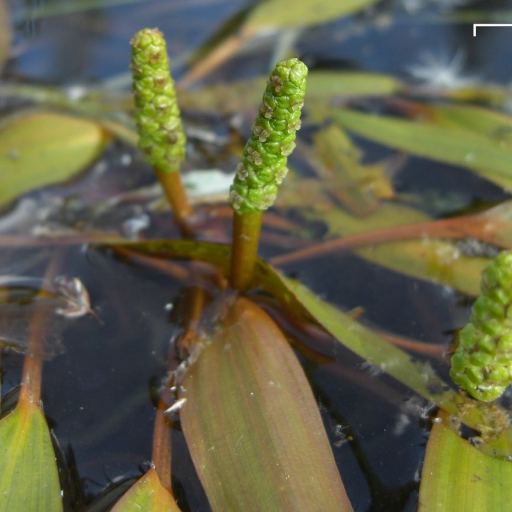
- 🌾 Spiky Blooms: In summer, it produces small, brownish-green flower spikes that poke just above the water line like tiny submerged towers.
🏡 In Your Garden & Pond
- 💧 Water Quality Indicator: This plant thrives in clean, oxygenated, and shallow waters. Its presence is often a sign of a healthy aquatic ecosystem with low pollution.
- 🐟 The Nursery Effect: In a garden pond, it acts as a vital sanctuary. Its dense, branching stems provide the perfect hiding spot for fish fry and tadpoles seeking refuge from predators.
- 🌱 Substrate Stability: It anchors itself with a creeping rhizome system. Because these roots are delicate, it hates being moved once established, so choose its permanent spot in the pond muck carefully.
⚠️ Safety & Toxicity
- ✅ Non-Toxic: Grassy Pondweed is generally considered safe and non-toxic for humans, dogs, and cats.
- 🦆 Wildlife Buffet: While safe for pets, it is a high-energy food source for waterfowl. Ducks and geese will frequently dive to feast on the nutrient-dense seeds and starchy rhizomes.
✨ Fun Fact
The Grassy Pondweed is a master of disguise. Because it can change its leaf shape based on the water's depth and current speed, it was historically confused for several different species before scientists realized it was just one very adaptable plant!

Detailed Care Instructions
To successfully grow Potamogeton gramineus (also known as the grass-leaved pondweed), follow these steps:
- Choose the right location: Potamogeton gramineus prefers full sun to partial shade. Ensure that the spot you choose receives at least 6 hours of direct sunlight each day.
- Prepare the planting area: If you are growing the plant in a pond or water garden, make sure the water depth is suitable. Potamogeton gramineus prefers water depths of 6 inches to 3 feet. Clear the area of any debris or competing plants.
- Purchase or collect seeds/rhizomes: Potamogeton gramineus can be propagated from seeds or rhizomes. Seeds can be obtained from online retailers or specialized nurseries. Rhizomes can be collected from mature plants or bought from aquatic plant suppliers.
- Sow seeds or plant rhizomes: If using seeds, scatter them over the planting area or press them into the soil gently. If using rhizomes, bury them approximately 1 inch deep in the soil or substrate.
- Maintain water conditions: Ensure that the water temperature remains between 18-25°C (64-77°F). Regularly test the pH level and maintain it between 6.5-8.0. Additionally, make sure that the water is free from pollutants and chemicals.
- Monitor water depth: Potamogeton gramineus requires a specific water depth range. If the water level drops or rises, adjust it accordingly to maintain the preferred depth.
- Control weeds and algae: Regularly remove any competing plants, algae, or debris from the planting area to prevent them from overshadowing or choking the Potamogeton gramineus.
- Provide fertilizer if needed: Potamogeton gramineus usually has low nutrient requirements. However, if the plant shows signs of nutrient deficiency, you can provide a slow-release aquatic plant fertilizer according to the manufacturer's instructions.
- Prune if necessary: If the Potamogeton gramineus becomes overgrown or tangled, you can trim it back to maintain a healthier and neater appearance.
- Monitor and maintain: Continuously monitor the plant's growth and condition. If any issues arise, such as pests or diseases, take appropriate steps to address them.
Remember to always research specific care requirements and consult with experts or specialized sources for detailed information on growing specific plants.

Place in a bright room that is sun drenched almost all day. Or directly in a south-facing window.

Potamogeton Gramineus is a submerged aquatic plant that requires regular watering to stay healthy. To water this plant, it is important to keep the water level in the aquatic environment at a consistent height. This can be achieved by periodically increasing or decreasing the water level as needed based on the plant's growth and water consumption.
Watering this plant requires regular maintenance and monitoring to ensure that the water quality and nutrient levels are adequate. The water should be clear and free of debris and pollutants, and the plant should receive adequate sunlight to support its growth and development.
Additionally, it is important to provide the right nutrient balance for Potamogeton Gramineus. This can be achieved through the use of natural or artificial sources of fertilizer, depending on the individual plant's needs and the availability of resources.
Overall, consistent watering and maintenance are essential for the successful growth and development of Potamogeton Gramineus. By providing the right conditions and care, this plant can thrive and contribute to a healthy aquatic ecosystem.
To fertilize this aquatic plant, use a slow-release fertilizer high in nitrogen and phosphorus. Apply the fertilizer once a month during the growing season, starting in late spring. Be careful not to over-fertilize, as this can cause algae blooms and harm the plant. It is also important to ensure that the fertilizer reaches the roots of the plant, either by placing pellets directly in the substrate or by dissolving them in water and pouring the solution into the plant's container.
To grow this plant successfully, it is recommended to use a soil that is rich in nutrients and organic matter. The pH of the soil should be slightly acidic, between 6.5 to 7.5. It is important that the soil is well-draining to prevent waterlogging and ensure adequate oxygenation of the roots. Additionally, the soil should be kept consistently moist, but not waterlogged, as the plant requires a lot of water to thrive. A good quality aquatic plant fertilizer can be added to the soil to provide additional nutrients for the plant. It is also recommended to use a substrate, such as aquarium gravel or sand, to anchor the plant in the soil and prevent it from floating to the surface of the water.
Propagation of this aquatic plant can be done through various methods. One way is through the collection of mature seeds. The seeds can be collected when they have turned brown and have fallen off naturally. These seeds can then be dried, stored, and planted in suitable aquatic conditions.
Another way to propagate this plant is through vegetative propagation. This can be done by taking cuttings from the mature plant and planting them in the substrate. The cuttings should be planted at a depth that allows at least one node to be submerged in water.
Division is also another method of propagation where an established plant can be divided into smaller plants. This is done by separating the rhizomes or runners and planting them in new locations.
To promote successful propagation, ensure that the substrate is rich in nutrients and the water quality is optimal. Provide adequate lighting and avoid disturbing the plants during the propagation process. With the right conditions, Potamogeton Gramineus can be easily propagated and grown.








