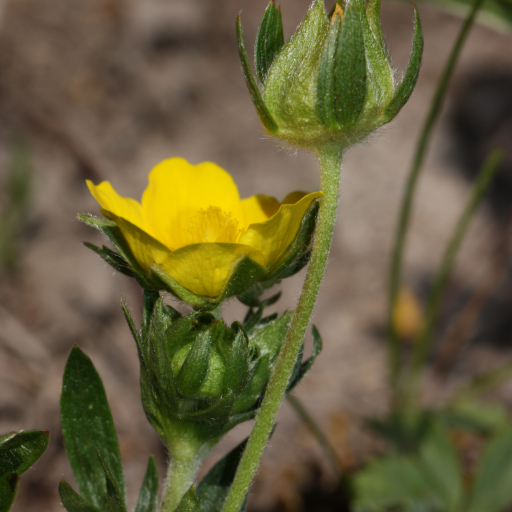
Plant Overview
Drummond's Cinquefoil is a hardy alpine beauty often found dancing in the sun-drenched subalpine meadows of Western North America. Named after the intrepid Scottish botanist Thomas Drummond, this plant is a favorite for rock gardens because of its "shimmering" silvery foliage and cheerful, buttery-yellow blooms. It is a tough survivor that brings the rugged spirit of the high mountains into a managed landscape.
🔍 How to Identify
- 🌼 The Flowers: Look for five bright yellow, heart-shaped petals that form a cup-like shape, often featuring a slightly darker golden center.
- 🌿 The Foliage: The leaves are the showstopper; they are grayish-green and divided into 5 to 11 toothy leaflets. They often appear "frosted" due to a layer of fine, silky white hairs.
- 🌱 Growth Habit: It typically grows in low, mounding clumps. While the leaves stay close to the ground, the flower stalks rise elegantly above the foliage to catch the breeze.
🏡 In Your Garden
- 🏔️ Mountain Mimicry: To thrive, this plant needs "lean" soil. It prefers gravelly or sandy mixes that mimic its native mountain home. If the soil is too rich or over-fertilized, the plant may become "leggy" and lose its compact, tidy shape.
- ☀️ Sun Seeker: This is not a plant for the shade. It craves full sun to maintain its silvery leaf color and to produce a heavy flush of flowers throughout the summer months.
- 💧 Drought Resilience: Once its root system is established, Drummond's Cinquefoil is remarkably water-wise. It is an excellent choice for xeriscaping or slopes where water runoff makes it difficult for thirstier plants to survive.
⚠️ Safety & Toxicity
- 🛡️ Non-Toxic Status: Potentilla drummondii is generally considered non-toxic to humans, dogs, and cats. It is a "worry-free" addition to a family garden.
- 🧤 Skin Sensitivity: While not poisonous, the fine, silky hairs on the leaves can occasionally cause very mild skin irritation for sensitive individuals. Wearing gloves during heavy pruning is a simple precaution.
✨ Fun Fact
The genus name Potentilla comes from the Latin word potens, meaning "powerful." This refers to the potent medicinal properties historical herbalists believed the plant possessed, often using it to treat everything from toothaches to digestive issues.

Detailed Care Instructions
To grow Potentilla Drummondii (Drummond's Cinquefoil), follow these steps:
- Find a suitable location: Potentilla Drummondii prefers full sun or partial shade. Ensure that the soil is well-drained.
- Soil preparation: Prepare the soil by loosening it and removing any weeds or debris. Amend the soil with organic matter, such as compost, to improve drainage and nutrient content.
- Sowing seeds: You can grow Potentilla Drummondii from seeds. Sow the seeds directly into the prepared soil in either spring or fall. Scatter the seeds evenly over the soil surface and lightly press them into the soil. Do not cover the seeds with additional soil, as they require light for germination.
- Watering: After sowing, water the area gently to keep the soil moist. Water regularly, but avoid overwatering as it can cause root rot.
- Maintenance: Remove any weeds that appear around the seedlings to ensure they have adequate space and nutrients. Mulching around the plants can help suppress weeds and retain moisture.
- Pruning: Potentilla Drummondii does not require extensive pruning. However, you can trim back the stems in late winter or early spring to encourage bushier growth.
- Fertilization: Potentilla Drummondii is generally low-maintenance and does not require frequent fertilization. However, you can apply a balanced, slow-release fertilizer once a year during the growing season to promote healthy growth.
- Pests and diseases: Drummond's Cinquefoil is relatively resistant to pests and diseases. However, keep an eye out for common garden pests like aphids, spider mites, or leafhoppers. Treat any infestations promptly using organic insecticidal soaps or other appropriate methods.
- Propagation: You can propagate Potentilla Drummondii by dividing mature plants or by taking stem cuttings. Division can be done in early spring or fall, while stem cuttings can be taken in early summer.
By following these steps, you can successfully grow Potentilla Drummondii and enjoy its beautiful yellow flowers throughout the growing season.
Potentilla Drummondii is best watered regularly and deeply, providing adequate moisture to the roots without saturating the soil. This plant prefers moist, well-drained soils and should not be allowed to dry out completely between watering. When watering, it is important to avoid getting water on the leaves and flowers, as this can encourage disease. The best method for watering Potentilla Drummondii is to use a watering can or hose with a gentle spray nozzle, applying the water directly to the soil around the base of the plant. Watering should be adjusted based on weather conditions and the needs of the plant, with more frequent watering during hot, dry periods and less frequent watering during cooler, wetter periods.
Begin fertilizing your Potentilla Drummondii plant in early spring, using a balanced fertilizer such as a 10-10-10 formula. Apply the fertilizer according to the directions on the package, being careful not to over-fertilize, as this can lead to negative effects such as root burn or stunted growth. As the plant grows, continue to fertilize it every four to six weeks during the growing season, tapering off in late summer. Water the plant thoroughly after fertilizing to ensure the nutrients penetrate deeply into the soil.
For Potentilla Drummondii plants, it is recommended to use well-draining soil that is rich in organic matter. The soil should have a pH range of 5.0 to 7.5. The plant prefers loamy, sandy loam or gravelly soil that is moderately fertile and moisture-retentive. The soil should not be waterlogged, as this can lead to root rot and other diseases. Potentilla Drummondii plants can tolerate both alkaline and acidic soils but cannot tolerate heavy clay soil. An ideal soil mix for Potentilla Drummondii plants should include a mix of perlite or sand to improve drainage, along with peat moss, compost or leaf mold to improve water retention and soil structure. Before planting, it is important to ensure that the soil is free of weeds, stones, and other debris that can hinder plant growth and development. Proper soil preparation is essential for healthy and vigorous Potentilla Drummondii plant growth.
Potentilla Drummondii can be easily propagated by taking stem cuttings. The best time to take cuttings is during the active growing season, around spring and early summer. Select a healthy and disease-free stem with a length of about 4-6 inches.
Using a clean and sharp pruner, cut the stem from the parent plant at an angle just below a node or leaf. Remove the lower leaves and any flowers or buds to focus the plant’s energy on root growth.
Prepare a clean container with a mixture of equal parts sand and perlite or a good quality potting soil. Moisten the rooting medium but don't make it too wet, as the cutting may rot.
Make a hole in the rooting medium with a pencil or similar tool, and insert the cutting stem gently. Ensure that at least one node or leaf is covered by the medium. Firmly press down the medium around the cutting stem to hold it in place.
Cover the container with a clear plastic bag to create a greenhouse effect, and keep it in a warm and bright location that gets filtered or diffused light. Avoid direct sunlight as it may cause overheating and plant stress.
Mist the cutting daily with water to keep the rooting medium moist but not waterlogged. After a few weeks, gently tug on the cutting to check for resistibility, meaning that it has rooted. When it has anchored, remove the plastic bag and continue to care for the new plant as you would an adult plant.
Potentilla Drummondii is a hardy and adaptable plant that can thrive in a variety of growing conditions, provided it receives the right amount of sunlight, water, and nutrients. With a bit of patience and care, your propagated new plant will reward you with its beautiful flowers.








