Plant Overview
Known for its soft, velvety gray leaves, Potentilla incana—commonly called the Gray Cinquefoil—is a resilient survivor of dry, rocky landscapes. This charming perennial looks as though a fine dusting of silver has settled across the ground, punctuated by cheerful, sunny yellow blooms. It is a favorite for "wild" aesthetics and rock gardens where only the toughest plants can thrive.
🔍 How to Identify
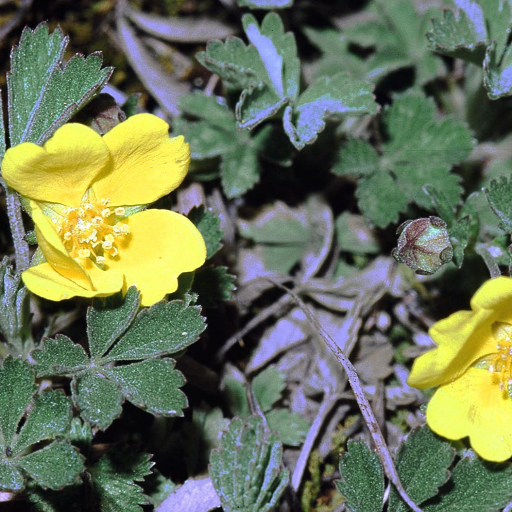
- 🌫️ The Foliage: The leaves are the standout feature, appearing grayish-green or silvery due to a dense coating of tiny, star-shaped hairs (tomentum).
- 🌼 The Flowers: Classic "Cinquefoil" blooms with five heart-shaped, bright yellow petals surrounding a cluster of darker yellow stamens.
- 🌱 The Habit: It forms low, prostrate cushions or mats that hug the earth, rarely growing taller than 2 to 4 inches.
🏡 In Your Garden
- ☀️ Sun & Drainage: This plant is a sun-worshipper. It requires sharp drainage and thrives in sandy or gravelly soils where other plants might wither; if kept in soggy soil, its silver "coat" may suffer from rot.
- 🧗 Rockery Specialist: Because of its creeping nature, it is perfect for tucking into the crevices of stone walls or as a groundcover in xeric (water-wise) landscaping.
- 🦋 Pollinator Magnet: Despite its small stature, the bright yellow flowers provide an early-season nectar source for small solitary bees and hoverflies.
⚠️ Safety & Toxicity
- ✅ General Safety: Potentilla incana is generally considered non-toxic to humans and common household pets like dogs and cats.
- 🧤 Skin Sensitivity: While not poisonous, the fine hairs that give the plant its "hoary" look can occasionally cause mild skin irritation for people with very sensitive skin if handled extensively without gloves.
✨ Fun Fact
The name Potentilla translates to "little powerful one" in Latin. This refers to the historical belief that these small, unassuming plants held potent medicinal properties, particularly for cooling fevers and soothing inflammation.

Detailed Care Instructions

Place in a bright room that is sun drenched almost all day. Or directly in a south-facing window.

Some plants require more regular watering than others, which should be done every few days. It's critical to maintain the soil moist all of the time. The water requirements of the same plant placed in pots with varying sizes will differ. Because the water in the smaller pot evaporates faster than the water in the larger pot, it will require more watering. Regardless of pot size, the surface should constantly be maintained moist.








