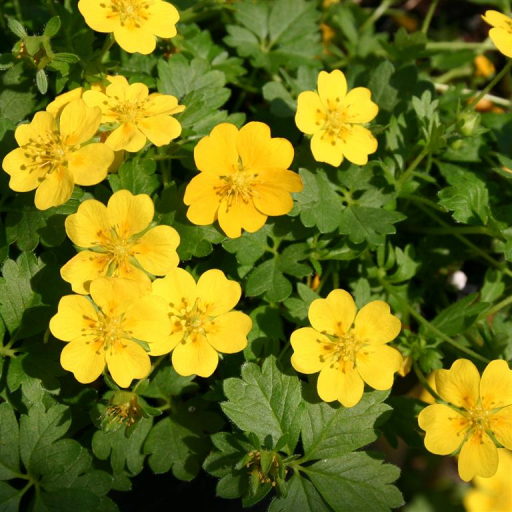
Plant Overview
Often called the Spring Cinquefoil or Golden Cinquefoil, this charming perennial is one of the first signs that winter is finally losing its grip. Its name comes from the French "cinque feuilles," meaning "five leaves," referring to its hand-like foliage. It creates a low-growing, golden carpet that has been a favorite in European rock gardens for centuries.
🔍 How to Identify
- 🌼 The Flowers: Bright, buttery-yellow blooms with five distinct petals. They look remarkably like tiny wild strawberries or buttercups, usually appearing in clusters just above the foliage.
- 🍃 The Foliage: Rich green leaves that are "palmate," meaning they spread out like fingers from a palm. Each leaf typically has five to seven leaflets with jagged, serrated edges.
- 🌱 Growth Habit: A prostrate, mat-forming plant. It spreads via creeping stems (runners) that stay very close to the earth, rarely growing taller than 4 inches.
🏡 In Your Garden
- 🧱 The Perfect Groundcover: Because it is so low-profile and tough, it is an excellent choice for filling gaps between stepping stones or cascading over dry stone walls where other plants might struggle.
- ☀️ Sun Seeker: While it isn't picky about soil quality, it demands sunlight. In too much shade, the "golden carpet" effect thins out, and the plant may refuse to bloom.
- 💧 Drought Resilience: Once established, it is incredibly "set and forget." It has a deep taproot that helps it survive dry spells, making it a sustainable choice for water-conscious gardeners.
⚠️ Safety & Toxicity
- ✅ Safe for All: Potentilla verna is generally considered non-toxic to humans, dogs, cats, and horses.
- 🧤 Mild Sensitivity: While safe to touch, some sensitive gardeners might experience very mild skin irritation if handling large quantities of the fuzzy stems without gloves.
✨ Fun Fact
The genus name Potentilla is derived from the Latin word potens, meaning "powerful." This refers to the plant's long history in herbal medicine, where it was once believed that these "powerful" little leaves could cure everything from fevers to "sorcery-induced" ailments.

Detailed Care Instructions
To grow Potentilla verna (spring cinquefoil) successfully, follow these steps:
- Prepare the soil: Choose a well-draining location with full to partial sunlight. The soil should be fertile, moist, and have a slightly acidic to neutral pH.
- Propagation: Potentilla verna can be grown from seeds, divisions, or cuttings. If growing from seeds, sow them in trays or pots filled with moist seed-starting mix. Cover the seeds lightly and keep them moist until germination. If using divisions or cuttings, take them from an established plant in early spring or fall.
- Transplantation: Once the seedlings or divisions have developed a few sets of true leaves or roots, transplant them to the desired location in the garden. Space them around 6-8 inches apart.
- Watering: Potentilla verna prefers moderate watering. Keep the soil consistently moist but not soggy. Water deeply whenever the top inch of soil starts to dry out.
- Mulching: Apply a layer of organic mulch, such as shredded bark or straw, around the plants. This helps conserve moisture, suppress weeds, and regulate soil temperature.
- Fertilization: Potentilla verna generally doesn't require heavy fertilization. However, you can fertilize once or twice a year with a general-purpose balanced fertilizer, following the package instructions.
- Pruning: Prune Potentilla verna after flowering to maintain a neat and compact shape. Remove any dead or damaged stems and trim back any straggly growth. This will also promote better blooming in the following seasons.
- Pests and diseases: Potentilla verna is generally resistant to pests and diseases. However, keep an eye out for aphids, spider mites, or leaf spot, and treat accordingly if necessary.
- Winter care: Potentilla verna is hardy and can tolerate cold winters. Provide a layer of mulch around the plants in late fall to protect the roots from freezing temperatures.
With proper care and attention, your Potentilla verna plants should thrive and produce beautiful flowers in the spring.

Place in a bright room that is sun drenched almost all day. Or directly in a south-facing window.

Potentilla Verna is a type of plant that requires frequent watering to thrive. The most important thing to keep in mind when watering this plant is to provide consistent moisture without allowing the soil to become waterlogged.
To water Potentilla Verna, start by checking the soil moisture level with your finger or with a moisture meter. If the soil feels dry to the touch, it is time to water the plant.
Use a watering can or a hose with a gentle spray nozzle to water the plant. Be sure to apply water to the base of the plant, avoiding wetting the leaves as this can promote disease and pest problems.
Water the plant until the soil feels moist but not waterlogged. If excess water accumulates in the saucer or drainage tray, be sure to empty it out to prevent root rot.
During hot, dry weather, you may need to water Potentilla Verna more frequently, possibly every day or every other day. However, during cooler, wetter weather, you can reduce the frequency of watering to once or twice a week.
Overall, the key to watering Potentilla Verna is to monitor the soil moisture level and provide consistent, moderate moisture to keep the plant healthy and thriving.
- Choose a fertilizer that is balanced and contains equal amounts of nitrogen, phosphorus, and potassium.
- Apply the fertilizer during the growing season, usually from early spring to late summer.
- Dilute the fertilizer according to package instructions.
- Apply the fertilizer evenly around the base of the plant, avoiding contact with the leaves and stems.
- Water the plant thoroughly after fertilizing to help the fertilizer reach the roots.
- Repeat the fertilizing process every four to six weeks during the growing season.
When planting the Potentilla Verna plant, it is important to select a well-draining soil mix. The ideal soil for this plant should not be too heavy or compacted. The soil should be rich in organic matter and have a pH range between 6.0 and 7.0. A sandy loam soil with good drainage is ideal. This type of soil will allow for optimal water retention and prevent root rot. It is also recommended to mix some perlite into the soil mix to increase drainage and aeration. Adding composted manure or a slow-release fertilizer to the soil will also help provide necessary nutrients for healthy growth.
To propagate this plant, you will need to take softwood or semi-hardwood stem cuttings in the late spring or early summer. Using a sharp, clean pair of pruning shears, cut a 4-6 inch stem from the parent plant, making sure to include at least 2-3 nodes or leaf joints. Remove all but the top 2-3 leaves from the cutting, as well as any flowers or buds.
Dip the cut end of the stem cutting into rooting hormone powder to promote root growth, and then insert it into a pot filled with a well-draining potting mix. Water the cutting well, and then cover the pot with a plastic bag or dome to create a greenhouse-like environment that will trap in moisture and encourage root development.
Place the pot in a location with bright, indirect light and keep the soil moist but not waterlogged. After 4-6 weeks, check for roots by gently tugging on the stem cutting. If you feel resistance, the roots have begun to develop.
Once the roots have formed, gradually acclimate the new plant to its surroundings by exposing it to longer periods of direct sunlight and decreasing the humidity around it. After a few weeks, the plant should be ready to transplant into a larger pot or directly into the garden.








