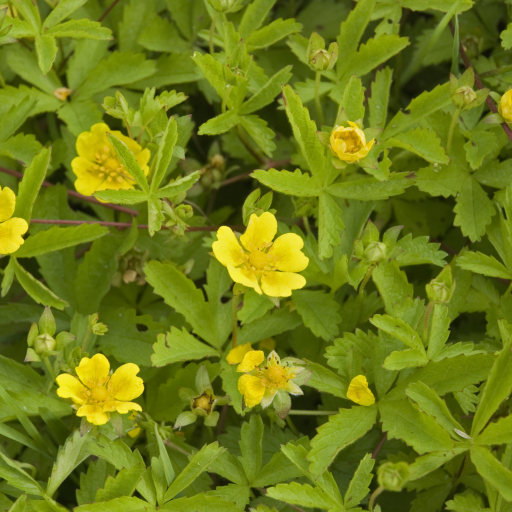
Plant Overview
Often called the "Cinquefoil" (meaning five leaves), the Potentilla is a resilient member of the Rose family that blooms with the enthusiasm of a summer sun. Its name translates to "the little powerful one," a nod to its historical medicinal use and its rugged ability to thrive where other plants might wither. Whether as a golden-flowered shrub or a delicate woodland creeper, these plants are beloved for their long blooming season and easygoing nature.
🔍 How to Identify
- 🖐️ The Signature Leaf: Most species feature "palmate" leaves, meaning the leaflets radiate from a single point like fingers on a hand—typically in groups of five.
- 🌼 The Flower Shape: They produce charming, five-petaled flowers that look remarkably like buttercups. While sunny yellow is the most common color, you’ll also find varieties in white, pink, and deep orange.
- 🌿 Growth Habit: Depending on the variety, they can be low-growing groundcovers or neat, rounded shrubs that rarely exceed three or four feet in height.
🏡 In Your Garden
- ☀️ The Sunshine Lover: These plants are sun-seekers. While they can tolerate partial shade, a lack of direct light will lead to "leggy" branches and significantly fewer flowers.
- 💪 Rugged Resilience: Potentilla is a champion for gardeners with "difficult" spots. It is incredibly cold-hardy and thrives in poor, rocky, or sandy soil where more delicate perennials might struggle.
- 🐝 Pollinator Magnet: If you want to see your garden hum with life, this is a top choice. Its open, flat flowers provide easy access to nectar for bees, butterflies, and hoverflies throughout the summer.
⚠️ Safety & Toxicity
- ✅ Safe Status: Potentilla is generally considered non-toxic to humans, dogs, and cats. It is a very safe choice for family gardens and high-traffic areas.
- 🍵 Traditional Use: Historically, parts of the plant were used in herbal teas and salves. However, as with any garden plant, it is best to enjoy it visually rather than as a snack, as individual sensitivities can vary.
✨ Fun Fact
The name Potentilla comes from the Latin word potens, meaning powerful. This refers to the potent astringent properties of its roots and leaves, which ancient herbalists used to treat everything from sore throats to toothaches!

Detailed Care Instructions
To grow a Potentilla plant, follow these steps:
- Choose the right location: Potentilla plants prefer a sunny location with well-drained soil. Ensure that the spot you select receives at least six hours of direct sunlight each day.
- Prepare the soil: Potentilla plants thrive in slightly acidic to neutral soil (pH of around 6.0-7.0). If your soil is too alkaline, amend it with organic matter like compost or peat moss to lower the pH.
- Dig a hole: Dig a planting hole that is twice the width and depth of the root ball of the plant. This will give the roots enough space to establish and grow.
- Plant the Potentilla: Carefully remove the plant from its nursery container and place it in the hole. Make sure the top of the root ball is level with the soil surface. Backfill the hole with soil, gently firming it down around the plant.
- Water thoroughly: Water the Potentilla plant immediately after planting to help eliminate air pockets around the roots. Keep the soil moist but not waterlogged during the establishment period.
- Mulch: Apply a layer of mulch around the plant to help conserve moisture and suppress weed growth. However, keep the mulch a few inches away from the base of the plant to prevent rot.
- Regular watering: Once established, Potentilla plants are relatively drought tolerant. However, it is still important to water them regularly, especially during dry spells, to promote healthy growth.
- Prune if necessary: Prune Potentilla plants in early spring to remove any dead or damaged branches. This will encourage new growth and maintain a neat shape. However, avoid heavy pruning as it may reduce flowering.
- Fertilize: Apply a balanced slow-release fertilizer in the spring to provide essential nutrients for healthy growth. Follow the instructions on the fertilizer packaging for the correct application rate.
- Be mindful of pests and diseases: Potentilla plants are generally resistant to pests and diseases, but it's still important to keep an eye out for any signs of trouble. If necessary, treat with appropriate organic or chemical controls.
By following these steps, you can successfully grow a Potentilla plant in your garden or landscape.

Place in a bright room that is sun drenched almost all day. Or directly in a south-facing window.

Potentilla plants are small ornamental shrubs that are typically grown in gardens. They are drought-tolerant plants that do not require a lot of water to thrive. Here are some tips on how to water Potentilla plants:
1. Water the plant deeply at least once a week. The soil should be moist but not waterlogged.
2. Water the plant in the morning or early evening to avoid evaporation.
3. Check the soil for moisture before watering. Stick your finger into the soil to test for dryness.
4. Water the plant slowly and deeply to allow the water to reach the roots.
5. Use a watering can or hose with a nozzle that has a gentle spray.
6. Avoid getting water on the leaves as this can lead to fungal diseases.
7. Water the plant less frequently during the winter months when the plant is dormant.
By following these guidelines, you can help ensure that your Potentilla plant stays healthy and vibrant.
For optimal growth, nourish the plant with a balanced fertilizer in early spring before new growth appears. Follow the package instructions for application rate and frequency. Use a low-nitrogen fertilizer during the flowering season, and stop fertilizing in late summer to prepare for winter dormancy. Avoid over-fertilizing to prevent excessive growth and weak stems. Always water the plant thoroughly after fertilizing to avoid burning the roots.
When planting Potentilla, it is recommended to use a well-draining soil with a pH of 5.5 to 7.5. The soil should be rich in nutrients and organic matter, such as compost or peat moss. It is important to ensure that the soil does not become waterlogged, as this can lead to root rot. If the soil is particularly heavy or clay-like, adding sand or perlite can improve drainage. Additionally, Potentilla prefers full sun, so planting it in an area with plenty of sunlight is recommended.
One way to propagate this plant is through softwood cuttings taken in the early summer when new growth is present. Using clean tools, make a diagonal cut just below a leaf node and remove any lower leaves. Dip the cut end in rooting hormone and plant it in a well-draining potting mix. Water thoroughly and place in a bright, but not direct, light. Keep the soil moist but not waterlogged and mist the leaves regularly to prevent dehydration. After several weeks, roots should begin to form and new growth should appear. Gradually acclimate the plant to brighter light and eventually transplant it into a larger container or outdoors in a suitable location.







