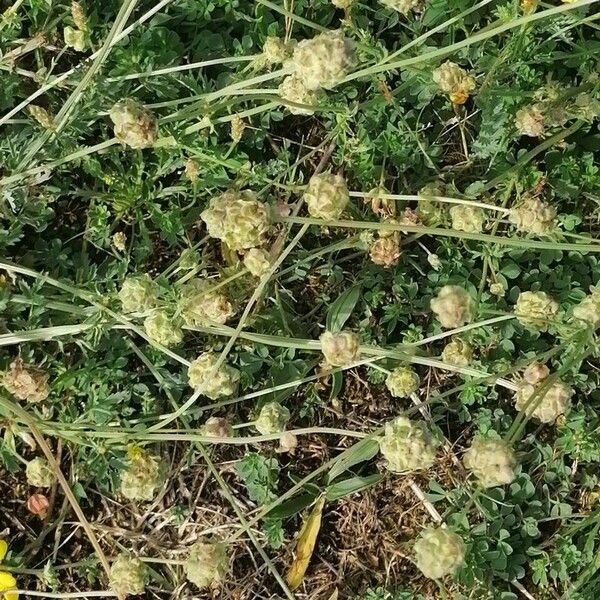
Plant Overview
Known as the "Mediterranean Salad Burnet" or "Warty Burnet," Poterium verrucosum is a hardy perennial that tastes surprisingly like fresh cucumbers. While it looks like a humble wildflower, it has been a staple in European herb gardens for centuries, often tucked into salads or used to flavor cooling summer drinks. This plant is a survivor, thriving in rocky, sun-drenched terrains where other greens might wither.
🔍 How to Identify
- 🌿 Feathery Foliage: The leaves are "pinnate," meaning they grow in pairs along a central stem, with sharply toothed edges that give the plant a delicate, fern-like appearance.
- 🧶 Globe Flowers: Instead of traditional petals, it produces tight, ball-shaped flower heads that start green and often blush with a deep reddish-purple tint as they mature.
- 🌕 Warty Seeds: True to its name (verrucosum means "warty"), the tiny fruits or seeds of this species have a distinctively bumpy, textured surface compared to its smoother cousins.
🏡 In Your Garden
- ☀️ Drought Warrior: This plant is incredibly resilient to heat and poor soil. It prefers "lean" soil—if the earth is too rich or wet, it may lose its compact shape and its signature cucumber flavor.
- 🌱 The Taproot Rule: Like many Mediterranean herbs, it develops a deep taproot to find water. Because of this, it hates being moved once established; pick its forever home carefully to avoid transplant shock.
⚠️ Safety & Toxicity
- 🥗 Safe & Edible: This plant is non-toxic and widely celebrated as a culinary herb. The young, tender leaves are the best for eating, as older leaves can become bitter and tough.
- 🐾 Pet Friendly: There are no known toxicities for cats or dogs, making it a safe addition to a sensory garden or a backyard where pets roam.
✨ Fun Fact
The genus name Sanguisorba (closely related to Poterium) translates to "blood-absorber." In ancient times, the plant was steeped in wine and given to soldiers before battle, as it was believed to help stop internal bleeding and keep the heart brave.

Detailed Care Instructions

Place in a bright room that is sun drenched almost all day. Or directly in a south-facing window.

Some plants require more regular watering than others, which should be done every few days. It's critical to maintain the soil moist all of the time. The water requirements of the same plant placed in pots with varying sizes will differ. Because the water in the smaller pot evaporates faster than the water in the larger pot, it will require more watering. Regardless of pot size, the surface should constantly be maintained moist.








