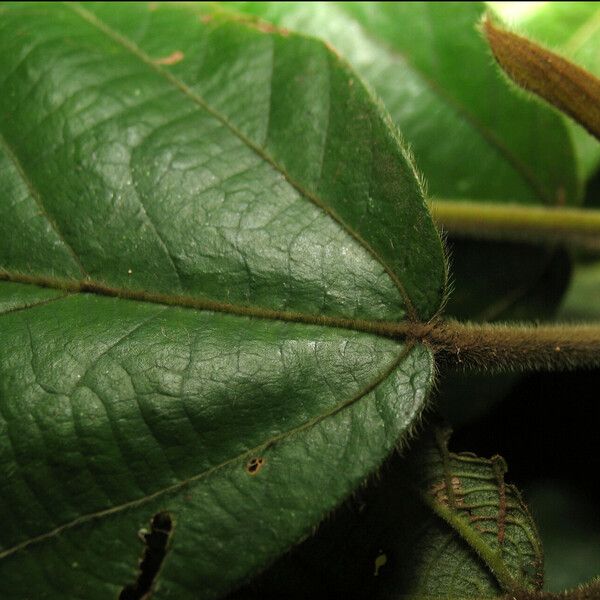
Plant Overview
Commonly known as a wild relative of the Amazon Grape, Pourouma velutina is a hidden gem of the South American rainforest. This fast-growing tree is a close cousin to the more famous Mapati, prized for its clusters of sweet, juicy fruits that look like oversized, matte-finish grapes. In its native Amazonian home, it serves as a vital food source for both indigenous communities and local wildlife.
🔍 How to Identify
- 🍃 Velvety Foliage: As the name velutina suggests, the undersides of the leaves are covered in fine, soft hairs, giving them a distinct "velvet" texture that feels plush to the touch.
- 🌳 Stilt-like Roots: In older specimens, you may notice small prop roots at the base of the trunk, a clever adaptation that helps the tree stay anchored in the soft, wet soil of the jungle floor.
- 🍇 Grape-like Clusters: The tree produces heavy hanging clusters of round fruits that transition from green to a deep purple or black when fully ripe.
🏡 In Your Garden
- 🌦️ Humidity is Key: This isn't a plant for dry climates. Because it originates from the humid lowlands of the Amazon, it breathes through its leaves; if the air is too dry, those beautiful velvety leaves will quickly brown and curl at the edges.
- 🥣 Rich Diet: In a garden setting, it requires deep, organic-rich soil. It is a "heavy feeder," meaning it appreciates a thick layer of compost or mulch to mimic the decaying leaf litter of the rainforest floor.
⚠️ Safety & Toxicity
- ✅ Edible Fruit: The ripe fruit is generally considered safe and quite tasty for humans, often described as having a flavor profile somewhere between a grape and a honeydew melon.
- 🐾 Large Seeds: While the pulp is safe, the fruits contain relatively large seeds. These can be a choking hazard for small pets or curious toddlers if the fruit is left to drop on the ground.
- Sticky Sap:** The bark and stems contain a clear-to-milky sap that is very sticky; while not typically toxic, it can be a nuisance to get off skin or clothing.
✨ Fun Fact
Many species in the Pourouma genus have a "bodyguard" relationship with ants. The tree provides nesting spaces or sugary secretions, and in exchange, the ants aggressively defend the tree against leaf-cutting insects!

Detailed Care Instructions








