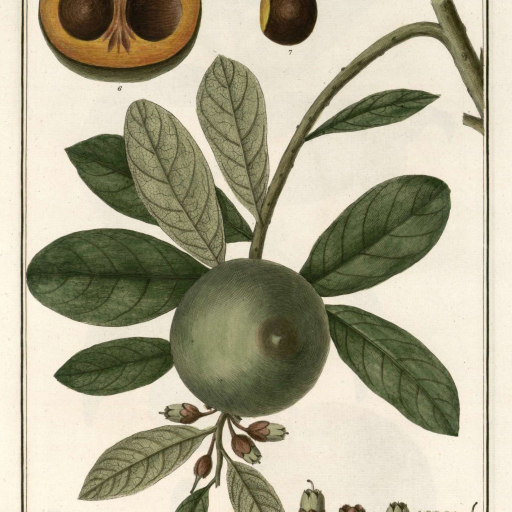
Plant Overview
Known as the "Gold of the Incas," the Lucuma is a legendary fruit tree native to the high-altitude Andean valleys of Peru, Chile, and Ecuador. This ancient tree was a staple in the Moche civilization, often appearing in their intricate ceramics and artwork. Its fruit is prized globally today as a gourmet "superfood" with a flavor profile that tastes like a heavenly blend of maple, caramel, and sweet potato.
🔍 How to Identify
- 🌳 The Canopy: It is an evergreen tree with a dense, rounded crown. The leaves are thick, leathery, and a deep, glossy green, often clustering at the tips of the branches.
- 🌼 The Blooms: Look for small, yellowish-green flowers that grow in clusters. They are quite discreet and hide under the foliage but emit a light, sweet fragrance.
- 🥑 The Fruit: The most distinctive feature is the round or egg-shaped fruit with dusty green skin. When cut open, the flesh is a vibrant, dry, orange-yellow—remarkably similar in texture to a hard-boiled egg yolk.
🏡 In Your Garden
- ⛰️ Highland Roots: Because it originates from the mountains, the Lucuma prefers a "cool-temperate" climate. It is surprisingly resilient to dry spells once established, but it absolutely demands well-draining soil; it will not tolerate "wet feet" or standing water.
- ⏳ Exercise Patience: This is not a fast-growing specimen. It takes its time to mature and can take several years before it begins to produce its golden harvest. It is best grown in areas where frost is rare, as young trees are quite sensitive to freezing temperatures.
⚠️ Safety & Toxicity
- 🟢 Status: Generally safe and non-toxic.
- 🥣 Details: The fruit is a nutritional powerhouse for humans, rich in antioxidants and fiber. While there are no specific records of toxicity to pets, the large, hard seeds inside the fruit should be kept away from dogs to avoid a potential choking hazard or intestinal blockage.
✨ Fun Fact
🍦 The National Favorite: While vanilla and chocolate rule the world, Lucuma is the most popular ice cream flavor in Peru! It is so beloved that it is often used as a base for sophisticated desserts and even artisanal cocktails.

Detailed Care Instructions
| Humidity | Normal |
| Lighting | Full Sun |
| Difficulty | Easy |
| Hibernation | Cold Period |
| Temperature | 20°C - 32°C |
To grow a Pouteria Lucuma plant, also known as Lucuma or Eggfruit, you can follow these steps:
- Climate requirements: Lucuma plants thrive in subtropical or tropical climates. They prefer temperatures ranging from 50°F to 95°F (10°C to 35°C), but can tolerate mild frosts for short periods. They need a well-drained soil and should be protected from strong winds.
- Choose a suitable location: Select a sunny spot in your garden with good soil drainage. If your soil is heavy or clayey, you can improve it by adding organic matter like compost or well-rotted manure.
- Starting from seeds: Lucuma plants can be grown from seeds. Soak the seeds in warm water for about 24 hours to soften the outer shell before planting. Prepare small pots filled with well-drained potting mix and plant the seeds about 1 inch deep. Keep the soil evenly moist but not waterlogged.
- Germination: Lucuma seeds can take anywhere from a few weeks to several months to germinate. Keep the pots in a warm area with temperatures around 75°F to 85°F (24°C to 29°C) to aid germination. Once the seeds sprout, ensure they receive adequate light.
- Transplanting: Once the seedlings have become established and have developed a few sets of true leaves, they can be transplanted into larger pots or directly into the ground. Gradually acclimate them to outdoor conditions by placing them in a shady area for a few days before moving them into full sun.
- Watering and care: Lucuma plants require regular watering to keep the soil consistently moist, especially during dry periods. However, be cautious to avoid overwatering, as it can lead to root rot. Additionally, mulching around the plant can help retain moisture and suppress weed growth.
- Fertilizing: Feed your lucuma plant every 3-4 months with a balanced, slow-release fertilizer or use a liquid fertilizer according to the manufacturer's instructions. Avoid excessive nitrogen fertilizers as they can hinder fruit production.
- Pruning: As the plant grows, remove any dead, damaged, or crossing branches to maintain a healthy shape. Light pruning can also help encourage branching and increase fruit production.
- Pollination: Lucuma trees are usually self-fertile, meaning they can pollinate themselves. However, having multiple trees can increase fruit yield. To ensure good pollination, you can also gently shake the trees or use a small brush to transfer pollen between flowers.
- Harvesting: Depending on the climate, it can take several years for a Lucuma tree to mature and bear fruit. The fruits are typically ready to harvest when the skin turns yellowish-brown and slightly soft. Pick them carefully to minimize damage.
With proper care and patience, you can enjoy the delicious Lucuma fruits from your own tree.
The plant requires regular watering, but it should not be over-watered as it can lead to root rot. Water the plant deeply once a week, making sure the soil is moist but not waterlogged.
It is important to allow the soil to dry out slightly between watering to prevent water accumulation and promote healthy root growth. Do not allow the plant to sit in standing water, as this can also cause root rot.
During the winter months, reduce the frequency of watering as the plant enters its dormant period.
Avoid getting the foliage wet while watering, as this can lead to fungal growth and diseases. Instead, water directly onto the soil at the base of the plant.
To fertilize the Pouteria Lucuma plant, you should use a balanced fertilizer with equal parts of nitrogen, phosphorus, and potassium. Apply the fertilizer in the spring and again in the fall at a rate of one pound per 100 square feet of soil. Water the plant before and after applying the fertilizer to help it absorb the nutrients. Avoid over-fertilizing as it can cause damage to the plant. It is also recommended to incorporate organic matter into the soil to improve its structure and nutrient retention.
Pouteria Lucuma, a small tree or shrub that is native to South America, requires well-draining soil with a pH between 6.0 and 7.5. The ideal soil composition should contain a mix of organic matter, such as compost and peat moss, as well as some sand to increase drainage. The plant prefers a soil that is rich in nutrients, containing a balanced combination of nitrogen, phosphorus, and potassium. It is also important to avoid using heavy, clay soils that are prone to waterlogging as they can suffocate the plant's roots. The soil should be kept moist but not waterlogged, allowing for good drainage to prevent waterlogging.
Pouteria Lucuma can be propagated through several methods such as seed propagation, root cuttings, and air layering. Here is a step-by-step guide on how to propagate Pouteria Lucuma plant:
- Seed Propagation: Collect fresh seeds from fully ripened fruits and remove the pulp to prepare them for sowing. Soak the seeds in water for 24 hours to soften their coats. Sow the seeds in a well-draining potting mix and cover them with a thin layer of soil. Keep the soil consistently moist and warm (around 70°F) to encourage germination. Once the seedlings reach a height of 2 inches, transplant them into individual pots or outdoors.
- Root Cuttings: Take a cutting from the plant's root using a sterile cutting instrument. Cut the root at a 45-degree angle and ensure that it is at least 3 inches long. Dip the cutting in rooting hormone powder to increase its chances of survival. Plant the cutting in a well-draining potting mix and water it well. Keep the soil moist and warm (around 70°F) to encourage root development.
- Air Layering: Choose a healthy branch with a diameter of at least 1 inch and remove the leaves at the bottom 4 inches of the branch. Make a small cut underneath the bark, about 1 inch long, and cover it with moist sphagnum moss. Wrap the moss-covered area with plastic wrap and secure it with a wire. Keep the moss moist and remove the plastic wrap after roots have formed, which usually takes around 6-12 weeks. Cut the newly rooted branch from the parent plant and transplant it to its new location.
Regardless of the propagation method chosen, ensure that the newly propagated plant is kept in a shaded area until it can withstand sun exposure. With proper care, Pouteria Lucuma plant can grow into a healthy and productive plant.








