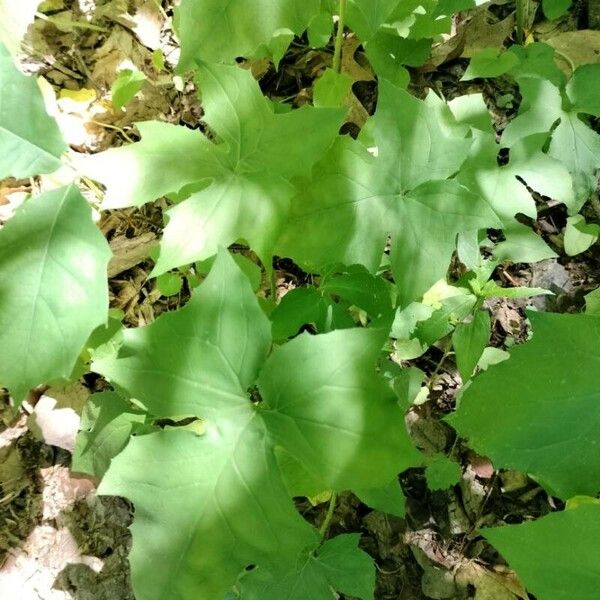
Plant Overview
Commonly known as the White Rattlesnake Root or the "Lion’s Foot," Prenanthes alba is a ghostly, elegant wildflower native to the deciduous forests of North America. Often found tucked away in the dappled shade of ancient oaks and maples, this plant has a storied history in folk medicine and is prized by native plant enthusiasts for its unique, architectural silhouette.
🔍 How to Identify
- 🔔 The Flowers: Its most striking feature is the clusters of nodding, bell-shaped flower heads. These creamy-white to pinkish blooms hang downward, surrounded by deep purple or maroon bracts.
- 🍃 The Foliage: The leaves are highly variable; lower leaves are often large, triangular, and deeply lobed (resembling a lion's paw), while upper leaves are smaller and more lance-shaped.
- 🥛 The Milky Sap: If a leaf or stem is broken, the plant exudes a thick, bitter, milky white latex, a common trait among members of the Aster family.
🏡 In Your Garden
- 🌳 Woodland Preference: This isn't a plant for the open, sunny border. It thrives in "dry-mesic" woods, meaning it loves the rich, leaf-mold soil of a forest floor with consistent but not soggy moisture.
- 🐝 Bumblebee Haven: Because the flowers hang downward, they are specifically evolved for bumblebees, which are strong enough to hang upside down and push their way into the bells for nectar.
- 🌱 Slow to Establish: It grows from a fleshy, tuberous root. It hates being moved once settled, so choose its spot in your shade garden carefully to avoid "transplant shock."
⚠️ Safety & Toxicity
- 🐾 Low Toxicity: Prenanthes alba is generally considered non-toxic to humans and pets, though it is not a culinary herb.
- 👅 Bitter Defense: The milky sap is incredibly bitter, which usually discourages curious pets or children from eating more than a tiny nibble.
- 🧴 Skin Sensitivity: Some individuals may experience mild skin irritation (dermatitis) from contact with the milky latex; it is best to wear gloves when pruning.
✨ Fun Fact
The name "Rattlesnake Root" comes from an old folk belief that the bitter, milky juice from the pounded roots could be used as a poultice to cure rattlesnake bites. While it’s a beautiful piece of folklore, modern science suggests you should definitely stick to a hospital if you encounter a real snake!

Detailed Care Instructions
To grow Prenanthes alba, also known as white lettuce or lion's foot, follow these steps:
- Seeds: Obtain Prenanthes alba seeds either by purchasing them from a reputable seed supplier or by collecting them from mature plants. Harvest the seeds when they are fully ripened and have turned brown.
- Preparing the soil: Prenanthes alba grows well in loamy, well-draining soil. Before sowing the seeds, loosen the soil and remove any weeds or debris. Amend the soil with organic compost to improve its fertility.
- Sowing: Plant the Prenanthes alba seeds in early spring or autumn. Create shallow furrows or sow the seeds directly on the surface of the soil. Lightly cover the seeds with a thin layer of soil or vermiculite.
- Watering: Keep the soil moist but not waterlogged. Water the seeds or seedlings gently, using a watering can or mist sprayer. Avoid overwatering as it can lead to root rot.
- Sunlight: Prenanthes alba prefers partial shade to full sun. Choose a location where it receives at least 4-6 hours of direct sunlight per day.
- Temperature: Prenanthes alba is tolerant of a wide range of temperatures. It can survive both hot summers and winters with freezing temperatures, making it suitable for various climates.
- Maintenance: Regularly check for weeds and remove them to prevent competition for nutrients and water. Water the plants during prolonged dry periods. Mulching can help in conserving moisture and suppressing weed growth.
- Propagation: Prenanthes alba can also be propagated by division. In early spring, carefully dig up a mature plant and separate the crown or rhizomes into smaller sections. Replant the divisions in prepared soil and water thoroughly.
- Pruning: Trim any dead or diseased parts of the plant to maintain its health and appearance. Pruning also encourages better branching and flowering.
- Harvesting: If you want to collect seeds, allow the flowers of Prenanthes alba to mature and form fluffy seed heads. Harvest the seeds before they scatter naturally. Store them in a cool, dry place.
By following these guidelines, you can successfully grow Prenanthes alba and enjoy its beautiful flowers in your garden.
To provide proper hydration to the Prenanthes Alba plant, you need to follow these steps:
- Assess watering needs: Before watering the plant, check the soil moisture level. Insert your finger about an inch or two into the soil, near the plant's base. If the soil feels dry, it is time to water.
- Choose the watering method: There are various methods for watering plants, such as using a watering can, hose, or drip irrigation system. Select the method that works best for your garden or container setup.
- Watering frequency: Prenanthes Alba plants generally require regular watering, especially during dry or hot weather. However, the frequency of watering may vary depending on factors like temperature, humidity, and soil type. Aim to keep the soil consistently moist but not waterlogged.
- Watering technique: When watering, focus on delivering the moisture directly at the plant's base, as it helps to prevent water runoff and promotes better absorption. Avoid overhead watering if possible, as it may cause fungal diseases.
- Water deeply: It is essential to ensure deep watering rather than just surface watering. This encourages the plant's roots to grow deeper into the soil, increasing their access to moisture and nutrients. A thorough watering session should moisten the soil at least 6-8 inches deep.
- Mulch application: Consider applying a layer of organic mulch around the base of the Prenanthes Alba plant. Mulch helps retain soil moisture, reduces weed growth, and regulates soil temperature. It also prevents excessive evaporation, reducing the frequency of watering.
- Monitor for signs of overwatering or underwatering: Keep an eye on the plant's overall health and appearance. Overwatering can lead to root rot and other fungal diseases, causing wilting, yellowing leaves, or stunted growth. Underwatering, on the other hand, shows similar symptoms, such as wilting or yellowing leaves, but the soil will be dry.
- Adjust watering based on season: During periods of dormancy or slower growth, such as winter or autumn, the Prenanthes Alba plant may require less frequent watering. Adjust the watering schedule accordingly to prevent overwatering during these phases.
Remember, watering needs may vary depending on various factors specific to your growing conditions. It's crucial to observe your Prenanthes Alba plant closely, adapt to its individual requirements, and make necessary adjustments as needed.
Fertilizing Prenanthes Alba (plant):
- Choose a balanced fertilizer: Select a fertilizer with an NPK ratio of equal proportions, such as 10-10-10 or 20-20-20.
- Dilute the fertilizer: Follow the instructions provided on the packaging to dilute the fertilizer with water.
- Apply the fertilizer: Using a watering can or sprayer, apply the diluted fertilizer to the soil around the base of the plant. Avoid getting the fertilizer on the leaves or stems.
- Timing: Fertilize Prenanthes Alba in early spring, just as new growth begins. You can also apply a second round of fertilizer in mid-summer to promote healthy growth.
- Quantity: Apply the fertilizer according to the recommended dosage on the fertilizer packaging. Avoid over-fertilizing, as it can lead to nutrient imbalances or burn the plant roots.
- Watering: After applying the fertilizer, water the soil thoroughly to ensure proper absorption and distribution of nutrients.
- Repeat: Fertilize Prenanthes Alba annually or as needed, following the same steps outlined above.
Note: It's important to consider the specific needs and preferences of Prenanthes Alba when it comes to fertilization. Adjusting the fertilizer type, schedule, or dosage may be necessary based on the plant's response and individual growing conditions.
Prenanthes Alba plant prefers to grow in soil that is well-draining and consistently moist. It thrives in a soil mix that is rich in organic matter and has a slightly acidic to neutral pH level. The soil should be loose and sandy, allowing for proper aeration and root penetration. Adequate drainage is crucial to prevent waterlogged conditions that can lead to root rot.
To create an ideal soil environment for Prenanthes Alba, you can incorporate various organic materials such as compost, peat moss, or well-decomposed manure into the soil. These organic amendments improve the soil structure and enhance its water-holding capacity. Additionally, adding perlite or coarse sand can improve drainage and prevent compaction.
It is recommended to avoid heavy clay soils or those that retain excessive moisture, as they can cause root suffocation and hinder proper growth. Instead, opt for a loamy soil blend that allows for good water infiltration and drainage.
Regularly monitoring the moisture level of the soil is essential for the well-being of Prenanthes Alba. Ensuring that the soil is kept evenly moist but not waterlogged will promote optimal growth and prevent drought stress. Watering should be done thoroughly, allowing the excess water to drain out completely.
Overall, providing a loose, well-draining soil mix rich in organic matter will create a favorable growing medium for Prenanthes Alba, helping it to thrive and flourish.
Prenanthes Alba, a perennial flowering plant, can be easily propagated through various methods. Here's a detailed guide on how to propagate Prenanthes Alba:
- Propagation by Seeds:
- Collect ripe seeds from the plant during the late summer or early fall. Look for dry, brown seed heads.
- Remove the seeds from the seed heads and store them in a cool, dry place until ready to sow.
- Prepare a well-draining potting mix by combining equal parts of peat moss, perlite, and vermiculite.
- Sow the Prenanthes Alba seeds on the soil surface, gently pressing them down, but do not bury them.
- Mist the seeds with water to provide moisture and cover the container with a plastic bag or a clear plastic lid to create a greenhouse effect.
- Place the container in a warm and bright location, receiving indirect sunlight.
- Keep the soil consistently moist by misting it regularly or watering from below.
- Germination should occur within a few weeks to a couple of months. Once the seedlings have grown to a certain size, transplant them into individual pots with a well-draining soil mixture.
- Continue caring for the young plants until they are large enough to be planted outdoors, usually after one or two growing seasons.
- Propagation by Division:
- When the Prenanthes Alba plant is mature and showing signs of active growth, choose a healthy and vigorous plant to divide.
- Carefully dig around the plant and lift it out of the ground, trying to minimize root disturbance.
- Gently separate the plant into smaller sections, making sure each division has a portion of the root system and some foliage.
- Plant these divisions in pots or directly into prepared garden soil.
- Water the divisions thoroughly and keep the soil consistently moist until they establish themselves.
- Propagation by Stem Cuttings:
- Begin by selecting a healthy Prenanthes Alba plant with vigorous growth.
- Take 4-6 inch long cuttings from the tips of non-flowering shoots. Ensure that each cutting has at least three sets of leaves.
- Remove the bottom set of leaves and dip the cut end in a rooting hormone powder to promote better root development.
- Prepare a well-draining potting mix by combining peat moss or compost with perlite or vermiculite.
- Create planting holes in the potting mix with a pencil or similar object and insert the cuttings, ensuring that at least one set of leaves remains above the soil surface.
- Water the cuttings thoroughly and place the container in a warm location with bright, indirect light.
- Mist the cuttings regularly to maintain humidity and prevent excessive drying.
- After several weeks, roots should start to form, and once the cuttings show signs of new growth, they can be transplanted into larger pots or a suitable garden location.
Remember to provide proper care and maintenance to the propagated Prenanthes Alba plants, including regular watering, fertilization, and protection from extreme weather conditions.








