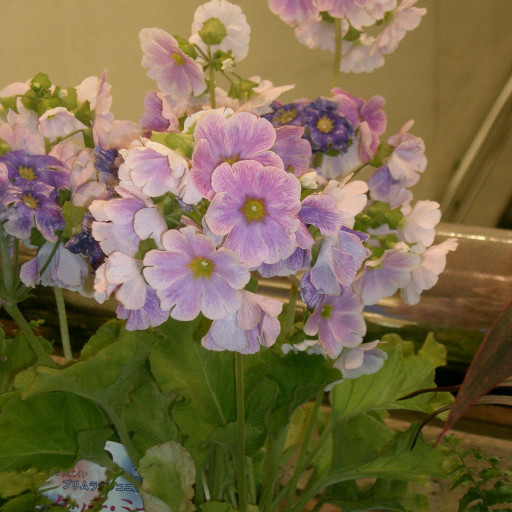
Plant Overview
Often called the Poison Primrose or German Primrose, this Chinese native is a classic cool-weather favorite. In the Victorian era, it was a staple of the "winter garden," prized for its ability to bloom in vibrant shades of lilac, pink, and white while other plants were dormant. Despite its somewhat intimidating nickname, it remains a beloved windowsill companion for those seeking a splash of early-season color.
🔍 How to Identify
- 🍃 The Foliage: Round, heart-shaped leaves that are slightly hairy and have wavy (undulate) edges. They grow in a dense, lush rosette at the base of the plant.
- 🌸 The Bloom Clusters: Flowers emerge in "umbels"—beautiful, umbrella-like clusters—atop sturdy stalks that rise well above the leaves.
- 🎨 The Petals: Each individual flower features five notched, heart-shaped petals, often with a contrasting yellow "eye" at the center.
🏡 In Your Garden & Home
- 🌡️ The Chill Factor: Unlike many tropical houseplants, this Primula thrives in cool temperatures (50-65°F). If your home is too warm, the flowers will fade quickly and the plant may stop blooming entirely.
- 💧 Consistency is Key: It has a "Goldilocks" relationship with water; it hates sitting in soggy soil but will wilt dramatically if it dries out completely. Keep the soil consistently moist to the touch.
- ☀️ Light Needs: Indoors, it loves a bright north or east-facing window. Outdoors, it must be kept in deep shade to filtered light, as the hot afternoon sun will scorch its soft, velvety leaves.
⚠️ Safety & Toxicity
- 🚫 Skin Irritant: The nickname "Poison Primrose" comes from primin, a chemical found in the tiny hairs on the leaves and stems. For many people, touching the plant causes a red, itchy rash (contact dermatitis).
- 🐾 Pet Warning: This plant is considered toxic to cats, dogs, and horses. If ingested, it can cause vomiting and intestinal upset. It is best kept on high shelves or in areas inaccessible to curious pets and toddlers.
✨ Fun Fact
Modern science has come to the rescue of flower lovers! While the original species is quite irritating to the skin, plant breeders have developed "Primin-free" cultivars, often sold under the series name "Touch Me," specifically designed so you can enjoy their beauty without the itchy side effects.

Detailed Care Instructions
| Humidity | Normal |
| Lighting | Part Sun |
| Toxicity | Poisonous |
| Difficulty | Medium |
| Temperature | 16°C - 20°C |
| Hardiness Zones | 3 - 8 |
To grow Primula obconica plants, follow these steps:
- Choose a suitable location: Primula obconica plants prefer bright, indirect sunlight. They thrive in temperatures between 55°F (13°C) and 70°F (21°C). Avoid placing them in direct sunlight as it can lead to leaf burn.
- Prepare the pot or container: Primula obconica plants grow well in well-draining soil mixtures. Use a pot with drainage holes to prevent waterlogged soil. Ensure that the container has enough space for the roots to spread out.
- Plant the Primula obconica: Fill the pot with the well-draining soil mixture, leaving some space at the top for watering. Gently remove the plant from its nursery pot, being careful not to damage the roots. Place it in the prepared pot, making sure the soil level remains the same as it was in the nursery pot. Press the soil lightly around the plant to secure it.
- Watering: Primula obconica plants prefer moist soil but should not be left in standing water. Water them when the top inch of soil feels dry. Use room temperature water and avoid wetting the leaves as it can lead to fungal diseases.
- Fertilization: Use a balanced, water-soluble fertilizer once every two weeks during the growing season (spring and summer). Follow the package instructions for the appropriate dilution ratio. Be cautious not to over-fertilize, as it can cause salt buildup and damage the plant.
- Pruning: Remove spent flowers and yellowing leaves to encourage new growth. Cut back the entire plant after it finishes blooming to promote fresh foliage.
- Pests and diseases: Primula obconica plants are susceptible to aphids, spider mites, and powdery mildew. Inspect the plant regularly and take appropriate measures if you notice any pests or signs of disease. Mild soap solutions or organic pesticides can be used for pest control.
- Transplanting and propagation: Primula obconica plants can be divided and transplanted to propagate new plants. This is best done when the plant is dormant in summer or early fall. Gently remove the plant from its container, carefully divide the clumps, and replant them in fresh soil. Water thoroughly after transplanting.
Remember to research the specific care requirements of the Primula obconica variety you have, as different species might have slightly different needs.

Place in a window with dappled sun or a spot in the middle of a room. Or directly in a window facing west or east.

To properly water this plant, it is important to avoid watering the foliage or the delicate blooms. Instead, the water should be applied directly to the soil at the base of the plant. This can be achieved by either using a watering can or a hose attachment with a gentle trickle setting. It is important to monitor the soil moisture and only water when the top inch of soil feels dry to the touch. Overwatering can lead to root rot and other issues. It is also important to ensure that the pot or container has adequate drainage to prevent water from pooling around the roots.
To fertilize this plant, use a water-soluble fertilizer every two weeks during the growing season. Dilute the fertilizer to half strength and apply it to the soil, being careful not to get any on the leaves. In the winter months, reduce the frequency of fertilizing to once a month. Ensure that the soil is moist before fertilizing to prevent damage to the plant.
Primula obconica is a type of plant that prefers well-draining soil with a slightly acidic pH level of around 6.0 to 6.5. It requires soil that is rich in organic matter, and regular fertilization with a balanced fertilizer can help it thrive. Additionally, it is important to ensure that the soil is not compacted, as this can prevent water and air from reaching the roots. Therefore, a light and fluffy soil mixture is best for this plant such as peat moss, perlite, and vermiculite.
To propagate this plant, you will need to take stem or leaf cuttings from a healthy adult plant. Cut the stem or leaf at a 45-degree angle to promote root growth. Remove any leaves or blooms from the lower portion of the cutting so that it can put its energy into producing roots instead of supporting foliage. Dip the cut end into rooting hormone to increase the chances of successful propagation.
Prepare a well-draining soil mix and moisten it before planting the cuttings. You can use a peat-based mix or a soilless mixture of perlite and vermiculite. Plant the cuttings in individual pots, taking care not to bury the leaves. Cover the pots with plastic bags or plastic wrap to maintain humidity levels, then place them in a warm, bright location out of direct sunlight.
Monitor the moisture level of the soil and mist the cuttings periodically to maintain humidity. After a few weeks, roots should begin to form. Once the new plants have established themselves, remove the plastic covering and continue to care for them. Remember to keep the soil moist and avoid overwatering.
Once the new plants have grown to a healthy size, they can be transplanted into larger pots or a garden bed. With proper care, your propagated Primula Obconica plants will thrive and add beauty to your collection.
Common pests of the top primrose include Aphids, snails. Make a habit of checking your top primrose frequently for pests so that any infestations can be caught and managed early.








