Plant Overview
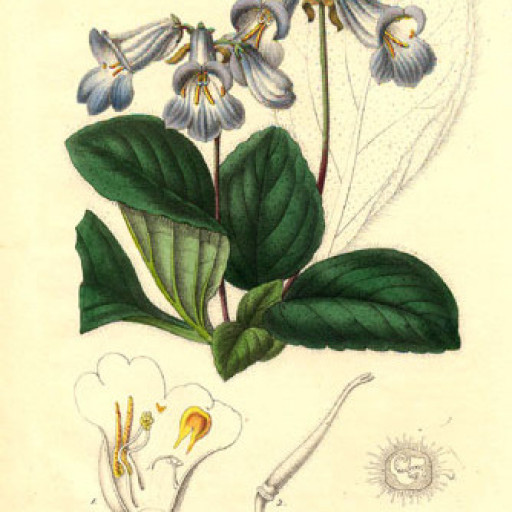
Often called the "Asian Violet," the Primulina is a hidden gem from the misty limestone cliffs of Southern China and Vietnam. For decades, these plants were tucked away in the genus Chirita, but they have recently stepped into their own spotlight as a favorite for indoor collectors. With their symmetrical, velvety leaf rosettes and elegant bell-shaped flowers, they offer the charm of an African Violet but with a much hardier, more resilient personality.
🔍 How to Identify
- 🍃 The Rosette: Most species grow in a tight, symmetrical circle (rosette), making them look like a living green mandala on your shelf.
- ✨ Foliage Texture: The leaves are often thick, succulent-like, and covered in fine silver or white hairs. Many varieties feature stunning "quilted" patterns or silver veining.
- 🔔 Tubular Blooms: They produce delicate, trumpet-shaped flowers—often in shades of lilac, white, or soft yellow—that rise above the leaves on slender stems.
🏡 In Your Garden
- 🪨 The Limestone Connection: In the wild, these plants grow in the cracks of karst (limestone) mountains. Because of this, they prefer a slightly more alkaline potting mix than your average houseplant and absolutely hate "wet feet."
- 💧 Leaf Etiquette: Just like their cousins, the African Violets, Primulina leaves are sensitive to cold water. If you splash the leaves, they can develop permanent brown spots, so it is best to water them from the bottom or use a narrow-spout can.
- ⛅ Light Preferences: They are the masters of the "bright-indirect" spot. While they can survive in lower light, their stunning leaf patterns will fade, and they may refuse to bloom if kept in the dark.
⚠️ Safety & Toxicity
- ✅ Pet-Friendly Status: Great news for pet parents! Primulina is generally considered non-toxic to cats and dogs, making it a safe alternative to more dangerous tropical plants.
- ✋ Skin Sensitivity: While not poisonous, the fine hairs on the leaves can occasionally trap dust or allergens, which might cause very mild irritation to those with extremely sensitive skin if handled excessively.
✨ Fun Fact
The Primulina is a "resurrection" specialist of sorts. In their native habitat, they can endure dry spells by curling their leaves and going dormant, only to "spring back to life" and bloom almost immediately once the monsoon rains return!

Detailed Care Instructions
Primulina plants are relatively easy to grow and care for. Here are some tips to help you grow a healthy Primulina plant:
- Light: Primulinas prefer bright, indirect light. Avoid placing them in direct sunlight as this can scorch their leaves. Place your plant near a window that receives filtered sunlight or use artificial grow lights.
- Temperature: Primulinas thrive in temperatures between 60-80°F (15-27°C). Avoid exposing them to extreme temperatures or drafts, as this can harm the plant.
- Watering: Water your Primulina plant when the top inch of soil feels dry. Water thoroughly until water drains out of the bottom of the pot, and allow the top inch of soil to dry out before watering again. It's important to avoid overwatering, as this can lead to root rot.
- Humidity: Primulina plants prefer high humidity levels, so consider placing a humidity tray or humidifier near your plant to increase moisture in the air.
- Soil: Use a well-draining potting mix that is rich in organic matter, such as a mixture of peat moss, perlite, and vermiculite. Avoid using heavy or compacted soils, as they can retain too much moisture and cause root rot.
- Fertilization: Feed your Primulina plant with a balanced, water-soluble fertilizer once a month during the growing season (spring and summer). Be sure to dilute the fertilizer to half strength to avoid damaging the plant.
- Repotting: Repot your Primulina plant every 1-2 years to refresh the soil and provide it with more space to grow. Choose a slightly larger pot with good drainage holes.
By following these tips and providing proper care, you can successfully grow a beautiful and healthy Primulina plant.

Place in a window with dappled sun or a spot in the middle of a room. Or directly in a window facing west or east.

To water this particular plant, you will need to be careful not to over-water it, as it is susceptible to root rot. Allow the top layer of soil to dry out slightly before watering it. When you do water the plant, make sure to water it thoroughly, giving it enough water so that it can drain out the bottom of the pot. It is important to use a pot with drainage holes to prevent water from sitting in the bottom of the pot. Additionally, this plant prefers to be watered with room temperature or tepid water, as cold water can shock the roots. It is recommended that you water this plant from the bottom (by placing the pot in a container of water and allowing it to soak up water through the drainage holes) rather than from the top, to prevent water from getting trapped in the center of the plant. In general, this plant prefers to be kept evenly moist, but not waterlogged.
The Primulina plant should be fertilized once a month during its growing season, which is typically in the spring and summer months. Use a balanced water-soluble fertilizer diluted to half the recommended strength. Apply the fertilizer to the soil around the plant, being careful not to splash it onto the leaves. Water the plant thoroughly after fertilizing to help distribute the nutrients. Avoid fertilizing in the winter months when the plant is dormant.
Primulina plants prefer a well-draining soil mixture that is rich in organic matter. The soil should be slightly acidic, with a pH range of about 5.5 to 6.5. A good soil mix for Primulina would consist of a combination of peat moss, vermiculite or perlite, and sand or gravel to improve drainage. It is important that the soil is loose and airy to allow for proper aeration to the roots. Additionally, using a slow-release fertilizer high in potassium and phosphorus will help promote healthy growth and vibrant blooms. It is also important to avoid overwatering, as this can lead to root rot and other issues. Therefore, it is recommended to allow the top layer of soil to dry out slightly before watering again.
One way to propagate Primulina plants is by taking leaf cuttings. To do this, select a healthy leaf from the plant and cut it cleanly near the base. Place the cutting in a container filled with moist potting soil, making sure that the leaf is inserted into the soil at a slight angle. Keep the soil consistently moist and place the container in a warm, bright location, but out of direct sunlight.
Another method of propagating Primulina plants is by division. Carefully dig up the plant and separate the root ball into smaller sections, making sure each section has enough roots and foliage to support it. Replant the divided sections in individual pots filled with fresh potting soil and water them well. Place the newly divided plants in a warm, bright location and continue to care for them as usual.
Propagation of Primulina plants can also be done through seed germination. Collect the seeds from mature plants and sow them in a shallow tray filled with a moist, well-draining seed-starting mix. Cover the tray with plastic wrap or a clear plastic dome to create a mini greenhouse effect, which will help retain moisture and create a humid environment for the seeds to germinate. Place the tray in a warm location with bright, indirect light and keep the soil consistently moist. Once the seeds have sprouted, carefully transplant them into individual pots to continue growing.







