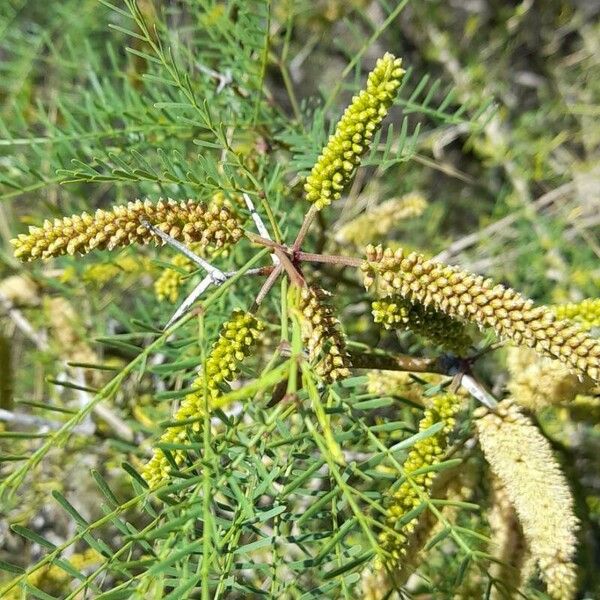
Plant Overview
The Alpataco is a rugged survivor of the South American drylands, specifically the harsh, wind-swept plains of Argentina. Often called the "creeping mesquite," this shrub has a fascinating habit of growing partially buried in the sand, appearing as if it is emerging directly from the earth. In its native habitat, it is a symbol of endurance, providing shelter and sustenance in places where few other plants can survive.
🔍 How to Identify
- 📏 Growth Habit: Unlike its tree-sized relatives, the Alpataco is a low-growing, sprawling shrub that rarely exceeds 2-3 meters in height. It often forms dense, prickly thickets that hug the ground.
- 🍃 Lacy Foliage: The leaves are "bipinnate," meaning they have a delicate, feathery appearance. These small, bright green leaflets are designed to minimize water loss in scorching heat.
- ⚔️ Defensive Spines: Along the zig-zagging branches, you will find formidable, straight thorns. These spines can grow quite long (up to 6 cm) and serve as protection against hungry desert herbivores.
🏡 In Your Garden
- 🏜️ Master of Aridity: The Alpataco is a "phreatophyte," which means it possesses an incredibly deep taproot system designed to find groundwater far below the surface. In a garden setting, this means it is exceptionally drought-tolerant once established but hates being moved due to its deep root structure.
- 🌬️ Erosion Control: Because of its sprawling nature and ability to trap windblown sand, it is excellent for stabilizing sandy soils or slopes. It thrives in poor, saline, or sandy soils where other plants might wither, making it a "tough-as-nails" choice for xeriscaping.
⚠️ Safety & Toxicity
- 🩹 Physical Hazard: While the plant is not known to be chemically toxic to humans or pets, its thorns are a significant physical danger. They are sharp enough to puncture tires or leather boots.
- 🐾 Pet Safety: The pods are actually quite nutritious and are often eaten by livestock or wild animals. However, keep the plant away from high-traffic areas where pets or children might run into the sharp spines.
✨ Fun Fact
In the regions where it grows, the Alpataco is more than just a shrub; it’s an ecosystem engineer. Its low branches trap organic debris and moisture, creating "islands of fertility" in the desert that allow other smaller plants and insects to survive in the shade.

Detailed Care Instructions








