Plant Overview
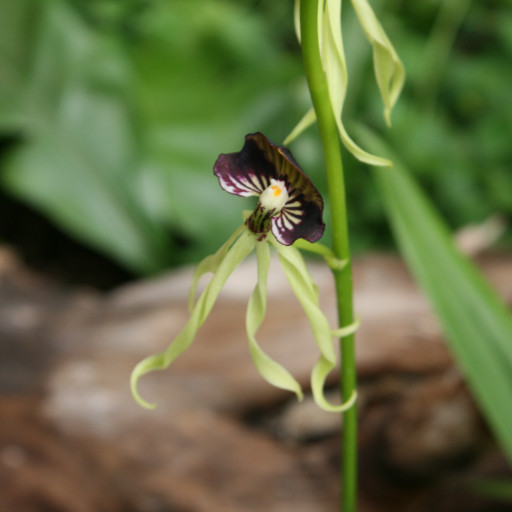
Commonly called the Cockleshell Orchid or Clamshell Orchid, this striking tropical beauty looks like it floated straight out of an undersea reef. Native to Central America and the Caribbean, it is famously the national flower of Belize. It is one of the most popular orchids for beginners because of its "alien" look and its incredibly long-lasting blooming cycle.
🔍 How to Identify
- 🐙 The "Octopus" Shape: Unlike most orchids, the flowers are non-resupinate, meaning they grow "upside down." The long, thin, greenish-yellow sepals and petals hang downward like dangling tentacles.
- 🐚 The Hooded Lip: The "lip" of the flower (the labellum) sits at the top and is a deep, velvety purple-black with radiating yellow veins, resembling a small seashell.
- 🍐 Pear-Shaped Bulbs: At the base of the plant, you will find flattened, pear-shaped pseudobulbs that store water, which usually sprout two or three long, strap-like evergreen leaves.
🏡 In Your Garden
- 🌬️ The Epiphytic Lifestyle: In the wild, this orchid grows on trees rather than in dirt. To keep it happy at home, use a chunky bark-based orchid mix. It thrives on air circulation and will quickly rot if planted in heavy potting soil.
- ⏳ The Marathon Bloomer: This species is a "sequential bloomer." Instead of all the flowers opening at once and dying together, it produces flowers one after another on the same stalk. A single flower spike can stay in bloom for over six months!
⚠️ Safety & Toxicity
- 🐾 Pet Friendly: The Cockleshell Orchid is generally considered non-toxic to cats and dogs, making it a safe choice for pet-friendly households.
- 🪴 Gentle Handling: While non-toxic, the sap from the pseudobulbs can be sticky. It is always best to wash your hands after pruning to avoid any potential mild skin irritation from the plant's natural juices.
✨ Fun Fact
The Cockleshell Orchid is a rebel in the botanical world; while 99% of orchids twist their flowers 180 degrees as they develop to put the "lip" on the bottom, this species refuses to turn, keeping its lip proudly at the top!

Detailed Care Instructions
To grow a Prosthechea cochleata plant, also known as the clamshell orchid, follow these steps:
- Lighting: Place the plant in a location with bright, but indirect, light. Avoid direct sunlight, which can scorch the leaves. A west or east-facing window is usually ideal.
- Temperature and humidity: Prosthechea cochleata plants prefer warm temperatures between 70-85°F (21-29°C) during the day and slightly cooler temperatures of 55-65°F (13-18°C) at night. They also require high humidity levels, around 50-70%. Consider placing a humidity tray near the plant or misting it regularly.
- Watering: Water the plant thoroughly when the top inch of the potting mix feels dry to the touch. Allow excess water to drain away and never let the plant sit in water, as this can lead to root rot. During hotter months, you may need to water more frequently.
- Potting mix: Use a well-draining orchid-specific potting mix, such as one containing bark, sphagnum moss, or perlite. Avoid using regular potting soil, as it can retain too much moisture and cause root rot.
- Fertilization: Provide the plant with a balanced orchid fertilizer, diluted to half-strength, every two to four weeks during the growing season (usually spring and summer). Follow the instructions on the fertilizer package for the exact amount to use.
- Repotting: Prosthechea cochleata plants prefer to be slightly root-bound, so repot them only when necessary, about every 2-3 years. Use a slightly larger pot when repotting and ensure good drainage.
- Air circulation: Good air circulation helps prevent fungal diseases and encourages healthy growth. Avoid placing the plant in drafty areas but ensure it receives enough airflow.
- Blooming: The Prosthechea cochleata plant produces beautiful white or yellow flowers with a distinctive clamshell shape. Flowering typically occurs in late winter or spring. Once the flowers have finished blooming, you can remove the spent flowers (a process called deadheading) to encourage new growth.
By following these care instructions and providing proper conditions, you can successfully grow a Prosthechea cochleata plant.

Place in a window with dappled sun or a spot in the middle of a room. Or directly in a window facing west or east.

To properly care for the plant, it is important to water it regularly. Watering should be done deeply and thoroughly, saturating the soil or growing medium. However, it is important to allow the top inch or so of soil to dry out before watering again. Overwatering can cause root rot and other issues, so it is important to monitor the moisture level of the soil. In addition, it is important to avoid getting water on the leaves or flowers, as this can promote the growth of harmful fungi or bacteria. To accomplish this, it is recommended to water the plant at the base, rather than from above. Finally, it is important to make sure the plant has proper drainage, as standing water can also cause issues.
- Choose a balanced fertilizer with equal amounts of nitrogen, phosphorous, and potassium.
- Dilute the fertilizer to half strength.
- Apply the fertilizer to the soil once every two weeks during the growing season (usually spring and summer).
- Water the plant immediately after fertilizing to ensure the nutrients penetrate the soil.
- Avoid fertilizing during the dormant season (usually fall and winter) when the plant is not actively growing.
- Watch for signs of overfertilization, such as yellowing or wilting leaves, and adjust the fertilizing schedule accordingly.
The optimal soil for the Prosthechea Cochleata plant should have good drainage and be fast-draining. It is recommended to use a mix of coarse sand and sphagnum moss or a mix of bark and perlite. The pH level should be slightly acidic, between 5.5 and 6.5. It is important to avoid soil that is too compact or that retains too much moisture, as this can lead to root rot. The Prosthechea Cochleata plant prefers to be slightly dry between watering, so it is important to not keep the soil constantly moist. Adding fertilizers to the soil should be done sparingly as the plant does not require heavy feeding. Overall, the soil used for this plant should promote healthy root growth and allow for good drainage.
To propagate this plant, take cuttings from healthy specimens during the active growing season. Use a clean, sharp pair of scissors or pruning shears to remove a stem section about 4-6 inches in length. Make the cut just below a leaf node or where the stem is still tender but not too young.
Remove any lower leaves on the stem section, leaving just a few at the top. Dip the cut end of the stem in rooting hormone and place it in a pot filled with sterile potting mix. Keep the pot in a warm, humid location, misting the soil and cutting regularly to keep it from drying out.
After several weeks, the cutting should begin to develop roots. Once it has a robust root system, it can be transplanted into a larger container or directly into the ground. Monitor soil moisture and provide appropriate care for the newly propagated plant until it is established.
Common pests of the clamshell orchid include Scale insect, mealybugs, spider mites, thrips. Make a habit of checking your clamshell orchid frequently for pests so that any infestations can be caught and managed early.








