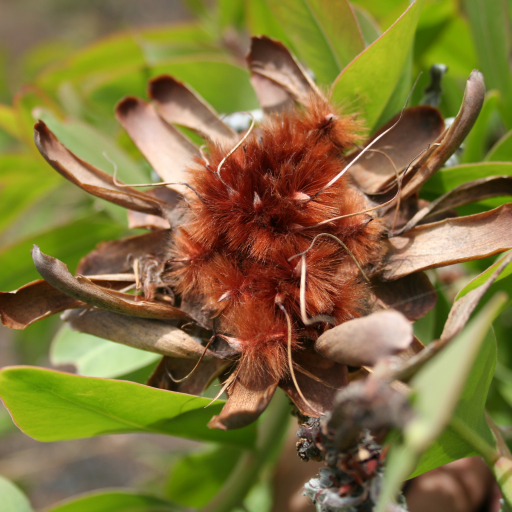
Plant Overview
Often called the "Savanna Sugarbush," Protea madiensis is a resilient symbol of the African wilderness. Unlike its more delicate-looking relatives from the Cape, this Protea is a rugged survivor, adapted to the sweeping grasslands and mountainous savannas of Central and East Africa. It acts as a vital "nectar bar" for sunbirds and bees, standing tall as a woody shrub that can withstand the heat of the sun and the sting of seasonal bushfires.
🔍 How to Identify
- 🌸 The "Flower" Head: What looks like a single large flower is actually a cluster of tiny florets surrounded by stiff, pointed bracts that range in color from creamy white to a soft, blushing pink.
- 🍃 Leathery Foliage: The leaves are thick, elliptical, and feel like smooth leather; they are designed to retain moisture in dry climates and often have a subtle blue-green tint.
- 🌳 Corky Bark: The main stem and branches are covered in a thick, fissured, cork-like bark, which serves as a natural heat shield against savanna fires.
🏡 In Your Garden
- 🌬️ Breezy Requirements: This plant demands excellent air circulation and hates "wet feet." In a garden setting, it needs rocky or sandy soil that drains almost instantly to prevent root rot.
- 🚫 Fertilizer Warning: Never use standard phosphorus-heavy fertilizers. Protea madiensis uses specialized "proteoid" roots to scavenge nutrients from poor soil; giving it too much food can actually poison the plant.
⚠️ Safety & Toxicity
- ✅ General Status: Protea madiensis is considered non-toxic to humans and common household pets like cats and dogs.
- 🧤 Pruning Care: While not poisonous, the dried flower heads and woody stems can become quite sharp and stiff. It is best to wear garden gloves when pruning to avoid scratches or skin irritation from the fine hairs on new growth.
✨ Fun Fact
Protea madiensis is a "pyrophyte," a plant that has evolved to love fire. Its thick bark is so fire-resistant that even after a massive savanna blaze has turned the grass to ash, the Protea is often one of the first plants to sprout green shoots from its charred branches.

Detailed Care Instructions








