Plant Overview
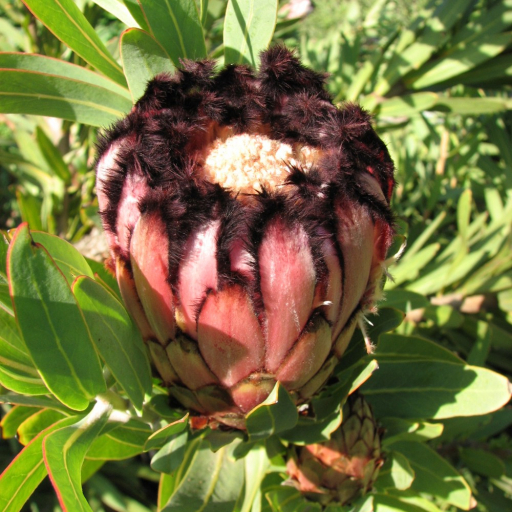
Often called the Oleander-leaf Protea or the Narrow-leaf Sugarbush, this plant is a crown jewel of the South African fynbos. It is famous for its regal, cup-shaped blooms that look as though they have been delicately dipped in black velvet. These hardy shrubs are the survivors of the botanical world, thriving in the rugged, wind-swept coastal mountains of the Cape.
🔍 How to Identify
- 🍃 The Foliage: The leaves are long, narrow, and leathery with a distinct grey-green hue. They look remarkably similar to the leaves of an Oleander tree, which is how the plant earned its botanical name, neriifolia.
- 🌸 The Bearded Bracts: The "flower" is actually a collection of small flowers surrounded by stiff, colorful bracts. These bracts range from creamy green to deep pink and are most famous for the tufts of soft, black or purple "fur" along their tips.
- 📏 Growth Habit: It grows as a large, upright evergreen shrub. In the wild, it can reach heights of up to 3 meters, creating a dense, silver-pink screen in the landscape.
🏡 In Your Garden
- 🧪 The "No-Phosphate" Rule: This plant has a specialized root system designed to scavenge nutrients from poor soil. Because of this, standard garden fertilizers can actually be "overdoses" for them. Always use a fertilizer specifically labeled for Proteas or natives to avoid phosphorus toxicity.
- 🌬️ Airflow is Key: Proteas hate "wet feet" and stagnant air. They thrive in windy, open positions with very well-draining, acidic soil. If you live in a humid area, give them plenty of space to breathe to prevent fungal issues on those beautiful leaves.
⚠️ Safety & Toxicity
- ✅ Status: Non-toxic and safe.
- 🐾 General Safety: Protea neriifolia is not known to be poisonous to humans, cats, or dogs. However, because the leaves are very tough and leathery, they can be a choking hazard or cause minor digestive irritation if ingested by curious pets.
✨ Fun Fact
In the 1800s, the nectar of the Sugarbush was so abundant that Cape settlers would shake the flower heads into buckets to collect the "honey water." They would then boil it down into a thick, dark medicinal syrup known as bossiestroop, which was used as a popular remedy for coughs and chest complaints!

Detailed Care Instructions
To grow Protea Neriifolia plant, also known as the oleander-leaf protea, you can follow these steps:
- Climate and location: Protea Neriifolia thrives in Mediterranean and subtropical climates. Ensure that your location provides full sun exposure and well-drained soil.
- Soil requirements: Use sandy or loamy soil with good drainage, as Protea plants are susceptible to root rot in heavy clay or waterlogged soil. The soil should also be slightly acidic to neutral.
- Propagation: You can either grow Protea Neriifolia from seeds or cuttings. Seeds can take several months to germinate, while cuttings root more easily and quickly.
- Seed propagation: Soak seeds in water for 24 hours, then plant them in a mixture of peat moss and perlite. Keep the soil moist but not soggy and provide bottom heat of around 70°F (21°C). Transplant seedlings once they have multiple true leaves.
- Cutting propagation: Take 4-6 inch (10-15 cm) stem cuttings from the main plant during late spring or early summer. Dip the cut ends in rooting hormone and plant them in a mixture of equal parts coarse sand and peat moss. Place the cuttings in a plastic bag with a few holes for ventilation and keep them in a warm, bright location. Rooting should occur in about 2-4 weeks.
- Seed propagation: Soak seeds in water for 24 hours, then plant them in a mixture of peat moss and perlite. Keep the soil moist but not soggy and provide bottom heat of around 70°F (21°C). Transplant seedlings once they have multiple true leaves.
- Watering: Protea Neriifolia prefers a slightly dry environment, so water sparingly once established. Never let the soil become completely dry, but avoid overwatering as it can lead to root rot.
- Fertilizer: Use a low-phosphorus, slow-release fertilizer formulated for acid-loving plants. Apply it in spring and late summer, following the package instructions for dosage.
- Pruning: Prune the plant after flowering to maintain a compact shape and remove any dead or diseased branches. Avoid heavy pruning, as Protea Neriifolia blooms on old wood.
- Mulching: Apply a layer of organic mulch around the base of the plant to retain moisture, suppress weeds, and protect the roots from temperature fluctuations.
- Protection from frost: If you live in a frost-prone area, provide protection by covering the plant with frost cloth, burlap, or a blanket during cold winter nights.
- Pest and disease control: Protea Neriifolia is generally resistant to pests and diseases. However, occasional issues may include scale insects, aphids, and powdery mildew. Treat pest problems with organic insecticides or horticultural oils, and prevent disease by ensuring good air circulation and avoiding overwatering.
By following these guidelines, you should be able to successfully grow Protea Neriifolia plant in your garden or as a potted specimen.

Place in a bright room that is sun drenched almost all day. Or directly in a south-facing window.

Protea Neriifolia plant prefers a moderate amount of water and should not be over-watered as it can lead to root rot. The soil should be allowed to dry partially before watering again. It is important to ensure good drainage to prevent waterlogging. Watering should be done at the base of the plant, avoiding getting the leaves wet. During the growing season, the plant may require more frequent watering, especially during hot and dry weather. However, the plant should be allowed to dry out completely between watering sessions. In winter, watering should be reduced to prevent the soil from becoming too wet and cold.
To fertilize this plant, apply a slow-release fertilizer with a balanced NPK ratio of 10-10-10 or 7-7-7. Apply the fertilizer in early spring and again in mid-summer, following the package instructions for the amount to use. Avoid applying fertilizer directly to the base of the plant, instead, spread the fertilizer evenly around the plant's drip line and water it in thoroughly. Additionally, supplement the plant with occasional applications of a liquid seaweed fertilizer during the growing season.
Protea Neriifolia plants thrive in well-draining soil that is slightly acidic to neutral in pH. It is best to use a soil mixture that is a combination of sandy loam, perlite, and organic matter such as compost or peat moss. This type of soil will provide good aeration and drainage for the plant's roots, preventing waterlogging and root rot.
In addition, adding some coarse sand to the soil mixture can further improve drainage and prevent the soil from becoming compacted. This will help promote healthy root growth and overall plant health.
It is important to avoid using heavy, clay-like soils or soils with poor drainage for Protea Neriifolia plants, as this can lead to root rot and other problems. Regularly testing the soil pH and amending it as needed with lime or sulfur can also help ensure that the plant is receiving the proper nutrients it needs to thrive.
To propagate this plant, you will need to first take semi-hardwood cuttings from the stem of a healthy and mature plant during the summer months. Cuttings should be approximately 5-10 centimeters long and taken from a non-flowering section of the stem. Remove the bottom leaves and dip the cut end in hormone rooting powder.
Prepare a well-draining soil mix of equal parts perlite, vermiculite, and peat moss. Place the cuttings in the soil, ensuring that the cutting is inserted deep enough to create a stable base. Water the cuttings well and cover with a plastic bag or clear plastic dome to maintain humidity levels.
Place the cuttings in a bright, indirect light location and maintain a consistent soil moisture level. After approximately 4-6 weeks, roots should begin to form, and the plant can be transplanted into individual containers.
Continue to provide bright, indirect light and moist soil as the new plants establish themselves. Once the plants are well-established, they can be moved into their final growing location, where they will bloom beautiful flowers.
Common pests of the narrow-leaf sugarbush include Scale insect. Make a habit of checking your narrow-leaf sugarbush frequently for pests so that any infestations can be caught and managed early.








