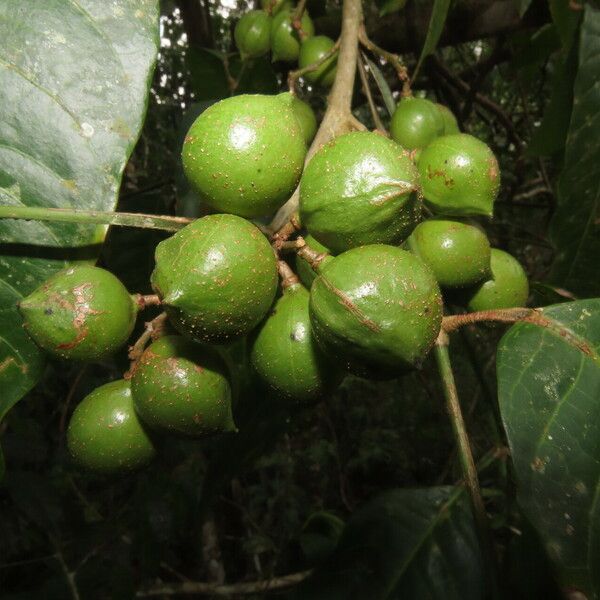
Plant Overview
Known affectionately as the Copal Tree, Protium panamense is a fragrant sentinel of the Central American rainforests. It belongs to the Burseraceae family, making it a close cousin to the legendary Frankincense and Myrrh trees. For centuries, it has been cherished not just for its stature, but for the "tears" of aromatic resin it produces, which have scented sacred ceremonies from ancient times to the present day.
🔍 How to Identify
- 🍃 Pinnate Foliage: The leaves are large, glossy, and compound, usually consisting of several pairs of leaflets that give the tree a lush, feathered appearance.
- 🪵 Aromatic Resin: One of the easiest ways to identify this tree is by its scent; if the bark is slightly nicked, it "bleeds" a milky, sticky resin that smells strongly of citrus and pine.
- 🦴 Smooth Bark: The trunk is typically smooth and grayish, often standing out against the darker, rougher bark of neighboring tropical trees.
🏡 In Your Garden
- 🌱 The Taproot Rule: Like many of its relatives, Protium panamense develops a deep, sensitive taproot early in its life. It intensely dislikes being transplanted, so it is best to plant it in its permanent location while it is still a small sapling.
- ☀️ Light Gradation: In its youth, it thrives in the dappled light of a forest understory, but as it matures, it requires full sun to reach its full height and produce its signature resin.
- 💧 Moisture Consistency: While it is surprisingly resilient once established, it prefers well-draining soil that mimics the humic-rich floor of a tropical jungle—never let the roots sit in stagnant water.
⚠️ Safety & Toxicity
- ✅ General Safety: This tree is considered non-toxic to humans and common household pets.
- 🧴 Resin Sensitivity: While the resin is used in perfumes and incense, the raw sap can be a mild skin irritant for some individuals. It is best to wear gloves if you are pruning or handling the "bleeding" bark to avoid a sticky rash.
✨ Fun Fact
🔥 Messenger to the Gods: The name "Copal" is derived from the Nahuatl word copalli. Ancient Mayan and Aztec cultures believed that the smoke from the burning resin of this tree acted as a spiritual medium, carrying the prayers of the living directly to the ears of the gods.

Detailed Care Instructions








