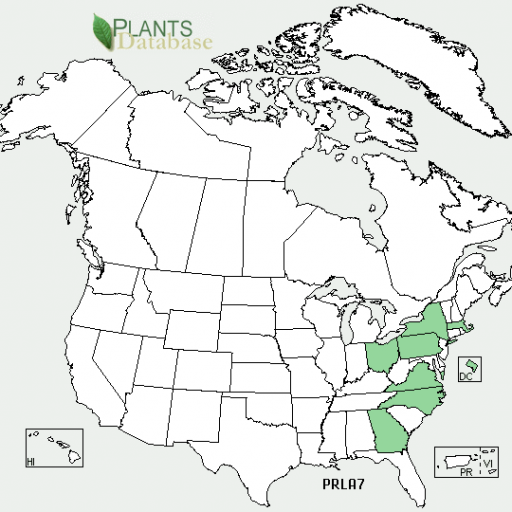
Plant Overview
Known as the Cut-leaf Self-heal, this charming perennial is the sophisticated cousin of the common lawn self-heal. While most members of its family paint the ground in shades of violet, Prunella laciniata stands out with its creamy-white blossoms and intricately fringed foliage. It is a resilient "healer" of the plant world that adds a touch of wild, meadow-like elegance to any sun-drenched garden.
🔍 How to Identify
- 🍃 Lacy Foliage: Unlike the smooth, oval leaves of its relatives, these leaves are deeply "laciniate" (lobed or fringed), looking as though they were carefully detailed with a pair of craft scissors.
- ☁️ Creamy Blooms: The tubular flowers are packed into dense, square-shaped spikes. They are typically a soft cream or buttery white, which makes them pop against the dark green stems.
- 📏 Low-Profile Habit: It grows in a creeping, mat-like fashion, usually staying under 10 inches tall, though the flower spikes stand upright to greet passing pollinators.
🏡 In Your Garden
- 🐝 Pollinator Paradise: This plant is a high-value nectar source. Its "hooded" flowers are specifically designed for bumblebees, who use the lower lip as a landing pad while they push inside for a drink.
- 🌱 Tough-as-Nails Groundcover: It thrives in dry, calcareous (limestone) soils where other plants might wither. Because it has a vigorous root system, it’s excellent for stabilizing soil on small slopes or filling gaps in rock gardens.
⚠️ Safety & Toxicity
- ✅ Safe Status: Prunella laciniata is non-toxic and generally considered safe for households with curious cats, dogs, or children.
- 🍵 The "Self-Heal" Legacy: As the name suggests, plants in this genus have been used in traditional folk medicine for centuries to treat minor wounds and sore throats. However, never ingest wild plants without expert identification and consultation.
✨ Fun Fact
The name Prunella is a Latinized version of the German word "Die Bräune," an old term for a throat infection (quinsy) that this plant was historically used to cure. In the language of flowers, it represents "protection" and "healing."

Detailed Care Instructions
To grow Prunella Laciniata, also known as Cutleaf Selfheal, you can follow these steps:
- Choose a suitable location: Prunella Laciniata prefers partial shade to full sun, so select a spot in your garden or outdoor space that receives about 4-6 hours of sunlight daily.
- Prepare the soil: The plant thrives in well-draining soil, so make sure the soil is loose and friable. You can amend heavy clay soil by adding compost or organic matter to improve drainage.
- Planting: Prunella Laciniata can be grown from seeds or plant divisions. If using seeds, sow them directly into the prepared soil in spring or fall, following the instructions on the seed packet. For plant divisions, dig a hole slightly larger than the root ball and place the plant in the hole at the same level it was previously growing. Gently backfill the hole and firm the soil around the plant.
- Watering: Keep the soil moist but not waterlogged during the establishment period after planting. Once the plant is established, water it regularly, especially during dry periods. Water deeply so that the root system receives sufficient moisture.
- Mulching: Apply a layer of organic mulch around the plant to help retain moisture, suppress weeds, and regulate soil temperature. Avoid placing mulch directly against the stem to prevent rot.
- Fertilizing: Prunella Laciniata generally does not require heavy fertilization. However, you can apply a balanced slow-release fertilizer in early spring to promote healthy growth.
- Pruning: Prunella Laciniata is a low-growing perennial, and regular pruning can help maintain a neat appearance. It can be cut back after flowering to encourage a second bloom and prevent it from becoming too leggy.
- Pests and diseases: Prunella Laciniata is relatively resistant to pests and diseases. However, keep an eye out for aphids, slugs, and snails. If any infestations occur, treat them accordingly using eco-friendly pest control methods.
- Propagation: The plant can be propagated through division. Every 2-3 years, dig up the plant in early spring or fall, and separate the clumps into smaller sections. Replant the divisions in suitable locations and care for them as you would for mature plants.
By following these steps and providing proper care, you should be able to successfully grow Prunella Laciniata.

Place in a bright room that is sun drenched almost all day. Or directly in a south-facing window.

To water this plant, always check the moisture level of the soil before watering. Stick your finger in the soil up to the first knuckle. If the soil feels dry, it's time to water. Keep the soil moist but not waterlogged. Avoid overwatering as it can lead to root rot. Water the plant at the base, avoiding getting water on the leaves. Consider using a watering can with a narrow spout to deliver water directly to the soil. Also, consider using a tray under the plant pot to catch any excess water. Water the plant regularly, preferably in the morning or evening when the temperature is cooler.
To fertilize this plant, use a balanced slow-release fertilizer with an NPK ratio of around 10-10-10. Apply the fertilizer in early spring before new growth begins. Do not over-fertilize as this can lead to excessive vegetative growth. Water the plant thoroughly after applying fertilizer.
The ideal soil for this plant should be well-draining and nutrient-rich. A mix of loamy soil and organic matter such as compost or aged manure will provide the necessary nutrients for healthy growth. The plant prefers a soil pH of 6.0-7.5 and can tolerate slightly acidic soil. It is important to ensure that the soil is not waterlogged, as this can lead to root rot. Additionally, the plant benefits from a layer of mulch around the base to retain moisture and suppress weeds.
There are several methods for propagating this plant. One common method is through division. This involves gently digging up the plant and carefully separating the roots into smaller sections, each with its own set of leaves and stems. These sections can be replanted in a new location or in pots to grow.
Another method is through stem cuttings. Select a healthy stem with several leaves and cut it just below a node, which is the spot where leaves or branches emerge from the stem. Remove the leaves from the bottom half of the stem and plant the cutting in a pot filled with moist soil. Keep the soil consistently moist and place the pot in a warm, bright location. The cutting should root and begin to grow in a few weeks.
Finally, some species of this plant can be grown from seed. Sow seeds in a shallow tray or pot filled with moist seed-starting mix. Cover the seeds with a thin layer of soil and keep the soil consistently moist. Germination can take several weeks. Once the seedlings are large enough, they can be transplanted to individual pots or a growing bed.








