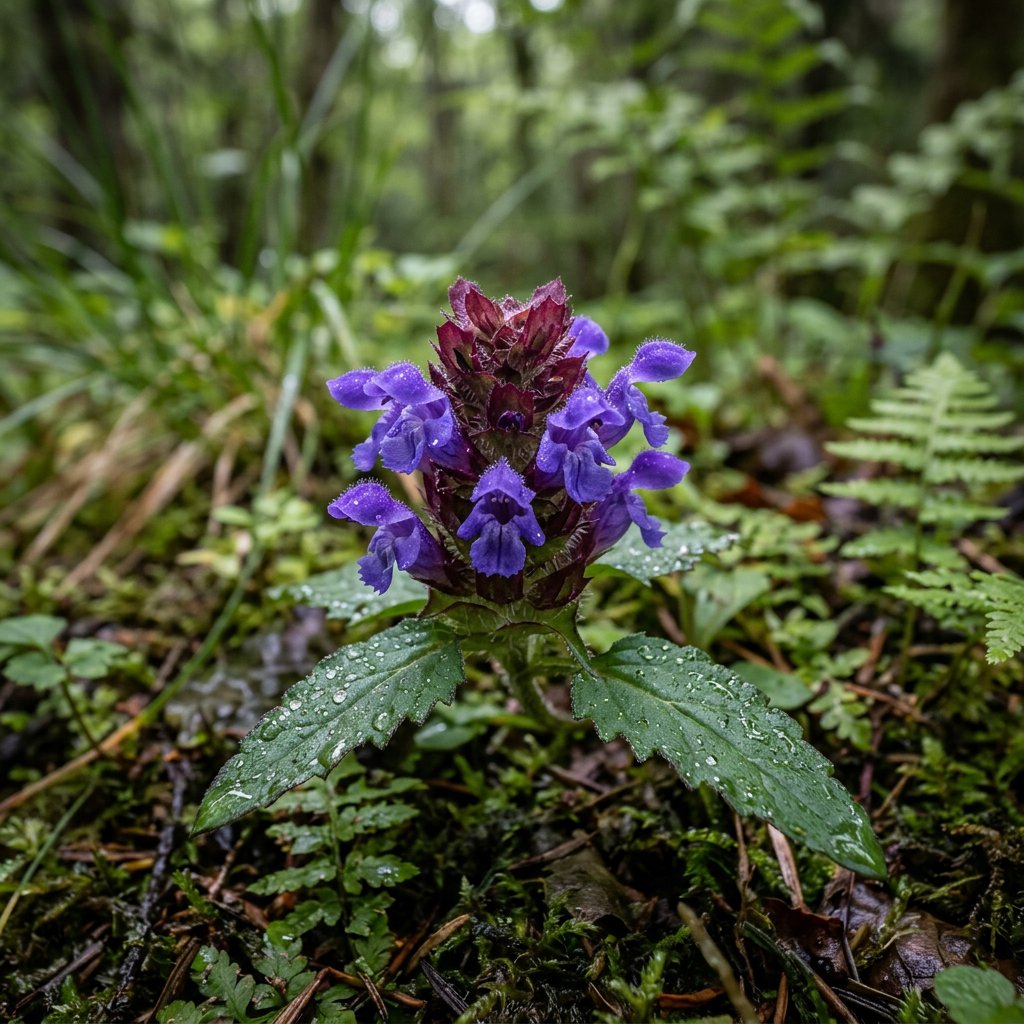
Plant Overview
Often called "Heal-all," "Woundwort," or "Heart-of-the-earth," Prunella vulgaris is a humble but mighty member of the mint family that has traveled across the globe. For centuries, it was the go-to remedy for soldiers and herbalists, earning a reputation as a plant that could mend almost any minor ailment. Whether tucked into a wild meadow or popping up in your backyard lawn, this resilient little perennial is a friend to both pollinators and people.
🔍 How to Identify
- 🌿 Square Stems: True to its mint family lineage, the stems are distinctly four-sided and slightly hairy, growing either upright or creeping along the ground.
- 💜 Hooded Blooms: The flowers are a vibrant violet or deep purple, clustered in dense, club-like spikes that look almost like miniature pinecones from a distance.
- 🍃 Opposite Leaves: The lance-shaped or ovate leaves grow in pairs directly opposite each other, often featuring slightly wavy edges and a soft, textured surface.
🏡 In Your Garden
- 🌱 Lawn Resilience: This plant is incredibly tough; it can survive regular lawn mowing by simply adapting its growth habit, blooming shorter and closer to the ground to avoid the blades.
- 🦋 Pollinator Magnet: If you allow it to grow in a "No Mow" patch, you’ll notice it is a favorite for bumblebees and butterflies who prize the high-quality nectar hidden within its tubular flowers.
- 🌍 Adaptable Groundcover: It isn't picky about soil and can handle both damp clay and drier spots, making it an excellent choice for a low-maintenance, "wild" lawn alternative.
⚠️ Safety & Toxicity
- ✅ Safe Status: Prunella vulgaris is considered non-toxic to humans and has a long history of being used in salads, stews, and herbal teas.
- 🐾 Pet Friendly: It is generally safe for cats and dogs, so you don't need to worry if your furry friend brushes against it or takes a curious nibble.
- 🚜 Harvesting Warning: If you plan to use this plant for tea, ensure it hasn't been growing in a lawn treated with chemical pesticides or near a busy, polluted roadside.
✨ Fun Fact
🗡️ The Soldier’s Herb: In the Middle Ages, this plant was so highly regarded for its ability to stop bleeding that it was a mandatory ingredient in the "wound drinks" given to knights and soldiers returning from the battlefield.

Detailed Care Instructions
To grow Prunella vulgaris, also known as self-heal or heal-all, you can follow these steps:
- Obtaining seeds or seedlings: You can purchase Prunella vulgaris seeds or seedlings from a local nursery or online. Alternatively, you can also collect seeds from wild Prunella vulgaris plants if they are found in your area.
- Choosing a suitable location: Prunella vulgaris prefers full sun to partial shade. Select a well-draining spot in your garden that receives at least 4-5 hours of direct sunlight per day.
- Preparing the soil: Ensure that the soil is well-drained and loosened. Remove any weeds or debris from the area. If the soil is heavy clay or sandy, consider improving it by adding organic matter such as compost or well-rotted manure to improve fertility and drainage.
- Planting seeds or seedlings: If you are starting with seeds, sow them directly on the soil's surface and then lightly cover them with a thin layer of soil. Water gently to keep the soil moist until germination, which usually takes around 10-14 days. If using seedlings, dig a hole twice the size of the root ball, place the seedling in the hole, and backfill with soil, gently firming it around the roots. Water the seedling after planting.
- Watering: Prunella vulgaris prefers slightly moist soil. Water regularly but avoid overwatering, as it can lead to root rot. Allow the top inch of soil to dry between waterings.
- Mulching: Apply a layer of organic mulch around the base of the plants to retain moisture, suppress weeds, and maintain a more consistent soil temperature.
- Pruning: Prunella vulgaris typically grows in a low, spreading habit. Regular pruning encourages bushier growth and helps to control its height. You can trim back the stems after blooming to promote new growth.
- Fertilization: Prunella vulgaris generally does not require heavy fertilization. However, you can apply a balanced, slow-release fertilizer once or twice a year during the growing season to provide additional nutrients.
- Pests and diseases: Prunella vulgaris is relatively pest and disease resistant. However, keep an eye out for common garden pests like aphids, slugs, or snails. If necessary, treat them using organic pest control methods.
- Harvesting: Prunella vulgaris leaves and flowers can be harvested for medicinal purposes or used in teas. Harvest the leaves and flowers just before or during flowering when they are at their most potent. Dry them in a well-ventilated area before storage.
Remember to check your local regulations regarding the cultivation of Prunella vulgaris, as some areas may consider it an invasive weed.

Place in a window with dappled sun or a spot in the middle of a room. Or directly in a window facing west or east.

To water this type of plant, first consider the soil conditions such as drainage and moisture levels. It prefers moist but not soggy soil. Avoid letting the soil dry out completely between waterings, but also make sure not to overwater as that can lead to root rot. You can water the plant using a watering can or hose, making sure to water the soil directly and not the leaves. The frequency of watering will depend on factors such as the climate, season and location of the plant. Monitor the plant regularly and adjust watering as needed.
To fertilize this plant, apply a balanced all-purpose fertilizer in the early spring before new growth appears. Use a slow-release granular fertilizer or a liquid fertilizer diluted to half strength. Fertilize again every six weeks during the growing season until the end of summer. Water the plant after applying the fertilizer to help it absorb the nutrients. Avoid fertilizing during drought conditions or extreme temperatures.
Generally, Prunella Vulgaris plant can grow in various types of soils as long as they are well-draining. It is ideal to use a soil mixture that is loamy, light, and rich in organic matter. The pH of the soil should be between 6.0 to 7.5, which means it should be slightly acidic to neutral. The plant does well in soil that retains moisture well but does not become waterlogged. Adding in some sand or perlite can improve drainage. Additionally, fertilizer can be added to the soil once or twice a year to provide essential nutrients. Overall, a well-draining soil mixture that is rich in organic matter and slightly acidic to neutral is ideal for the growth and development of Prunella Vulgaris plant.
One way to propagate this plant is by taking stem cuttings. Select a healthy stem from the parent plant and use a sharp, clean pair of scissors to cut it at a 45-degree angle. The cutting should be approximately four to six inches in length and should have at least two sets of leaves.
Remove the lower set of leaves from the cutting, leaving only the top set. This will allow the cutting to concentrate its energy on root development rather than leaf growth.
Next, dip the bottom two inches of the cutting in rooting hormone powder to stimulate root growth. Tap off any excess powder.
Place the cutting in a pot filled with moist potting soil. Water the cutting thoroughly and cover the pot with a clear plastic bag to create a humid environment for the cutting. Keep the potting soil moist, but not waterlogged, and avoid direct sunlight.
In about four to six weeks, the cutting should develop roots and can be transplanted to its permanent location.
Common pests of the common selfheal include Spider mites, whiteflies. Make a habit of checking your common selfheal frequently for pests so that any infestations can be caught and managed early.








