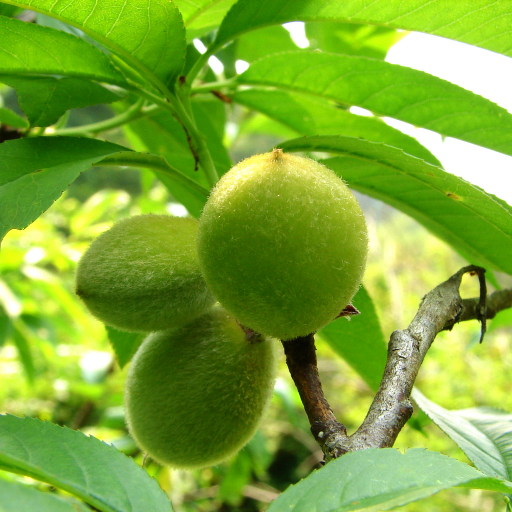
Plant Overview
Often called the "Queen of the Rose Family," the Almond tree is a symbol of spring’s first breath, famously being one of the first trees to bloom in late winter. In ancient folklore, it represents watchfulness and promise due to its early awakening from dormancy. While we treat them as nuts in the kitchen, these crunchy treasures are botanically the seeds of a fruit closely related to the peach.
🔍 How to Identify
- 🌸 Early Blossoms: Stunning five-petaled flowers in shades of snowy white or soft pink that transform the tree into a cloud of color before any leaves even appear.
- 🍃 Slender Foliage: Long, lance-shaped leaves with finely serrated (saw-toothed) edges that give the canopy a delicate, shimmering appearance in the breeze.
- 🍑 Velvety Drupes: Unlike a peach, the outer flesh is a tough, leathery green "hull" that eventually dries and splits open to reveal the pitted shell we recognize.
🏡 In Your Garden
- 🐝 The Need for Neighbors: Most traditional almond varieties are "self-sterile," meaning they require a different variety planted nearby and plenty of pollinating bees to actually produce a harvest.
- ☀️ Mediterranean Soul: They crave intense sun and well-draining soil; their biggest enemy is "wet feet," as standing water around the roots can lead to rapid fungal decay and root rot.
⚠️ Safety & Toxicity
- 🚫 Sweet vs. Bitter: Commercial "Sweet Almonds" are perfectly safe, but wild "Bitter Almonds" contain amygdalin, which breaks down into cyanide when ingested. Never eat almonds found in the wild without positive identification.
- 🐾 Pet Precautions: While the meat of a sweet almond isn't toxic to dogs like macadamias are, the high fat content can cause stomach upset, and the hard pits are a significant choking or intestinal blockage hazard.
✨ Fun Fact
Almonds are so closely related to peaches that the two can actually be cross-bred! The resulting hybrid is often used by orchardists as a sturdy rootstock for new trees.

Detailed Care Instructions
To grow a Prunus Amygdalus plant or almond tree, you can follow these steps:
- Select a suitable location: Almond trees require full sunlight, so choose a spot in your garden that gets at least 6-8 hours of direct sunlight daily. The soil should be well-draining, slightly acidic, and rich in organic matter.
- Prepare the soil: Before planting, prepare the soil by loosening it with a garden fork or tiller. Remove any weeds or rocks, and incorporate organic matter like compost or well-rotted manure to improve soil fertility.
- Choose and plant the almond variety: Select a suitable almond variety that is adapted to your climate. There are sweet and bitter almond varieties available. Purchase a grafted or bare-rooted almond tree from a reputable nursery. Dig a hole that is wide and deep enough to accommodate the roots, making sure not to bend or break them. Place the tree in the hole, ensuring that the graft union (the swollen area where the scion is joined to the rootstock) is above the soil surface. Backfill the hole with soil, gently firming it around the roots.
- Watering: Give the newly planted almond tree a thorough watering to settle the soil. Almond trees require regular watering during the first few years of growth to establish strong root systems. Water deeply, but less frequently, allowing the soil to dry out slightly between waterings.
- Mulching and weed control: Apply a layer of organic mulch, such as wood chips or straw, around the base of the tree, leaving a small space around the trunk to avoid direct contact with the bark. Mulching helps retain moisture, suppresses weeds, and maintains a more even soil temperature.
- Pruning: Prune the almond tree during the dormant season, preferably in late winter or early spring when new growth has not yet started. Remove any dead, damaged, or diseased branches. Also, thin out crowded branches to improve airflow and sunlight penetration. Pruning helps maintain the tree's health and shape.
- Fertilizing: Almond trees benefit from annual fertilization. Apply a balanced fertilizer specifically formulated for fruit trees following the recommended instructions on the package. Divide the total amount into multiple applications throughout the growing season.
- Pest and disease management: Regularly monitor your almond tree for any signs of pests or diseases, such as aphids, mites, or fungal infections. If detected, apply appropriate treatments as recommended by a local garden center or horticulturist to control the issue.
- Harvesting almonds: Depending on the variety, almonds usually take 4-6 months to mature. Harvest when the fruit pulp splits open naturally. Shake the tree gently or use long poles to knock the almonds loose. Allow them to dry for a week or two before removing the shells.
Remember that growing almond trees may require specific care based on your specific climate, so it's advisable to consult with local gardening resources or experts for further guidance.
Water the plant deeply, taking care not to let the soil dry out completely between waterings. It is important to avoid overwatering, which can lead to root rot. The plant prefers well-draining soil, so ensure proper drainage if planted in a container. During the growing season, the frequency of watering may need to be increased, especially during periods of hot, dry weather. Check the soil moisture level by inserting a finger into the soil to a depth of about an inch. If the soil feels dry, it is time to water. Avoid getting water on the foliage, as this can encourage fungal growth.
- Prior to planting, incorporate compost or aged manure into the soil to add nutrients.
- Apply a balanced fertilizer with equal amounts of nitrogen, phosphorus, and potassium in early spring.
- Once the tree begins to produce new growth, apply the same fertilizer every four to six weeks until early fall.
- Avoid applying fertilizer during late fall or winter to prevent stimulating new growth that may be damaged by frost.
- Water the tree thoroughly after each fertilizer application to help distribute the nutrients evenly.
When planting a Prunus Amygdalus plant, it is important to select the appropriate type of soil that is well-draining and rich in nutrients. This can be accomplished by using a mixture of loam, sand, and organic compost to create a well-balanced soil composition. The pH level of the soil should be slightly acidic to accommodate the plant's preferences. Additionally, the plant should be placed in a location that receives full sunlight and has adequate protection from strong winds. Regular watering and fertilization are also recommended to promote healthy growth and development of the plant.
To propagate this plant, take a cutting from a healthy and mature parent plant in the spring or early summer. The cutting should be approximately 4-6 inches long and have at least two nodes. Strip the leaves from the lower half of the cutting and dip it in rooting hormone powder. Then, insert the cutting into a pot filled with a well-draining soil mix.
Cover the pot with a plastic bag to create a humid environment and place it in a bright location, avoiding direct sunlight. Keep the soil evenly moist and do not allow it to dry out completely. After a few weeks, check for roots by gently tugging on the cutting. If there is resistance, roots have formed.
Once the cutting has developed roots, remove the plastic bag and gradually expose it to more light. After a few weeks, the cutting should be able to tolerate full sun. Once the plant has grown to a suitable size, it can be transplanted into a larger pot or into the ground.








