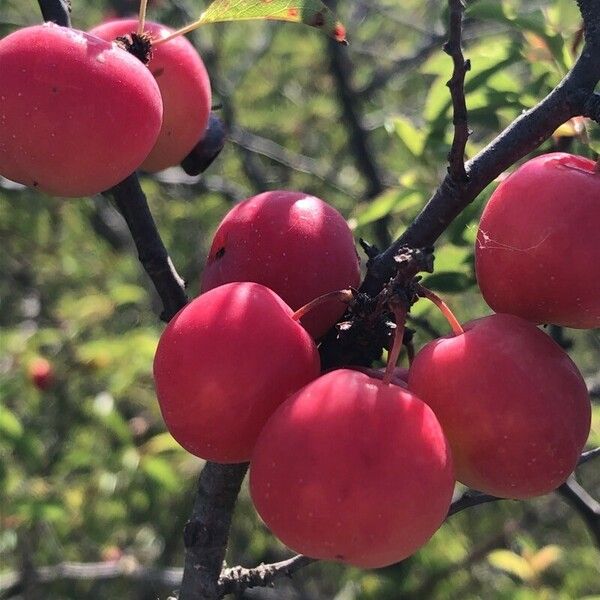
Plant Overview
Known affectionately as the Chickasaw Plum or Sand Plum, this hardy native of North America is a springtime showstopper. It was widely cultivated by Native American tribes long before European settlers arrived, who valued it for its tart, sun-ripened fruit. In the wild, it often forms dense, protective "thickets" that provide essential housing for songbirds and pollinators.
🔍 How to Identify
- 🌸 Early Blooms: Clusters of tiny, five-petaled white flowers blanket the branches in early spring, usually appearing well before the leaves emerge.
- 🍃 Narrow Foliage: The species name angustifolia means "narrow leaf," referring to its slender, lance-shaped leaves that fold slightly upward along the midrib.
- 🍒 Bright Fruit: Small, round plums—ranging from cherry-red to golden-yellow—appear in summer, boasting a thin skin with a distinct waxy "bloom."
- 🎋 Thicket Habit: It naturally grows as a multi-stemmed shrub or small tree, often featuring reddish-brown twigs that can develop thorn-like spurs.
🏡 In Your Garden
- 🌱 Thicket Control: Because it spreads via underground runners (suckers), this plant is perfect for stabilizing slopes or creating a natural privacy screen, but it may require pruning if you want a single-trunk tree look.
- ☀️ Soil Preferences: True to its "Sand Plum" nickname, it thrives in well-draining, sandy, or loamy soils. It is remarkably drought-tolerant once established and dislikes "wet feet" or heavy, compacted clay.
- 🦋 Wildlife Magnet: It is a vital host plant for several butterfly species, including the Tiger Swallowtail, and provides high-quality nectar for early-season bees.
⚠️ Safety & Toxicity
- 🟢 Fruit Status: The ripe fruit is edible and highly prized for making tart jellies, jams, and wines.
- 🚫 Toxic Parts: Like most members of the Prunus genus (including cherries and peaches), the wilting leaves, stems, and fruit pits contain cyanogenic glycosides.
- 🐾 Pet Safety: Keep livestock and pets away from the foliage and pits, as ingestion of these parts can be toxic if consumed in significant quantities.
✨ Fun Fact
History suggests that the Chickasaw Plum isn't actually native to the Southeast where it's most common today; instead, it's believed that ancient Indigenous groups brought it across the Mississippi River from the Western plains to cultivate it as a stable food source!

Detailed Care Instructions
Prunus angustifolia, also known as Chickasaw plum, is a species of native plum tree that produces small edible fruits. Here are some tips on how to grow and care for a Prunus angustifolia plant:
- Choose a sunny location: Prunus angustifolia plants prefer full sun, so choose a spot in your garden that receives at least 6-8 hours of direct sunlight each day.
- Plant in well-draining soil: Make sure the soil is well-draining to prevent waterlogged conditions, which can cause root rot.
- Water regularly: Keep the soil consistently moist, especially during the first year of growth. Once established, Prunus angustifolia plants are drought-tolerant and require less frequent watering.
- Fertilize sparingly: Prunus angustifolia plants do not require heavy feeding. You can apply a balanced fertilizer in the spring, but avoid over-fertilizing as it can lead to excessive leaf growth at the expense of fruit production.
- Prune as needed: Prunus angustifolia plants have a naturally shrubby growth habit, but you can prune them to shape and remove dead or diseased branches. Pruning should be done in late winter or early spring before new growth begins.
- Protect from pests and diseases: Keep an eye out for common pests such as aphids, scale insects, and plum curculio beetles. Treat infestations promptly with insecticidal soap or neem oil. Additionally, practice good sanitation by removing fallen fruit and debris to prevent the spread of diseases.
By following these tips, you can successfully grow and care for a Prunus angustifolia plant in your garden. Enjoy the beauty of its spring blooms and delicious fruits!

Place in a bright room that is sun drenched almost all day. Or directly in a south-facing window.

Prunus angustifolia plants should be watered regularly to keep the soil consistently damp but not waterlogged. It is important to water the plant at the base, near the roots, and avoid getting the foliage wet to prevent fungal diseases. During periods of hot, dry weather, the plant may require more frequent watering to maintain optimal growth. It is recommended to check the soil moisture levels before watering to avoid over or under-watering the plant. Using a watering can or a drip irrigation system can help deliver water directly to the roots and ensure the plant receives adequate moisture. Additionally, adding a layer of mulch around the base of the plant can help retain soil moisture and reduce the frequency of watering.
The Prunus angustifolia plant should be fertilized in early spring before new growth appears. Use a slow-release fertilizer specifically formulated for shrubs and trees. Follow the instructions on the fertilizer package for the correct amount to use based on the size of the plant. Water the plant thoroughly after applying fertilizer to help it absorb the nutrients. Avoid over-fertilizing, as this can harm the plant. Repeat the fertilization process once or twice during the growing season, if necessary.
Prunus Angustifolia plants thrive in well-draining soil that is slightly acidic to neutral in pH. A mixture of sandy loam soil enriched with organic matter such as compost or peat moss is ideal for these plants. It is important to avoid heavy clay soil as it can lead to poor drainage and waterlogging, which can be detrimental to the plant's health. Additionally, incorporating a slow-release fertilizer into the soil can help provide the necessary nutrients for healthy growth and development. Overall, providing a nutrient-rich, well-draining soil mixture will help ensure the optimal growth and vigor of Prunus Angustifolia plants.
Prunus Angustifolia plants can be propagated through a variety of methods such as seed germination, softwood cuttings, and hardwood cuttings.
To propagate the plant from seeds, collect ripe fruits from the tree and remove the seeds. Soak the seeds in water for 24 hours to soften the outer seed coat. Plant the seeds in a well-draining potting mix and keep them moist until they germinate.
Softwood cuttings can be taken in late spring or early summer. Select healthy, young shoots and cut them at a 45-degree angle just below a leaf node. Remove any lower leaves and dip the cut end in rooting hormone before placing it in a pot with a well-draining rooting medium.
Hardwood cuttings can be taken in late fall or winter. Choose a healthy, mature branch and cut it into 6-10 inch sections. Remove any leaves from the lower half of the cutting and dip the cut end in rooting hormone. Plant the cutting in a pot with well-draining soil and keep it moist until roots develop.
Regardless of the propagation method used, it is important to provide the plant with the proper care and conditions to encourage healthy growth. Keep the newly propagated plants in a warm, humid environment with bright, indirect light and water regularly to ensure they establish strong roots and thrive.







