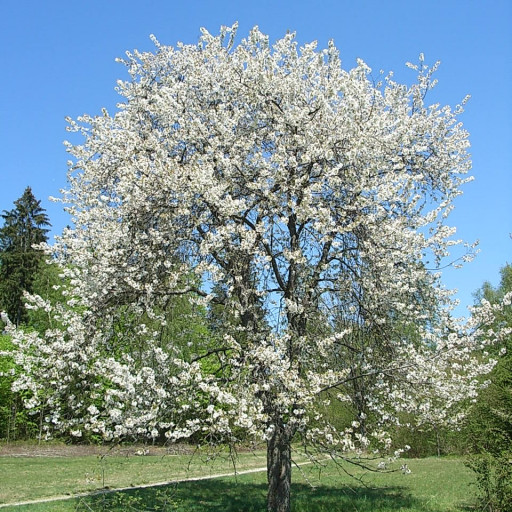
Plant Overview
Often called the "Wild Cherry" or "Mazzard," Prunus avium is the majestic ancestor of almost all the sweet cherries we enjoy today. In early spring, these trees transform into snow-white clouds of blossoms, signaling the end of winter to gardeners and hungry pollinators alike. While it is celebrated for its succulent summer fruit, the tree is also prized for its high-quality reddish-brown wood, often used in fine cabinetry and musical instruments.
🔍 How to Identify
- 🌸 The Blossoms: Look for clusters of 2–6 pure white flowers, each with five petals and a fountain of yellow stamens, appearing just as the new leaves begin to unfurl.
- 🍃 The Foliage: The leaves are oval with a pointed tip and serrated edges; if you look closely at the base of the leaf stalk (petiole), you will find two small, distinctive reddish glands.
- 🍒 The Fruit: The cherries are round or heart-shaped drupes, hanging on long, slender stalks. They transition from green to a glossy, vibrant red or deep mahogany when ripe.
🏡 In Your Garden
- ☀️ Sun & Airflow: Sweet cherries are sun-worshippers that require full light to produce sugar-rich fruit. They also need excellent air circulation to prevent "Brown Rot," a common fungal foe that can shrivel the harvest.
- 🐝 Pollination Needs: Many wild-type and older varieties are self-sterile, meaning they need a "partner" tree of a different variety nearby to cross-pollinate and produce fruit.
⚠️ Safety & Toxicity
- ✅ The Fruit: The ripe, fleshy part of the cherry is safe and nutritious for humans.
- 🚩 The "Pits" and Leaves: The seeds (pits), stems, and wilted leaves contain cyanogenic glycosides, which can release cyanide if chewed or crushed. These are highly toxic to dogs, cats, and horses if ingested in significant amounts.
✨ Fun Fact
The species name avium comes from the Latin word for "birds." This refers to the tree's historical relationship with feathered friends like starlings and blackbirds, who are so fond of the fruit that they often strip a tree bare before the gardener can get to the ladder!

Detailed Care Instructions
| Color | White |
| Soil Ph | 6.5-6.7 |
| Invasive | Weed |
| Lighting | Full Sun |
| Toxicity | Poisonous |
| Soil Type | Moist, Well-Draining |
| Bloom Time | Spring |
| Plant Type | Deciduous |
| Mature Size | Up To 65 Feet Tall |
| Native Area | Asia, Africa, Europe |
| Sun Exposure | Full Sun, Part Shade |
| Hardiness Zones | 4-7 |
To grow Prunus avium, also known as sweet cherry or wild cherry, follow these steps:
- Choose a suitable location: Select a sunny spot in your garden that receives at least 6 hours of direct sunlight per day. The soil should be well-draining and rich in organic matter.
- Prepare the soil: Before planting, amend the soil with compost or well-rotted manure to improve its fertility and drainage. Break up any clumps and remove rocks or debris.
- Select healthy plant: Purchase a young Prunus avium sapling from a reputable nursery or garden center.
- Planting time: Ideally, plant the sapling in early spring when the soil has thawed and is workable. Avoid planting during periods of frost or extreme heat.
- Dig a hole: Dig a hole that is wide and deep enough to accommodate the root ball of the sapling. The hole should be roughly twice the width and the same depth as the container in which the sapling was grown.
- Plant the sapling: Gently remove the sapling from its container and place it in the hole. Ensure that the top of the root ball is level with or slightly above the surrounding soil. Backfill the hole with soil, pressing it down gently to remove air pockets.
- Watering: Water the newly planted sapling thoroughly, ensuring that the surrounding soil becomes moist but not soggy. Provide regular watering during the growing season to keep the soil consistently moist, especially during dry periods.
- Mulching: Apply a layer of organic mulch, such as wood chips or straw, around the base of the plant. This will help retain moisture, suppress weeds, and regulate soil temperature.
- Pruning: Prunus avium requires regular pruning to maintain its shape, promote air circulation, and encourage fruit production. Prune in late winter or early spring before new growth begins. Remove any dead, damaged, or crossing branches.
- Fertilizing: Apply a balanced fertilizer during the growing season to provide essential nutrients. Follow the instructions on the fertilizer packaging for proper application rates.
- Pest and disease control: Monitor the plant regularly for signs of pests, such as aphids or cherry fruit flies, and diseases like cherry leaf spot or brown rot. Take appropriate measures to control these issues, such as using organic insecticides or fungicides if necessary.
- Harvesting: Be patient, as it may take a few years for the tree to start producing fruit. Once the cherries are ripe, typically in late spring or early summer, harvest them by gently twisting or cutting the stems.
Remember to research any specific recommendations or requirements for your region, as local climate and soil conditions can vary.

Place in a bright room that is sun drenched almost all day. Or directly in a south-facing window.

To properly water this plant, it is important to first ensure that the soil is not already moist before watering. This can be determined by sticking a finger into the soil at a depth of about 1-2 inches. If the soil feels dry to the touch, it is time to water.
When watering, it is best to use a watering can or a hose with a gentle spray nozzle to avoid disturbing the soil around the roots. Slowly pour water onto the soil around the base of the plant, allowing it to soak in fully before adding more. Be careful not to water too much at once, as this can lead to waterlogging and root rot.
In general, this plant prefers a moist but well-draining soil, so it is important to water consistently but not excessively. Adjust the frequency of watering depending on the weather, as hot and dry conditions may require more frequent watering.
To fertilize Prunus Avium, apply a balanced fertilizer with a 10-10-10 ratio in early spring before new growth appears. Use a granular form and sprinkle it around the base of the plant, avoiding contact with the trunk or leaves. Water the plant thoroughly after fertilizing to help the nutrients soak into the soil. Avoid fertilizing late in the season as this can encourage new growth that may not have time to harden off before winter.
When selecting soil for Prunus Avium plants, it is important to consider its preferences for well-draining soil that is rich in nutrients. One should avoid heavy clay soils that retain too much water or rocky soils that do not retain enough. It is recommended to use a loamy soil with a pH range of 6.0-7.0, with a mix of organic matter such as compost or well-rotted manure. The addition of perlite or sand can also improve drainage. Additionally, some gardeners prefer to add mycorrhizal fungi to the soil to promote healthy root growth and increase nutrient uptake. Regular fertilizing with a balanced fertilizer during the growing season can also ensure optimal growth and health.
To propagate this plant, take softwood cuttings from healthy, disease-free parent plants in the spring. Cut a 5-7 inch (12-18 cm) piece of stem that is not yet woody, and remove the leaves from the lower half of the stem. Dip the cut end in rooting hormone powder, and plant it in a well-draining potting mix. Water thoroughly, and place the pot in bright, indirect light. Keep the soil moist, but not wet, and avoid letting the cutting dry out. In about 4-6 weeks, new roots should begin to form. Once the roots are established, the plant can be transplanted to a larger pot or planted outdoors during the appropriate season.
Common pests of the wild cherry include Scale insect, aphids, larvae. Make a habit of checking your wild cherry frequently for pests so that any infestations can be caught and managed early.








