Plant Overview
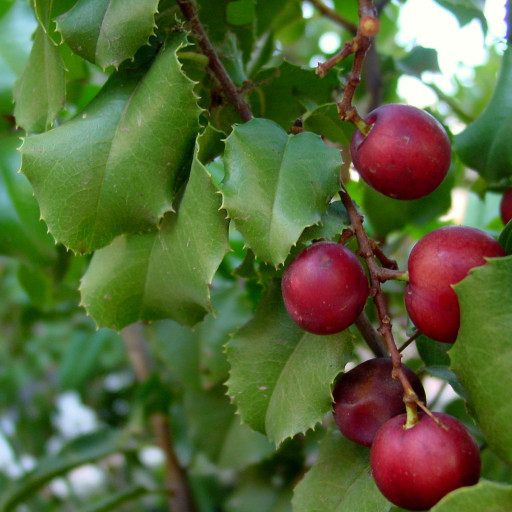
Commonly known as the Holly-leaved Cherry or Islay, this stunning evergreen shrub is a master of disguise. While its prickly, serrated leaves might lead you to believe it’s a member of the holly family, it is actually a true cherry native to the chaparral slopes of California and Baja. Historically, it was a vital resource for indigenous Californian tribes, who meticulously processed its fruit and seeds for food.
🔍 How to Identify
- 🍃 The Foliage: The leaves are the most distinctive feature—thick, leathery, and glossy dark green with sharp, spiny teeth along the edges that mimic English Holly.
- 🌸 The Blooms: In spring, the plant produces elegant, 2-to-6-inch long spikes (racemes) of tiny, creamy-white flowers that have a delicate, sweet fragrance.
- 🍒 The Fruit: By late summer, it bears round, fleshy cherries that transition from green to a deep, lustrous reddish-purple or near-black when fully ripe.
🏡 In Your Garden
- 🌱 Drought Specialist: This is a "plant it and forget it" species for dry climates. Because it evolved in the rugged California chaparral, it has a deep taproot that makes it incredibly resilient to drought but also means it hates being moved once established.
- 🦋 Wildlife Magnet: It acts as a bustling hub for local ecology. The flowers provide nectar for hairstreak butterflies, while the dense, prickly branches offer a "fortress" for nesting birds like mockingbirds and towhees to hide from predators.
⚠️ Safety & Toxicity
- 🐾 Caution for Pets: Like most members of the Prunus genus, the leaves and the pits of the fruit contain hydrocyanic acid (cyanide). It is considered toxic to dogs, cats, and horses if consumed in significant quantities.
- 😋 Human Consumption: The thin layer of fruit pulp is edible and has a pleasantly sweet-tart flavor. However, never crunch or swallow the pits, and avoid eating any part of the plant if you are unsure of the identification.
✨ Fun Fact
The common name "Islay" comes from the Salinan Native American word for the plant. Despite the cherry having very little flesh and a massive pit, indigenous people would grind the pits into a meal (called islay) after leaching out the toxins, similar to how acorns are processed!

Detailed Care Instructions
To grow a Prunus ilicifolia, also known as Hollyleaf Cherry or Catalina Cherry, follow these steps:
- Select a suitable location: Choose a spot in your garden that receives full sun to partial shade. The soil should be well-draining and rich in organic matter.
- Prepare the soil: Remove any weeds or grass from the area and loosen the soil with a garden fork or tiller. Add compost or well-rotted manure to improve the soil's fertility.
- Planting: Dig a hole that is slightly larger and deeper than the plant's root ball. Place the plant in the hole, ensuring that the top of the root ball is level with or slightly above the soil surface. Backfill the hole with soil and gently firm it around the base of the plant.
- Watering: After planting, thoroughly water the plant to settle the soil around the roots. Keep the soil slightly moist but not waterlogged during the plant's establishment period. Once established, it can tolerate some drought but will still require occasional watering, particularly during dry periods.
- Mulching: Apply a layer of organic mulch, such as bark chips or straw, around the base of the plant. This will help retain soil moisture, suppress weed growth, and regulate soil temperature.
- Pruning: Prunus ilicifolia is naturally dense and compact, but you can shape it by pruning to maintain its desired size and form. Prune any dead, damaged, or crossing branches, and remove suckers that may emerge from the base of the plant.
- Fertilizer: If the soil is not particularly fertile, you can fertilize the plant in early spring with a balanced slow-release fertilizer. Follow the instructions on the fertilizer packaging for application rates.
- Pest and disease control: Prunus ilicifolia is relatively resistant to pests and diseases. However, occasional monitoring for common garden pests like aphids or caterpillars is recommended, and appropriate control measures can be taken if necessary.
Remember to research any specific care requirements for your particular climate and growing conditions, as they may differ slightly from the general guidelines provided.

Place in a bright room that is sun drenched almost all day. Or directly in a south-facing window.

To water Prunus Ilicifolia plant, it is important to ensure that the soil is moist but not waterlogged. One of the best ways to do this is to water deeply once a week during the growing season, and then allow the soil to dry out slightly before watering again.
When watering, it is important to water the soil directly rather than the foliage, as wet leaves can lead to fungal growth and other issues.
In order to conserve water and prevent overwatering, it is also a good idea to mulch around the base of the plant to help retain moisture in the soil. Additionally, when planting Prunus Ilicifolia, it is important to choose a well-draining soil that will not become waterlogged and cause root rot.
Overall, with the right attention to watering and soil conditions, Prunus Ilicifolia can grow and thrive in a variety of environments.
To properly fertilize this plant, it is important to first assess the soil type and nutrient content. A soil test can be helpful in determining the specific needs of the plant.
Once the soil requirements are known, a balanced, slow-release fertilizer can be applied during the plant's active growth period. Fertilizer should be spread evenly around the base of the plant, avoiding direct contact with the trunk or stems.
It is important not to over-fertilize, as this can lead to excessive foliar growth and reduced fruiting. Regular watering is also essential for the plant's health and nutrient uptake.
When selecting a soil for the Prunus Ilicifolia plant, it is important to choose a well-draining soil that is rich in organic matter. The soil should have a pH between 5.5 to 7.5, which is slightly acidic to neutral. Adding compost or other organic material to the soil can improve soil structure and provide nutrients to the plant.
It is also important to consider the climate and location of the plant when selecting soil. If the plant is growing in a hot, dry location, a soil with higher sand content can help with drainage and prevent waterlogging. However, in cooler or wetter climates, a soil with higher clay content can retain more moisture and provide better insulation for the roots.
Ultimately, the goal is to choose a soil that provides good drainage while also retaining enough moisture and nutrients to support healthy growth.
To propagate this plant, you will need to take stem cuttings from a healthy and mature plant. Choose a stem that is about 6 inches long and without any signs of damage or disease.
Using a sharp and clean pair of scissors, make a clean cut at a 45-degree angle, just below a node. Remove the lower leaves, leaving only a few at the tip, and dip the cut end into a rooting hormone powder.
Prepare a planting pot with well-draining soil and make a hole in the center using a pencil or your finger. Insert the cutting into the hole and press the soil gently around it.
Water the cutting thoroughly and cover it with a plastic bag or a clear plastic container to create a mini greenhouse. Place the pot in a warm and bright location but away from direct sunlight.
Check the soil moisture regularly and mist the cutting with water if it starts to wilt. After a few weeks, you should see roots emerging from the bottom of the pot and new growth from the tip of the cutting.
Once the roots have established, you can transplant the new plant into a larger pot or into the garden. Remember to acclimate it slowly to its new environment by gradually exposing it to more sunlight and less protection.
Common pests of the hollyleaf cherry include Scale insect, aphids, larvae. Make a habit of checking your hollyleaf cherry frequently for pests so that any infestations can be caught and managed early.








