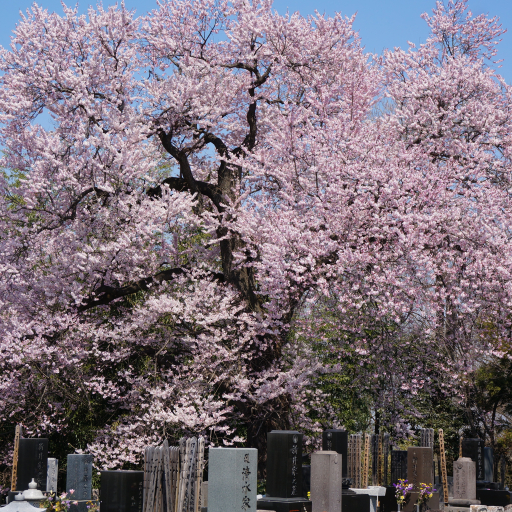
Plant Overview
The Prunus itosakura, affectionately known as the "Weeping Cherry" or Shidare-zakura, is the graceful ballerina of the botanical world. Famous for its cascading branches that resemble waterfalls of blossoms, this tree has been a centerpiece of Japanese art and poetry for centuries. It perfectly captures the essence of "mono no aware"—a Japanese term for the beauty found in the fleeting nature of life.
🔍 How to Identify
- 🌸 The Blossom: Look for clusters of delicate, five-petaled flowers that range from snowy white to soft blush pink. They usually emerge in early spring, often blanketing the branches before the leaves even appear.
- 🌿 The Silhouette: Unlike upright trees, its branches arch gracefully downward toward the ground. This "weeping" habit creates a natural floral curtain or umbrella shape.
- 🍃 The Foliage: The leaves are small, oval, and have finely serrated (saw-toothed) edges. They provide a lush green canopy in summer before turning vibrant shades of bronze and gold in the autumn.
🏡 In Your Garden
- ☀️ Space to Breathe: Because of its wide, cascading habit, this tree needs plenty of horizontal room. Avoid planting it too close to walls or narrow walkways, as pruning it to fit a tight space will ruin its iconic "waterfall" aesthetic.
- 💧 Drainage is Vital: The Weeping Cherry is highly sensitive to "wet feet." It requires well-draining soil, as sitting in stagnant water can quickly lead to root rot or fungal issues.
- ✂️ Pruning Patience: You should only prune to remove dead wood or "suckers" (stray, upright branches growing from the base). Heavy pruning of the weeping branches can permanently distort its natural beauty.
⚠️ Safety & Toxicity
- 🐾 Toxic to Pets: Like many members of the Prunus family, the leaves, stems, and pits contain cyanogenic glycosides. This is toxic to dogs, cats, and horses if chewed or ingested.
- 👶 General Safety: While the tree is a joy to look at, the fallen pits (seeds) can be a choking hazard and contain toxins. It is best to keep small children from playing with the fallen fruit or seeds.
✨ Fun Fact
🌸 A Living Legend: The most famous Prunus itosakura in the world is the "Miharu Takizakura" in Fukushima, Japan. This massive, ancient tree is over 1,000 years old and is officially designated as a National Treasure!

Detailed Care Instructions
To successfully grow a Prunus Itosakura plant, also known as a Japanese flowering cherry tree, follow these steps:
- Choose a suitable location: Prunus Itosakura plants prefer full sun to partial shade, and well-drained soil. Make sure the location you choose has enough space for the tree to grow to its full size.
- Planting: Plant your Prunus Itosakura tree in the spring or fall, when the weather is mild. Dig a hole that is as deep as the root ball and twice as wide. Place the tree in the hole, backfill with soil, and water thoroughly.
- Watering: Keep the soil around the tree consistently moist, especially during the first few years of growth. Water deeply and infrequently to encourage deep root growth.
- Fertilizing: Fertilize your Prunus Itosakura tree in the spring with a balanced slow-release fertilizer. Follow the instructions on the package for the correct dosage.
- Pruning: Prune your tree in late winter or early spring to remove dead or diseased branches, shape the tree, and encourage new growth. Avoid heavy pruning as it can stress the tree.
- Mulching: Apply a layer of organic mulch around the base of the tree to help retain moisture, suppress weeds, and regulate soil temperature.
- Pest and disease control: Keep an eye out for common pests and diseases that can affect Prunus Itosakura trees, such as aphids, scale, or powdery mildew. Treat any issues promptly using horticultural oil or insecticidal soap.
By following these steps, you can successfully grow a healthy and beautiful Prunus Itosakura plant in your garden.
Prunus Itosakura plants should be watered regularly to keep the soil consistently moist, but not waterlogged. It is important to allow the top inch of soil to dry out slightly in between waterings to prevent root rot. When watering, it is best to do so at the base of the plant to avoid getting the foliage wet, as this can lead to diseases. Additionally, using room temperature water is ideal, as cold water can shock the roots. During the growing season, it is recommended to water Prunus Itosakura plants more frequently, while in the winter months, watering should be reduced. Proper watering is essential for the health and growth of these plants.
To fertilize the Prunus Itosakura plant, it is recommended to use a balanced, slow-release fertilizer in the early spring before new growth begins. Apply the fertilizer around the base of the plant, following the manufacturer's instructions on the package for the correct dosage. Water the plant thoroughly after fertilizing to help the nutrients soak into the soil and reach the roots. Avoid fertilizing in late summer or fall, as this can stimulate new growth that may be damaged by frost. Repeat the fertilization process annually in the spring to promote healthy growth and blooming.
Prunus Itosakura plants thrive in well-draining soil that is rich in organic matter. A mix of loamy soil, sand, and peat moss is ideal to provide the right balance of nutrients, moisture retention, and drainage for the plant's roots to grow healthy and strong. The pH level of the soil should be slightly acidic to neutral, around 6.0-7.0, as it allows the plant to absorb essential minerals effectively. Regularly testing the soil and amending it with organic fertilizers can help maintain optimal soil conditions for the Prunus Itosakura plant to flourish.
Prunus Itosakura can be propagated through several methods such as seeds, cuttings, and grafting.
One way to propagate Prunus Itosakura is through seeds. Collect ripe fruits from the plant and remove the seeds from the pulp. Clean the seeds and soak them in water for a few hours to soften the outer coating. Plant the seeds in a well-draining potting mix and keep the soil consistently moist. Place the pot in a warm and bright location, but out of direct sunlight. Seeds can take several weeks to germinate.
Another method of propagation is through cuttings. Take softwood cuttings in the spring or hardwood cuttings in the fall. Remove the leaves from the bottom half of the cutting and dip it in rooting hormone. Plant the cutting in a well-draining soil mix and place it in a warm and humid environment. Keep the soil moist and wait for roots to develop.
Grafting is also a common method of propagating Prunus Itosakura. Choose a healthy rootstock and a scion from a mature plant. Make a clean cut on both the rootstock and scion and join them together. Secure the graft with tape or grafting wax. Keep the graft in a warm and humid environment until it establishes.
Propagation of Prunus Itosakura can be a rewarding process, but it requires patience and attention to detail. Each method has its own advantages and success rates, so it is important to choose the one that best suits your skill level and resources.








