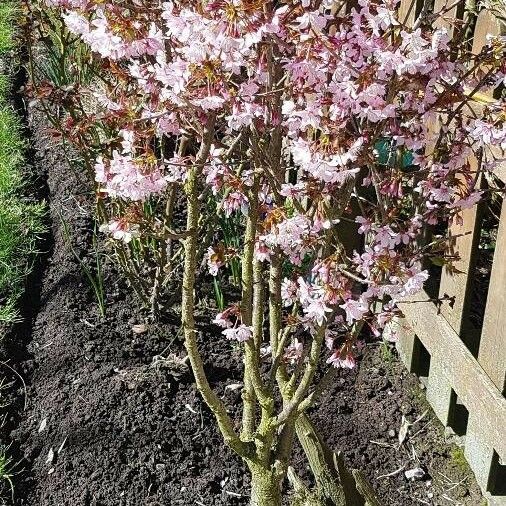
Plant Overview
The Kurile Cherry is a resilient beauty from the rugged North Pacific islands. Often called the "North Japanese Alpine Cherry," it braves freezing winds to be among the first to bloom in late winter or early spring. Its compact, shrubby nature makes it a darling for those with limited garden space who still crave that iconic "Sakura" aesthetic without the massive footprint of a standard cherry tree.
🔍 How to Identify
- 🌸 Blossom Details: Delicate pale pink or white petals that often feature a deeper pink or reddish center (calyx), appearing in clusters before the leaves fully emerge.
- 🍃 Leaf Structure: Sharply serrated, ovate leaves that transition from a soft bronze-green in spring to a brilliant, fiery orange-red in the autumn.
- 🌳 Growth Habit: It maintains a naturally compact and multi-stemmed form, rarely exceeding 6 to 10 feet in height, which gives it a dense, architectural look.
🏡 In Your Garden
- 🏔️ Extreme Hardiness: Unlike many fussy ornamental cherries, this species is incredibly cold-tolerant. It evolved on volcanic slopes and in alpine conditions, meaning it can handle harsh winters that would damage other flowering trees.
- 🪴 Perfect for Small Spaces: Because of its slow growth and modest size, it is an ideal candidate for rock gardens, urban patios, or even large containers. It doesn't mind a bit of wind, but it does require well-draining soil to prevent "wet feet."
⚠️ Safety & Toxicity
- 🐾 Toxic to Pets: Like most members of the Prunus genus, the leaves, stems, and especially the pits of the small fruits contain cyanogenic glycosides. If ingested in large quantities, these can be toxic to dogs, cats, and horses.
- 👶 Child Safety: While the tiny black fruits are technically edible when ripe, they are quite bitter and the pits inside should never be swallowed or cracked open. It is best to treat this as a strictly ornamental plant.
✨ Fun Fact
The Kurile Cherry is one of the "parent" species used to create many of the world's most popular dwarf cherry hybrids. Its DNA is the secret ingredient that allows modern gardeners to grow beautiful cherry blossoms in tiny backyard spaces!

Detailed Care Instructions
The Prunus Kurilensis plant should be watered deeply and consistently, ensuring that the soil remains moist but not waterlogged. One way to do this is by using a watering can or hose to water at the base of the plant, rather than from overhead. It is important to avoid getting water on the leaves or flowers, as this can lead to diseases or rot. During periods of drought or hot weather, it may be necessary to water more frequently to prevent the plant from drying out. It is also important to avoid overwatering, as this can drown the roots and cause damage to the plant. Regular monitoring of the soil moisture level, as well as the appearance and health of the plant, can help to determine the best watering schedule for the Prunus Kurilensis.
When planting Prunus Kurilensis, it is recommended to use soil that is well-draining and rich in organic matter. The soil should have a pH range of 5.5 to 7.5. The plant prefers sandy or loamy soil, but it can also grow in clay soil as long as it is well-aerated. It is important to avoid compacted soil as it can restrict root growth and cause waterlogging. Before planting, add compost or well-aged manure to the soil to improve its fertility and structure. Additionally, avoid soil that has recently been treated with herbicides or pesticides, as these may harm the newly planted tree.








