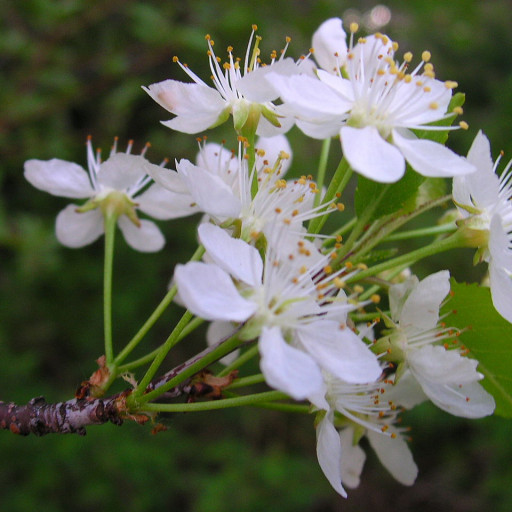
Plant Overview
Often called the Pin Cherry or Fire Cherry, Prunus pensylvanica is a resilient North American native known for its "pioneer" spirit. It earned the name "Fire Cherry" because its seeds can lie dormant in the soil for decades, waiting for a forest fire to clear the canopy so they can be the first to sprout in the sunlight. While it is short-lived, this tree is a vital early-succession species that brings life back to disturbed landscapes.
🔍 How to Identify
- 🍒 The Fruit: It produces tiny, bright red berries (about 1/4 inch wide) that grow on long, thin stalks, resembling the heads of old-fashioned pins.
- 🍃 The Foliage: Leaves are narrow, lance-shaped, and shiny green with finely serrated edges that taper to a sharp point.
- 🪵 The Bark: Young bark is smooth and reddish-brown, marked by prominent horizontal slits called lenticels; as it ages, the bark may peel in papery thin strips.
🏡 In Your Garden
- ☀️ Sun Seeker: This tree is "shade-intolerant," meaning it will struggle in the shadows of larger oaks or maples. It needs a bright, open spot to thrive and grow its signature airy canopy.
- 🦅 Wildlife Magnet: If you want to attract birds, this is the tree for you. Over 25 species of birds, including bluebirds and waxwings, feast on the tart cherries, while the early spring blossoms provide a critical nectar source for bees.
⚠️ Safety & Toxicity
- 🥣 The Fruit: The flesh of the ripe red berries is edible but very sour—it is most commonly used in jellies and preserves rather than eaten raw.
- 🚫 Toxic Parts: Like many members of the Prunus genus, the leaves, bark, and 특히 (especially) the pits contain cyanogenic glycosides.
- 🐾 Pet Warning: These components are toxic to dogs, cats, and livestock if ingested. Wilted leaves are particularly dangerous for horses and cattle.
✨ Fun Fact
The Pin Cherry is a master of patience; its seeds have a specialized thick coating that allows them to survive in the forest floor "seed bank" for 50 to 100 years, waiting for the perfect moment of disturbance to germinate!

Detailed Care Instructions
To successfully grow Prunus pensylvanica, also known as pin cherry or fire cherry, you can follow these steps:
- Select a suitable planting location: Prunus pensylvanica prefers full sun to partial shade and well-draining soil. Choose a spot in your garden with these conditions.
- Prepare the soil: Prior to planting, loosen the soil and remove any weeds or grass. Incorporate organic matter such as compost to improve soil fertility and drainage.
- Planting method: Prunus pensylvanica can be propagated from seeds, bare-root seedlings, or container-grown plants. The ideal time for planting is in early spring or late fall.
- From seeds: Collect the seeds from ripe berries and gently scarify them by rubbing between sandpaper. Soak the seeds in water for about 24 hours. Sow the seeds outdoors in a prepared bed, ½ inch deep and 1-2 inches apart. Water regularly to keep the soil moist.
- From bare-root seedlings or container-grown plants: Dig a hole twice as wide and as deep as the root ball. Place the seedling or plant in the hole, making sure the crown (where the roots meet the stem) is level with or just above the soil surface. Backfill the hole with soil, firming it gently around the roots. Water thoroughly after planting.
- From seeds: Collect the seeds from ripe berries and gently scarify them by rubbing between sandpaper. Soak the seeds in water for about 24 hours. Sow the seeds outdoors in a prepared bed, ½ inch deep and 1-2 inches apart. Water regularly to keep the soil moist.
- Watering: Prunus pensylvanica prefers consistently moist soil, especially during the first year of growth. Water regularly, providing enough moisture to keep the soil evenly moist but not waterlogged. Reduce watering once the plant is established.
- Mulching: Apply a layer of organic mulch, such as wood chips or bark, around the base of the plant. Mulch helps retain soil moisture, suppresses weed growth, and insulates the roots. Keep the mulch a few inches away from the stem to prevent rot.
- Pruning: Prunus pensylvanica generally requires minimal pruning, but it can be done to shape the plant or remove dead or diseased wood. Prune in late winter or early spring, before new growth begins.
- Fertilizing: Prunus pensylvanica usually doesn't require regular fertilization, especially if the soil is already fertile. However, you can apply a balanced slow-release fertilizer in early spring if necessary.
- Pest and disease management: Prunus pensylvanica is generally not prone to significant pest or disease issues. However, you should monitor for any signs of common problems such as aphids, caterpillars, or fungal diseases. If necessary, address them with appropriate measures, such as insecticidal soap or fungicides.
Remember to check if this plant is suitable for your specific climate and follow any guidelines or recommendations from local horticulturists or extension services.

Place in a bright room that is sun drenched almost all day. Or directly in a south-facing window.

In order to properly water this plant, it is important to consider its specific water needs. This can be achieved by monitoring the plant's soil moisture levels and adjusting watering frequency accordingly. The frequency of watering will depend on factors such as the climate and environment in which the plant is located, as well as the drainage capabilities of the soil. It is important to ensure that the soil remains moist, but not waterlogged, as overwatering can lead to root rot. When watering, it is best to water at the base of the plant, avoiding overhead watering which can lead to the development of fungal diseases. Additionally, allowing the top layer of soil to dry out slightly between watering can help promote healthy root growth.
To fertilize this plant, use a balanced fertilizer that contains nitrogen, phosphorus, and potassium. Apply the fertilizer during the early spring before new growth begins. Follow the instructions on the fertilizer package for the amount and frequency of application. Be careful not to over-fertilize, as this can lead to excessive growth and weaken the plant. Water the plant thoroughly after fertilizing to help the nutrients reach the roots.
Prunus Pensylvanica is a deciduous shrub that requires well-draining soil with a moderate amount of nutrients. It is tolerant of a wide range of soil types, including loamy, sandy, and clay soils, but prefers a slightly acidic to neutral soil pH between 5.5 and 7.5. The plant prefers a moist soil environment, but it does not tolerate waterlogged soil or standing water. When planting Prunus Pensylvanica, it is recommended to amend the soil with organic matter, such as compost or well-rotted manure, to improve soil structure and fertility. Additionally, the plant benefits from a regular fertilization program, typically applied in the early spring or fall. Overall, providing well-draining, nutrient-rich soil with a slightly acidic to neutral pH will ensure optimal growth and health for Prunus Pensylvanica.
Prunus Pensylvanica can be propagated using several methods such as cuttings, layering, and seeds.
- Cuttings: Take cuttings from a healthy and mature Prunus Pensylvanica plant in the early spring. Cut a 6-inch stem from the plant and remove the lower leaves leaving only two or three leaves on top. Dip the cut end of the stem in rooting hormone and plant it in well-drained soil. Water the cutting and keep the soil moist until the roots are formed.
- Layering: Select a healthy and mature Prunus Pensylvanica plant and identify a low-lying branch. Bend the branch and cover it with soil leaving only the tip exposed. Water the soil and keep it moist until roots are formed. Once roots appear, cut the branch from the mother plant and transplant it into a new location.
- Seeds: Collect ripe fruits from a Prunus Pensylvanica plant and remove the flesh. Sow the seeds in well-drained soil and cover them with a thin layer of soil. Water the soil and keep it moist until the seeds germinate. Once the seedlings are large enough, transplant them into individual pots or a new location.
Propagation of Prunus Pensylvanica requires patience and care. Most importantly, select healthy plants for propagation, and ensure that the propagation method is suitable for the plant.








