Plant Overview
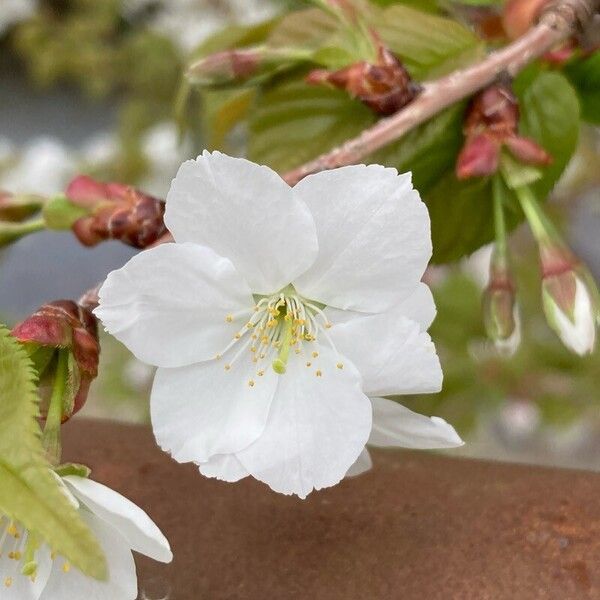
Known as the Oshima Cherry, this elegant tree is a native of the Izu Islands and the Izu Peninsula in Japan. It is often celebrated as the "mother of cherries" because it is a primary ancestor of the famous Somei-yoshino variety. Unlike many ornamental cherries that have pink blossoms, the Oshima Cherry is prized for its snow-white petals and its surprisingly sweet, almond-like fragrance.
🔍 How to Identify
- 🌸 The Blossoms: Large, single-layered flowers with five pure white petals. They usually bloom in clusters of two to four, creating a cloud-like appearance on the branches.
- 🍃 The Foliage: A key identifier is that the bright green leaves emerge at the same time as the flowers. Most other cherries bloom on bare branches, but the Oshima looks lush and green even at its peak flowering.
- 🍒 The Fruit: In early summer, it produces small, globose fruits that turn from red to a deep, dark purple or black when fully ripe.
🏡 In Your Garden
- 🌊 Coastal Hardy: Because of its island origins, it is remarkably resistant to salt spray and wind, making it a perfect choice for seaside gardens where other trees might struggle.
- 🌱 Root Sensitivity: Like many members of the Prunus family, it has a sensitive root system. It prefers deep, well-drained soil and generally dislikes being moved once established, so choose its "forever home" carefully.
- ☀️ Sun Seeker: To ensure a spectacular floral display and healthy growth, it needs a spot with full sun. Shade can lead to leggy branches and fewer blossoms.
⚠️ Safety & Toxicity
- 🐾 Caution for Pets: While the flower petals are harmless, the stems, leaves, and especially the seeds (pits) contain cyanogenic glycosides.
- 🚫 Risk Factor: If chewed or crushed, the seeds can release toxins that are harmful to dogs, cats, and horses. It is best to rake up fallen fruit if you have curious pets in the yard.
✨ Fun Fact
The leaves of the Oshima Cherry are the secret ingredient in the traditional Japanese sweet, Sakura Mochi. Because the leaves are particularly fragrant and soft, they are pickled in salt and used to wrap the pink rice cakes, imparting a unique salty-sweet aroma to the treat!

Detailed Care Instructions

Place in a bright room that is sun drenched almost all day. Or directly in a south-facing window.

When the top few inches of soil dry out, water your plants. If the top few inches of soil are still moist, do not water your plant. Wait a few days, then poke your finger into the soil to see if anything has changed. Overwatering poses a disease risk, such as the development of fungal diseases in the roots. These plants have adaptations in there leaves that allow them to survive in low water supply.







