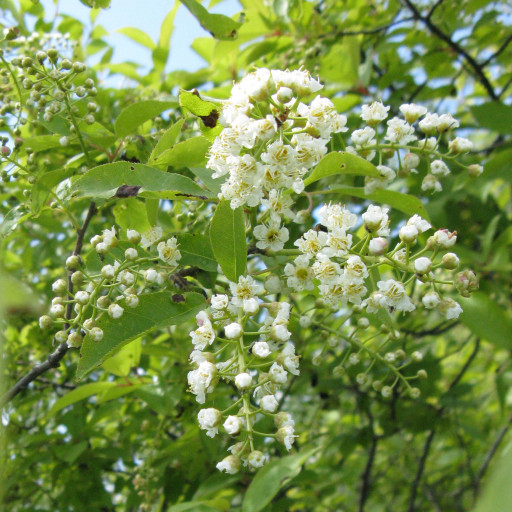
Plant Overview
Often called the Bitter-berry or simply the Chokecherry, Prunus virginiana is a hardy North American native that bridges the gap between a wild thicket-former and a backyard ornamental. It is famous for its "puckering" effect—the raw berries are so astringent they can make your mouth feel dry instantly. Despite this, it has been a vital resource for centuries, used by Indigenous peoples to create pemmican, a high-energy survival food.
🔍 How to Identify
- 🍃 The Leaves: Look for egg-shaped, finely serrated leaves with a distinct "pointed" tip. They are dark green on top and a paler green underneath, often turning a brilliant gold or reddish-purple in the fall.
- 🌸 Frothy Blooms: In late spring, the plant produces spectacular, drooping cylinders (racemes) of tiny white flowers. These "bottlebrush" clusters can reach up to 6 inches long and carry a sweet, heavy fragrance.
- 🍒 The Fruit: The berries grow in hanging bunches. They start out green, transition to a bright "lipstick" red, and finally settle into a deep, glossy purple-black when fully ripe.
🏡 In Your Garden
- 🌳 The "Colony" Habit: Chokecherries are social plants. They spread via underground suckers to form dense thickets. If you have a small garden, you’ll need to be diligent about pruning these "suckers" at the base to keep it shaped as a single-trunk tree.
- 🦋 Ecological Hero: This plant is an absolute powerhouse for local biodiversity. It serves as a host for hundreds of species of butterflies and moths, while the summer berries provide a critical high-energy feast for songbirds and waxwings.
⚠️ Safety & Toxicity
- 🚫 Pit & Leaf Danger: Like many members of the Prunus family, the leaves, stems, and pits contain hydrocyanic acid (cyanide). Never crunch or swallow the seeds, and do not brew tea from the leaves.
- 🐾 Livestock & Pets: This plant is particularly hazardous to horses and cattle, especially when the leaves are wilted, as the toxin concentration increases. Ensure pets do not chew on fallen branches or pits.
- 🍴 Edibility: The fruit flesh is safe to eat and makes world-class jams, jellies, and syrups once cooked and sweetened, which neutralizes the bitter tannins.
✨ Fun Fact
The Chokecherry is the official state fruit of North Dakota! During the famous Lewis and Clark expedition, Meriwether Lewis noted in his journals that Chokecherries were a staple of their diet, often being the only fruit available to the crew during their trek across the plains.

Detailed Care Instructions
| Color | White |
| Soil Ph | Acidic, Neutral |
| Toxicity | Non-Toxic |
| Soil Type | Loamy, Sandy, Clay, Moist |
| Bloom Time | Spring, Summer |
| Plant Type | Perennial, Shrub |
| Mature Size | 30 Ft. Tall, 20 Ft. Wide |
| Native Area | North America |
| Sun Exposure | Full, Partial |
| Hardiness Zones | 2-10 |
Here are some steps you can follow to grow a Prunus virginiana plant (also known as chokecherry):
- Choose a suitable location: Chokecherry plants prefer full sun to partial shade. Make sure the location you choose has well-draining soil.
- Prepare the soil: Before planting, prepare the soil by removing any weeds or grass from the planting area. Loosen the soil and enrich it with organic matter, such as compost, to improve drainage and nutrient content.
- Obtain the seed or sapling: You can either grow chokecherry plants from seeds or purchase saplings from a nursery. Seeds can be collected from mature chokecherry fruits and should be scarified (mechanically scratched or soaked) to enhance germination rates.
- Planting from seed: If planting from seed, sow the seeds in the prepared soil in the fall or early spring. Press the seeds lightly into the soil and cover with a thin layer of soil.
- Planting saplings: If using saplings, dig a hole slightly larger than the root ball. Place the sapling in the hole and backfill with soil, gently pressing it down to remove any air pockets. Water thoroughly after planting.
- Watering: Chokecherry plants require regular watering, especially during the first growing season. Water deeply and regularly, but avoid overwatering as they don't tolerate soggy soil.
- Mulching: Apply a layer of organic mulch, such as wood chips or straw, around the base of the plant. Mulching helps retain soil moisture, suppresses weeds, and provides nutrients as it decomposes.
- Pruning: Prunus virginiana plants benefit from light pruning to remove dead, damaged, or diseased branches. Pruning can be done in late winter or early spring before new growth begins.
- Fertilizing: Chokecherry plants generally don't require regular fertilization. However, if your soil is lacking in nutrients, you can apply a balanced slow-release fertilizer in early spring, following the instructions on the packaging.
- Pests and diseases: Chokecherry plants can be susceptible to various pests and diseases, such as aphids, scale insects, and black knot fungus. Regularly inspect the plants for any signs of infestation or disease, and take appropriate measures to control or prevent them.
Remember, growing plants can be dependent on specific climate conditions, so it's always a good idea to consult local gardening resources for additional information and guidance tailored to your specific region.

Place in a bright room that is sun drenched almost all day. Or directly in a south-facing window.

To water this plant, you should first check the soil moisture level by inserting your finger about an inch into the soil. If the soil feels dry, it is time to water the plant. When watering, be sure to give the plant a deep watering at its base, avoiding wetting the leaves to prevent fungal diseases. Do not allow the soil to become too saturated, as this can lead to root rot. Water the plant when the top inch of soil feels dry, and adjust the frequency based on the plant's specific needs and environmental conditions.
To fertilize this plant, use a balanced fertilizer with equal parts nitrogen, phosphorus, and potassium. Apply the fertilizer in early spring before new growth appears and then again in mid to late summer. Follow the instructions on the fertilizer package for proper application rates. Be careful not to over-fertilize as this can lead to excessive growth and weaken the plant. Water the plant deeply after fertilizing to ensure the nutrients are absorbed properly.
Prunus Virginiana is a deciduous shrub or small tree that prefers well-drained soil with moderate fertility. It thrives in soils that are slightly acidic with a pH range of 5.5 to 6.5. The plant grows well in loamy and sandy soils that are rich in organic matter, with good drainage. The soil should not be too heavy or compacted, as it can restrict root growth and lead to poor plant development. It is important to ensure that the soil is consistently moist, but not waterlogged, especially during the plant's first year after planting. The addition of high-quality compost or aged manure can improve soil fertility and increase organic matter content. In areas that receive heavy rainfall or have poor drainage, it is recommended to plant Prunus Virginiana on raised mounds or in well-draining containers.
One way to propagate this plant is through seed propagation. First, collect seeds from mature fruits in the fall and store them in a cool, dry place until the spring. In the spring, scarify the seeds by rubbing them with sandpaper or soaking them in warm water for 24 hours. Plant the scarified seeds in a well-draining potting mix and keep them moist, but not waterlogged. Provide ample light and warmth to encourage germination.
Another method of propagation is through softwood cuttings. In late spring or early summer, take cuttings from new growth on the plant, making sure they have at least two nodes. Dip the cuttings in rooting hormone and plant them in a well-draining potting mix, keeping them moist and warm. Enclose the pot in a plastic bag to maintain humidity and place it in a bright, but indirect light. Once the cuttings have rooted, remove the plastic bag and gradually acclimate the plant to lower humidity and brighter light.
Common pests of the chokecherry include Scale insect, mealybugs. Make a habit of checking your chokecherry frequently for pests so that any infestations can be caught and managed early.








