Plant Overview
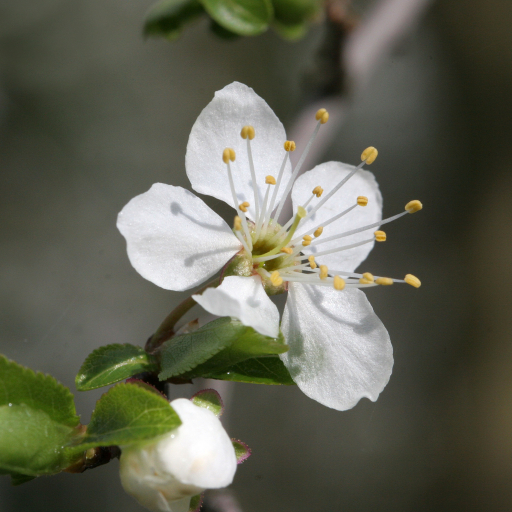
Often called the "Mirabelle Plum," this charming tree is a celebrated jewel of the orchard. Most famously associated with the Lorraine region of France, it is beloved for its small, honey-sweet fruits that taste like a blend of apricot and plum. In the spring, it transforms into a breathtaking cloud of snowy white blossoms, making it as much an ornamental masterpiece as it is a culinary one.
🔍 How to Identify
- 🌸 Spring Blossoms: Features delicate, five-petaled white flowers that emerge in early spring, often just as the first leaves begin to unfurl.
- 🍃 Leaf Structure: The leaves are small, oval-shaped, and possess finely serrated edges with a slightly fuzzy underside when young.
- 🍒 The Fruit: Produces small, perfectly round drupes (stone fruits). While most varieties are a vibrant wax-yellow with tiny red freckles, some can lean toward a deep, dusky red.
🏡 In Your Garden
- 🌳 Well-Drained Roots: While this tree is hardy, it is prone to "wet feet." It thrives best in loamy soil where water doesn't pool, as stagnant moisture can lead to root rot or silver leaf disease.
- ✂️ Pruning Nuance: To ensure a heavy harvest every year, it requires thinning. If the tree becomes too crowded, it may fall into a "biennial" cycle, meaning it will only produce fruit every second year. Light pruning in the summer helps maintain airflow and sun exposure.
⚠️ Safety & Toxicity
- ✅ Status: The flesh of the fruit is safe and highly nutritious for humans.
- 🚫 The Pits: Like all members of the Prunus genus, the seeds (pits) contain amygdalin, which breaks down into cyanide if crushed and ingested. Always remove pits before giving fruit to children or pets.
- 🐾 Pet Warning: Wilted leaves can be toxic to grazing animals like horses or goats, so keep the garden floor clear of fallen branches after a storm.
✨ Fun Fact
The Mirabelle plum is so prized in France that it is protected by law. The "Mirabelle de Lorraine" has a Protected Geographical Indication (PGI) status, and about 70% of the entire world's production comes from that single French province!

Detailed Care Instructions
Here are some steps to help you grow Prunus x Cereat (commonly known as cherry laurel) plant:
- Climate and soil conditions: Cherry laurel plants thrive in moderate climates and prefer well-draining soil. Ensure that your location provides enough sunlight or partial shade.
- Seed selection: Choose healthy cherry laurel seeds or purchase seedlings from a reputable garden center or nursery. Seeds should be fresh, as they lose viability over time.
- Seed preparation: Soak seeds in water overnight to improve germination rates. Alternatively, you can opt for seedlings already established in small pots.
- Planting: Select a suitable location in your garden and prepare the soil. Dig a hole that is slightly wider and deeper than the root ball of the seedling. Gently remove the seedling from its container, place it in the hole, and back-fill with soil. Water thoroughly to facilitate settling.
- Watering: Provide regular watering to help establish the plant during the first few months. Once the plant is established, cherry laurel generally requires low to moderate watering, especially during dry periods.
- Mulching: Apply a layer of organic mulch around the base of the plant to conserve moisture, suppress weed growth, and enrich the soil.
- Pruning: Prune your Prunus x Cereat plant to maintain its shape, promote healthy growth, and remove any dead or diseased branches. Pruning is best done during late winter or early spring before the plant starts to actively grow.
- Fertilizing: Apply a balanced slow-release fertilizer in early spring to provide sufficient nutrients for the plant's growth.
- Pest and disease management: Monitor your cherry laurel for potential pests like aphids, borers, or scale insects. Treat infestations promptly with appropriate organic or chemical insecticides. Additionally, be on the lookout for diseases like powdery mildew or phytophthora root rot, and take necessary actions to prevent or treat them.
- Winter care: Protect your cherry laurel from harsh winter conditions by covering it with burlap or providing a windbreak if necessary.
Remember to research specific care instructions for your particular climate and consult with local experts or nursery professionals for tailored advice.
To properly water this plant, it is recommended to use a watering can or hose with a gentle flow of water. Watering deeply once a week is usually sufficient, except during hot and dry periods when additional watering may be required. It is important to avoid over-watering as this can lead to root rot. Allow the soil to dry out slightly before watering again. Avoid getting the leaves wet, as this can promote disease. Water early in the morning or late in the evening to reduce evaporation and ensure the water reaches the roots.
To fertilize this plant, use a balanced fertilizer with equal parts nitrogen, phosphorus, and potassium. Apply the fertilizer in the early spring before new growth appears and again in mid-summer. Avoid over-fertilizing, as it can damage the plant. Water the plant thoroughly after fertilizing.
The soil composition that is recommended for Prunus X Cerea plant is a mixture that is well-draining, rich in organic matter, and slightly acidic. This type of soil will provide the plant with the necessary nutrients required for healthy growth and development. The ideal soil pH level for this plant should be between 6.0 and 6.5.
To achieve the optimal soil composition, it is recommended to mix equal parts of peat moss, perlite, and vermiculite with regular potting soil. This mixture will provide the plant with good drainage, while also retaining the necessary moisture and nutrients necessary for growth.
It is important to avoid using heavy clay soils as they do not provide good drainage and can lead to root rot. Similarly, sandy soils are also not recommended as they do not retain moisture and can lead to dehydration of the plant.
When planting Prunus X Cerea, it is important to ensure that the soil is well-prepared and adequately enriched with organic matter before placing the plant in the ground. This will help ensure that the plant establishes quickly and continues to grow and flourish throughout its lifespan.
Propagation of this plant can be done through a few different methods, but the most common ways are through softwood cuttings or budding.
For softwood cuttings, choose a healthy branch that is several inches long and has new growth. Cut directly below a node or bud, and remove the leaves from the lower half of the stem. Dip the cut end in rooting hormone and plant it in a soilless rooting medium. Keep the cutting moist and in a warm, bright location until roots form. Once rooted, plant in a pot with potting soil and care for as usual.
Budding is another method of propagation, where a bud is taken from a desirable cultivar and grafted onto a suitable rootstock. This is a more complex process and requires some knowledge of plant anatomy and technique.
Regardless of the propagation method chosen, it's important to keep the new plants well-watered and in a warm, bright location until they establish themselves. Some plants may take longer to root than others, so patience is key.








