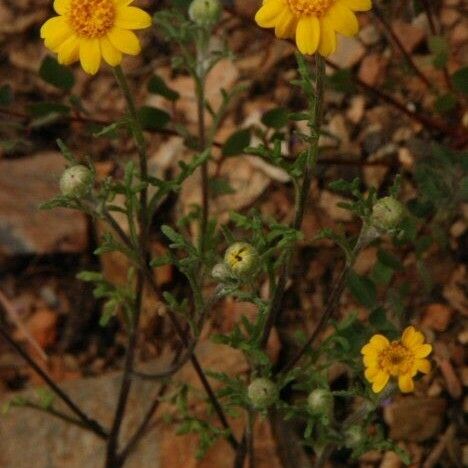
Plant Overview
Known affectionately as the Foothill Sunfields, this California native is a herald of spring in the Sierra Nevada foothills. It belongs to a small, specialized genus of the sunflower family, often appearing in vast, shimmering carpets of gold across the landscape after the winter rains. This plant is a master of the "short and sweet" lifestyle, blooming quickly to catch the sun before the heat of summer arrives.
🔍 How to Identify
- 🌼 The Bloom: Look for bright, lemon-yellow daisy-like flower heads. Each head typically features 6 to 9 "ray" petals that often have a tiny notch at the very tip.
- ☁️ Woolly Texture: One of its most distinct features is a coating of fine, white, cobweb-like hairs that cover the stems and leaves, giving the plant a soft, silvery-green cast.
- 🌿 Feathery Foliage: The leaves are deeply lobed and divided, creating a delicate, lace-like appearance that contrasts beautifully with the bold yellow flowers.
🏡 In Your Garden
- ☀️ Clay Specialist: Unlike many garden favorites that demand loamy soil, the Foothill Sunfield thrives in heavy clay or volcanic soils. It is a "tough love" plant that prefers the rugged conditions of open grassy slopes and oak woodlands.
- 💧 Drought Strategy: As an annual, it doesn't need year-round care. It germinates during the cool, wet months and sets its seeds before the ground dries out. If you are planting these, timing is everything—they need the natural rhythm of the seasons to flourish.
⚠️ Safety & Toxicity
- ✅ Low Risk: This plant is generally considered non-toxic and is not known to pose a major threat to humans or common household pets.
- 🧤 Touch Sensitivity: The dense, woolly hairs (trichomes) on the stems can occasionally cause very mild skin irritation or a "tickling" sensation for people with highly sensitive skin. It’s always a good idea to wear gloves if you are weeding around them for long periods.
✨ Fun Fact
- ✨ The Great Imposter: Its genus name, Pseudobahia, literally means "False Bahia." It was named this because it looks nearly identical to plants in the Bahia genus, but botanists discovered it has unique genetic traits that set it apart as a true California original!

Detailed Care Instructions
To grow Pseudobahia Heermannii, also known as Hermann's daisy, follow these steps:
- Climate and soil: Check if your region's climate is suitable for Pseudobahia Heermannii. It thrives in Mediterranean climates with mild, wet winters and dry summers. Ensure the soil is well-draining and low in nutrients.
- Propagation: Obtain Pseudobahia Heermannii seeds or starter plants from a reputable nursery or seed supplier.
- Planting: Start seeds indoors 6-8 weeks before the last frost date, or directly sow them in the garden after the threat of frost has passed. Plant the seeds at a depth of 1/8 inch in a seed tray or individual pots, or sow the seeds in well-prepared garden soil.
- Sunlight: Place the seed trays or established plants in a sunny location that receives at least 6-8 hours of direct sunlight per day.
- Watering: Provide regular water, especially during the establishment phase. Allow the soil to dry out slightly between waterings to prevent root rot. Once established, Pseudobahia Heermannii is drought-tolerant and requires minimal watering.
- Fertilization: Pseudobahia Heermannii does not typically require fertilization, as it prefers nutrient-poor soil. However, you can add a balanced, slow-release fertilizer during the early stages of growth if the soil is very poor.
- Pruning: Prune the flower stems after blooming to promote new growth and maintain a compact shape. Remove any dead or damaged foliage regularly.
- Pest and disease control: Pseudobahia Heermannii is generally resistant to most pests and diseases. However, keep an eye out for aphids, slugs, snails, and powdery mildew. Treat any infestations promptly with organic pest control methods.
- Mulching: Apply a layer of organic mulch around the base of the plant to help retain moisture and suppress weed growth.
- Propagation from cuttings: If you have an existing Pseudobahia Heermannii plant, you can also propagate it through stem cuttings taken during the active growing season (spring or early summer). Dip the cut end in rooting hormone and plant it in well-draining soil or a rooting mix. Keep the cutting moist and in a shaded area until roots develop.
Remember to always check local regulations and guidelines regarding the collection and propagation of native plant species, as Pseudobahia Heermannii is native to specific regions.

To properly water this plant, it is important to consider the type of soil it is planted in and the climate in which it is growing. If the soil is well-draining, it is best to water deeply but infrequently, allowing the soil to dry out between waterings to prevent root rot. In hot and dry climates, the plant may require more frequent watering, but it is still important to avoid overwatering. When watering, it is best to water around the base of the plant rather than directly on the leaves or flowers to prevent fungal growth. When first planting, it is important to water more frequently until the plant becomes established.
To fertilize this plant, use a balanced fertilizer with equal amounts of nitrogen, phosphorus, and potassium. Apply the fertilizer sparingly, following the manufacturer's instructions. Avoid over-fertilizing, as this can burn the roots and damage the plant. It is best to fertilize in the spring and early summer, when the plant is actively growing. Make sure to water the plant well before and after fertilizing to avoid any stress or shock to the roots.
When selecting a soil for this plant, it is important to choose one that is well-draining and does not hold excessive moisture. The soil should also be rich in organic matter and nutrients to support the growth and health of the plant. It is recommended to use a mixture of sand, loam, and organic compost to create a suitable soil blend. Additionally, adding perlite or vermiculite to the soil mix can improve aeration and drainage. The pH level of the soil should be between 6.0 to 7.5, which is slightly acidic to neutral. Avoid using soils that are heavy or compacted as they can lead to root rot and poor plant growth.
To propagate this plant, start by collecting seeds from mature plants in the wild or from existing plants in your garden. Clean the seeds by removing any debris, and then stratify them by storing them in a moist, cool location for at least two months.
Once the stratification period is over, plant the seeds in a well-draining soil mixture. Keep the soil moist but not overly wet, and place the container in a warm, sunny location.
As the seedlings grow, thin them out to promote healthy growth. Once they are big enough, transplant them into larger containers or into your garden.
Another way to propagate this plant is through stem cuttings. Take cuttings from the growing tips of mature plants and dip them in rooting hormone. Then plant the cuttings in a well-draining soil mixture and keep them moist.
With time and proper care, your Pseudobahia Heermannii plant will grow and thrive, producing beautiful flowers and foliage.








