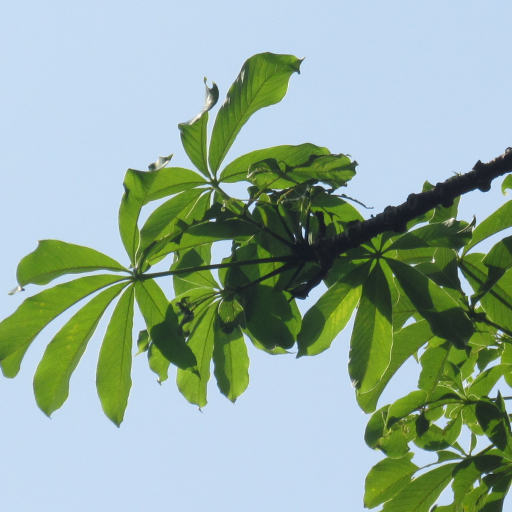
Plant Overview
Known as the Shaving Brush Tree or Barrigón, the Pseudobombax septenatum is a dramatic tropical masterpiece that looks like it belongs in a botanical fairy tale. Native to the lush forests of Central and South America, it is famous for its thick, bottle-shaped trunk and explosive, pom-pom-like flowers. In the wild, it acts as a landmark for hikers, standing tall with a smooth, green-streaked bark that captures the light.
🔍 How to Identify
- 🎨 The Bark: The trunk is smooth and grayish, often featuring distinct vertical green stripes that allow the tree to photosynthesize even when it has lost its leaves.
- 🖐️ The Leaves: As the name septenatum suggests, the leaves are "palmately compound," usually featuring 5 to 7 large, finger-like leaflets radiating from a single point.
- 🖌️ The Flower: The showstopper! The flowers look like an old-fashioned shaving brush, with hundreds of long, white-to-cream stamens bursting out of a woody, cup-like base.
🏡 In Your Garden
- 💧 Drought Strategy: This tree is a "pachycaul," meaning it has a thick, succulent-like trunk designed to store water. Because of this, it hates "wet feet" and requires extremely well-draining soil to prevent root rot.
- 🍂 Seasonal Drama: Don't panic if it drops all its leaves! This tree is deciduous and typically sheds its foliage just before its spectacular blooming season to ensure the flowers are fully visible to pollinators.
- ☀️ Light Lover: To maintain its iconic bottle shape and vibrant bark stripes, it needs full, direct sun. In shaded areas, the trunk may become leggy and lose its characteristic girth.
⚠️ Safety & Toxicity
- 🟢 Status: Generally considered non-toxic and safe for home landscapes.
- 🐾 Pets & Kids: There are no widely reported toxicities for dogs, cats, or humans. However, because the seeds are housed in large, woody pods, they could pose a choking hazard if curious pets or toddlers try to play with them.
✨ Fun Fact
The flowers of the Shaving Brush Tree are "night-bloomers." They open at dusk to invite their primary pollinators—fruit bats—who are attracted to the massive amounts of nectar hidden at the base of those silky white bristles!

Detailed Care Instructions

Place in a bright room that is sun drenched almost all day. Or directly in a south-facing window.

Pseudobombax Septenatum plant should be watered regularly, but not excessively. The soil should be allowed to slightly dry out before watering again. When watering, water thoroughly until water begins to drain out of the bottom of the pot. It is important to avoid getting water on the leaves and stem of the plant, as this can lead to fungal growth and other diseases. During periods of active growth, the plant may require more frequent watering, while during periods of dormancy, it may require less. Adding a small amount of fertilizer to the water every few weeks during the growing season can also help promote healthy growth.
The Pseudobombax Septenatum plant naturally grows in a well-drained soil that is rich in nutrients. It prefers a soil that is slightly acidic with a pH level ranging from 6.0 to 7.0. The soil should also be able to hold moisture, but not become waterlogged. It is important to avoid compacted soil, as it can restrict the plant's root growth and lead to poor performance.
To prepare the soil for planting the Pseudobombax Septenatum, it is recommended to mix in organic matter such as compost or well-rotted manure. This will help to improve soil texture, increase nutrient content, and retain moisture. It is also important to ensure that the soil is free from pests and diseases to avoid any potential problems.
When planting the Pseudobombax Septenatum, it is best to ensure that the soil is adequately moist, but not overly wet. After planting, it is important to keep the soil consistently moist until the plant becomes established. Once established, the plant requires moderate watering and a regular fertilization schedule to promote healthy growth.








