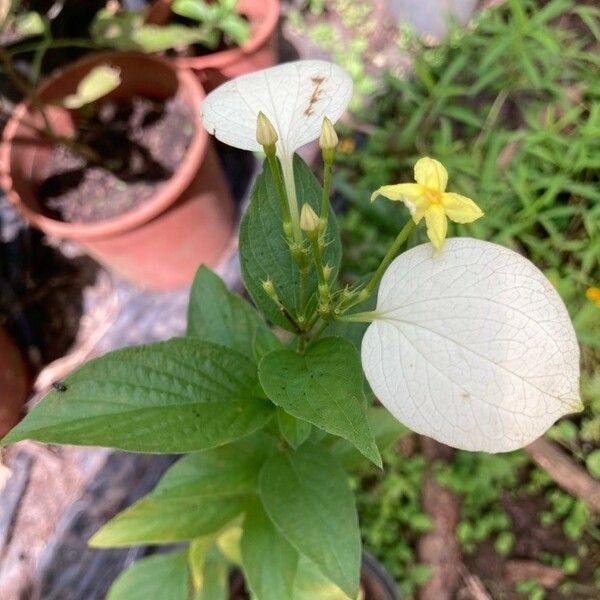
Plant Overview
Commonly known as the Fried Egg Plant or Yellow Mussaenda, this charming tropical shrub is a showstopper in any sunny garden. Originating from tropical Africa, it is beloved for its "fake" flowers—large, creamy-white sepals that surround tiny, bright yellow stars. It’s a favorite for butterfly gardens, acting like a bright landing pad for pollinators.
🔍 How to Identify
- 🍳 The "Fried Egg" Look: The most striking feature is the contrast between the small, bright yellow 5-pointed star flowers and the large, creamy-white leaf-like sepals (bracts) that surround them.
- 🌿 Velvety Foliage: The leaves are deep green, elliptical, and covered in fine, soft hairs, giving the plant a slightly fuzzy or velvety texture to the touch.
- 🌳 Compact Habit: Unlike its larger Mussaenda cousins, the Pseudomussaenda flava stays relatively small and bushy, rarely exceeding 3–5 feet in height, making it perfect for containers.
🏡 In Your Garden
- ☀️ Sun-Seeker: This plant is a sun worshipper. While it can survive in partial shade, the "fried egg" blooms will be sparse and less vibrant without at least 6 hours of direct light.
- 💧 Thirsty but Picky: It loves consistent moisture and high humidity, but it has a "weak heart" when it comes to soggy roots. Ensure your pot or soil has excellent drainage to avoid root rot.
- ✂️ Pruning Nuance: To keep it looking like a lush shrub rather than a leggy weed, pinch back the tips after a blooming cycle. This encourages the plant to branch out and produce more of those iconic yellow stars.
⚠️ Safety & Toxicity
- ✅ Generally Safe: The Fried Egg Plant is not considered high-risk or famously toxic to humans or common household pets.
- 🧤 Skin Sensitivity: Like many tropical shrubs, the fine hairs on the leaves and the sap may cause very mild skin irritation or "itchiness" for people with sensitive skin. Wearing gloves during heavy pruning is a good practice.
✨ Fun Fact
Despite its appearance, the large white "petals" aren't petals at all! They are enlarged sepals (calyx lobes). Evolution designed them this way to act as giant billboards, shouting to butterflies and bees from a distance since the actual yellow flowers are too tiny to be seen easily.

Detailed Care Instructions
To grow Pseudomussaenda Flava plants, you can follow these steps:
- Location: Choose a suitable spot for your Pseudomussaenda Flava plant. It prefers bright, indirect sunlight, so find a location with partial shade or filtered light.
- Soil: Use well-draining soil with organic matter mixed in. Pseudomussaenda Flava plants prefer slightly acidic soil, so aim for a pH range of 5.5 to 6.5.
- Planting: Dig a hole that is slightly larger than the root ball of your plant. Place the plant in the hole, ensuring that it sits at the same level it was in its nursery container. Backfill the hole with soil and gently firm it down.
- Watering: Provide regular and consistent watering to keep the soil evenly moist but not waterlogged. Allow the top layer of soil to dry out slightly between each watering to prevent overwatering.
- Fertilizing: Feed your Pseudomussaenda Flava plant with a balanced, slow-release fertilizer during the growing season (spring and summer). Follow the instructions on the fertilizer package for proper application rates.
- Pruning: Regular pruning is beneficial to maintain the plant's shape and encourage branching. Prune back any leggy or overgrown stems to promote a bushier growth habit.
- Temperature and humidity: Pseudomussaenda Flava plants prefer warm temperatures between 60 to 80°F (15 to 27°C). They also appreciate a slightly humid environment, so mist the leaves occasionally or use a humidifier.
- Propagation: You can propagate Pseudomussaenda Flava plants through stem cuttings. Take a 4-6 inch (10-15 cm) long cutting from a healthy stem with a node. Remove the lower leaves and plant the cutting in a well-draining potting mix. Keep the soil lightly moist until roots develop.
- Pests and diseases: Keep an eye out for common houseplant pests such as aphids, mealybugs, and spider mites. Treat any infestations promptly with neem oil or insecticidal soap.
By following these steps, you should be able to successfully grow and care for your Pseudomussaenda Flava plant. Remember to monitor its growth, adjust watering as needed, and provide the necessary care for a healthy and thriving plant.
To water this particular plant, it is important to ensure that the soil around the roots is moist but not waterlogged. One should avoid letting the soil dry out completely between waterings, as this can be damaging to the plant's health. When watering, be sure to direct the water towards the soil around the base of the plant rather than getting the foliage wet. It is also advisable to avoid using hard or chlorinated water, as this can negatively affect the plant's growth. In general, it is recommended to water Pseudomussaenda Flava plant regularly and consistently, taking into account factors such as the temperature and humidity levels in the environment.
- Choose a balanced fertilizer with a 20-20-20 NPK ratio.
- Dilute the fertilizer solution to half strength, following the instructions on the label.
- Water the plant thoroughly to ensure the soil is moist before fertilizing.
- Apply the fertilizer solution evenly around the soil surface of the plant.
- Avoid getting the fertilizer solution on the plant leaves or stems, as this may cause burning.
- Fertilize the plant every two to three weeks during the growing season (spring and summer).
- Reduce fertilizing in fall and winter when the plant is dormant.
- Monitor the plant for any signs of over-fertilization, such as brown leaf tips or yellowing leaves and adjust the fertilizing schedule if necessary.
Pseudomussaenda Flava is a plant that prefers well-draining and nutrient-rich soil. The ideal soil mixture for this plant should be composed of a combination of peat moss, perlite, and sand to ensure proper drainage. Additionally, adding organic matter such as compost or aged manure to the soil mixture can provide the necessary nutrients for the plant's growth and development. The soil pH should range from acidic to neutral, between 5.5 and 7.0. It is important to ensure that the soil is consistently moist, but not overly wet, as this can lead to root rot. The plant should be grown in a pot with drainage holes to prevent water from accumulating in the soil. Regular fertilization with a balanced fertilizer can also help to promote healthy growth and flowering.
To propagate this plant, take a stem cutting measuring 4-6 inches long. Remove the leaves from the bottom 2-3 inches of the stem. Dip the cut end in rooting hormone and plant it in a pot filled with well-draining soil. Water the cutting thoroughly and place a plastic bag over the pot to create a greenhouse effect. Place the pot in a bright, indirect light and keep the soil moist but not waterlogged. After 2-4 weeks, roots should start to form and new growth should appear. Once the cutting has established roots and new growth, it can be transplanted to a larger pot or directly into the ground.








