Plant Overview
Often called the Red Coral Cactus or Kimnachia, this tropical beauty is a master of disguise. While it looks like a deep-sea plant or a leafy succulent, it is actually an epiphytic cactus native to the rainforests of Central and South America. Its most famous trick is "sun-stressing"—turning from a lush forest green to a dramatic, fiery burgundy when exposed to bright light.
🔍 How to Identify
- 🌿 Stems: Long, flat, and ribbon-like. They start narrow at the base and widen into "leaves" (technically phylloclades) that gracefully arch downwards in a cascading habit.
- 🎨 Coloration: Depending on the light, the plant shifts from lime green to a stunning reddish-purple. The edges often darken first, creating a beautiful ombré effect.
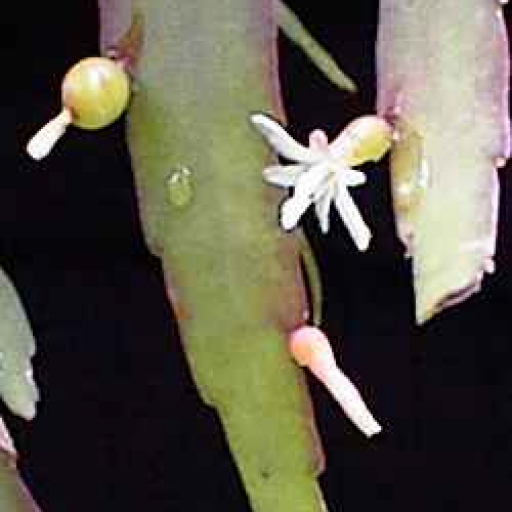
- 🌸 Bloom & Fruit: Tiny, bell-shaped creamy flowers appear along the scalloped edges of the stems. These are followed by small, translucent white berries that look like tiny pearls clinging to the plant.
🏡 In Your Garden
- ☁️ Atmospheric Needs: As an epiphyte, this plant doesn't like sitting in heavy, soggy soil. It thrives in a "chunky" mix—think orchid bark and perlite—to mimic the airy tree branches it calls home in the wild.
- ☀️ The Light Secret: To achieve that signature "coral" red, it needs high-intensity indirect light. If the plant stays completely green, it is telling you it wants a brighter spot, but avoid harsh, direct midday sun which can lead to crispy patches.
⚠️ Safety & Toxicity
- ✅ Status: Non-Toxic.
- 🐾 Details: This plant is generally considered safe for cats, dogs, and children. Unlike its desert cousins, it lacks the sharp, painful spines that usually make cacti a hazard in the home.
✨ Fun Fact
The name ramulosa means "many branches." In the wild, these plants grow tucked into the crooks of trees, gathering moisture and nutrients from the humid jungle air rather than the ground. It is often described as looking like "seaweed for the land."

Detailed Care Instructions
To grow Pseudorhipsalis Ramulosa plant, here are some steps to follow:
- Select a suitable pot: Choose a pot with drainage holes to ensure proper water drainage and prevent root rot.
- Potting mix: Use a well-draining potting mix rich in organic matter. You can create a mix by combining equal parts of compost, perlite, and peat moss.
- Planting: Place the Pseudorhipsalis Ramulosa plant in the pot, ensuring that the roots are covered with soil. Gently pat down the soil around the plant to secure it.
- Light: Place the plant in a location with indirect sunlight. Pseudorhipsalis Ramulosa prefers bright but diffused light. Avoid direct sunlight as it may scorch the leaves.
- Temperature and humidity: This plant thrives in temperatures between 60-80°F (15-27°C). Maintain moderate to high humidity levels by misting the plant regularly or placing a small tray of water nearby.
- Watering: Water the plant thoroughly, allowing the soil to dry slightly between waterings. Avoid overwatering, as soggy soil can lead to root rot. Adjust watering frequency based on the plant's needs and the moisture level of the soil.
- Fertilizer: Feed the plant with a balanced houseplant fertilizer once a month during the growing season (spring and summer). Follow the manufacturer's instructions for dosage and application.
- Pruning: Regularly prune the Pseudorhipsalis Ramulosa plant to maintain its shape and encourage bushier growth. You can also propagate new plants from the cuttings.
- Propagation: To propagate the plant, take stem cuttings of about 3-4 inches long and remove the lower leaves. Allow the cuttings to dry for a day or two before placing them in a well-draining potting mix. Keep the soil moist until new roots develop.
- Repotting: Once the plant outgrows its pot, repot it into a slightly larger container. This is usually required every 1-2 years. Use fresh potting mix and ensure the new pot has drainage holes.
Remember to monitor the plant regularly, provide adequate care, and adjust as needed based on its response and condition.

Place in a window with dappled sun or a spot in the middle of a room. Or directly in a window facing west or east.

To water this plant, it is important to observe the soil moisture level. Before watering, check the top 2-3 inches of soil with a finger or a moisture meter to see if it's dry. If the soil feels completely dry, it's time to water.
Use room-temperature, filtered water to prevent shock and damage to the plant. Water the soil until moistened, but avoid saturating it as the plant prefers well-draining soil. Allow the soil to dry out slightly before the next watering to prevent overwatering.
In winter when the plant goes into dormancy, watering should be reduced to once a month or so until spring when growth will resume and regular watering can begin again.
To fertilize this particular plant, you can use a balanced fertilizer with equal amounts of nitrogen, phosphorus, and potassium. Apply the fertilizer every two to four weeks during the growing season, which is typically from early spring to late summer. Avoid fertilizing during the winter months when the plant is dormant. Dilute the fertilizer to half-strength to prevent burning the roots. Water the plant before and after fertilizing to ensure the nutrients are distributed evenly throughout the soil.
The ideal soil for this plant is a well-draining mix, containing equal parts of perlite, vermiculite, and organic matter such as peat moss or coconut coir. The soil pH level should be slightly acidic, ideally between 5.5 and 6.5. It is important to avoid using heavy, clayey soils, as these can cause waterlogging and root rot. Additionally, adding a small amount of sand or gravel to the soil mix can aid in drainage and prevent compacting.
To propagate this plant, first, locate a healthy mother plant with several stems. With a sharp, sterile knife, cut a stem that is at least 3-4 inches long. Remove the bottom leaves of the stem, leaving only the top few leaves intact.
Before planting, prepare a pot or container with well-draining soil. Make sure the soil is moist, but not too wet. Insert the stem into the soil, burying the bottom 1-2 inches.
Position the pot in a place with bright, indirect light and maintain a consistent temperature of around 70°F. Water the plant regularly, but be careful not to overwater, as this can cause root rot.
Within a few weeks, the stem should start to form roots and new growth. Once the plant starts to grow new leaves, you can begin to fertilize with a balanced fertilizer.
After a few months, the new plant should be well-established and can be repotted into a larger container if necessary.
Common pests of the red mistletoe cactus include Scale insect, mealybugs, spider mites, thrips. Make a habit of checking your red mistletoe cactus frequently for pests so that any infestations can be caught and managed early.








