Plant Overview
Often called the Arrow Bamboo, Pseudosasa japonica is a symbol of strength and utility. This elegant, upright bamboo earned its name from the Japanese Samurai, who prized its remarkably straight, stiff stems for crafting arrows. Today, it is a favorite for gardeners looking to create a "living wall" that provides deep shade and a gentle rustling sound in the wind.
🔍 How to Identify
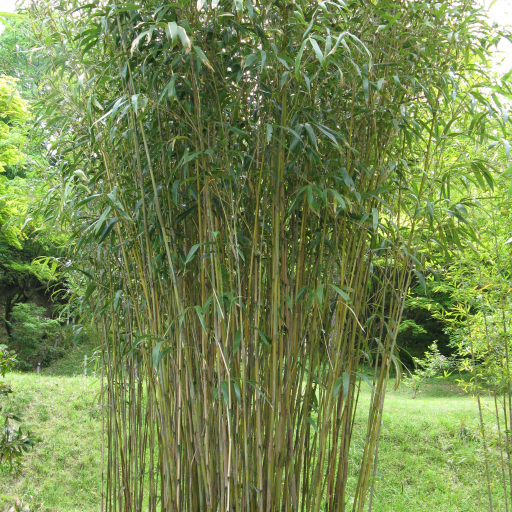
- 🍃 Large, Glossy Foliage: Unlike the wispy, delicate leaves of many other bamboos, these leaves are long (up to 12 inches), broad, and taper to a sharp point, giving the plant a lush, tropical appearance.
- 🦯 Straight Olive Culms: The stems are slender and olive-green, often remaining covered in tan, papery sheaths that persist for a long time, giving the stalks a textured, multi-toned look.
- 🎋 Dense Growth Habit: It grows in thick, vertical columns. Unlike some bamboos that "weep" or arch downward, the Arrow Bamboo stands tall and proud, reaching heights of 10 to 15 feet.
🏡 In Your Garden
- 🛡️ The Ultimate Privacy Screen: Because it grows so densely and retains its lower leaves even in maturity, it is one of the best choices for blocking out neighbors or creating a secluded backyard sanctuary.
- 🌬️ Wind & Shade Tolerance: While most bamboos crave full sun, this species is surprisingly tough. it thrives in shadier corners and is highly resistant to salt spray and coastal winds, making it a "workhorse" in difficult landscapes.
- 🚧 Management is Key: It is classified as a "running" bamboo, meaning it spreads via underground rhizomes. To keep it from wandering into your neighbor’s lawn, it is best to plant it in large containers or install a root barrier during planting.
⚠️ Safety & Toxicity
- 🐾 Pet Friendly: Good news for pet owners—Arrow Bamboo is generally considered non-toxic to cats, dogs, and horses.
- 🧒 Child Safe: There are no thorns or toxic saps. However, like many grasses, the leaf edges can be slightly sharp if pulled quickly through a hand, so it’s best placed away from tight walkways.
✨ Fun Fact
🏹 Historical Hardware: Beyond its use in warfare, the stiff, hollow stems of this bamboo were historically used in Japan to create high-quality flutes and birdcages, proving that it is as musical as it is "military."

Detailed Care Instructions
To grow Pseudosasa japonica, commonly known as Arrow Bamboo or Japanese Arrow Bamboo, follow these steps:
- Select a suitable location: Arrow Bamboo prefers partial shade to full sun conditions. Choose a spot with well-drained soil and protection from strong winds.
- Prepare the soil: Loosen the soil and remove any weeds or debris. Add organic matter like compost or well-rotted manure to improve the soil's fertility and drainage.
- Planting: Dig a hole slightly larger than the root ball of the plant. Place the plant in the hole, ensuring that the top of the root ball is level with or slightly above the soil surface. Backfill the hole with soil and gently firm it around the plant.
- Watering: Keep the soil consistently moist but not waterlogged. Water deeply and regularly, particularly during dry spells or in the first year after planting.
- Mulching: Apply a layer of organic mulch around the base of the plant to conserve moisture, suppress weed growth, and provide additional nutrients as it breaks down.
- Fertilizing: Apply a balanced slow-release fertilizer once or twice a year, following the manufacturer's instructions. Alternatively, you can top-dress the soil around the plant with compost or well-rotted manure in spring.
- Pruning: Arrow Bamboo generally requires minimal pruning. However, you can remove any dead, damaged, or overcrowded canes (stems) in early spring to maintain a tidy appearance and allow space for new growth.
- Propagation: Arrow Bamboo can be propagated by division or by taking stem cuttings. Division is typically done in spring when new shoots emerge. Dig up a clump of the plant and carefully separate it into smaller sections, ensuring each section has roots and shoots. Replant the divisions in prepared soil. For stem cuttings, take 6- to 8-inch long, healthy stems in early summer and plant them in moist soil or water until roots develop.
- Winter care: Arrow Bamboo is hardy in USDA zones 5-9. In colder regions, provide a layer of mulch around the plant's base to protect the roots from freezing temperatures.
- Monitor for pests and diseases: While resistant to most pests and diseases, occasionally, Arrow Bamboo may be susceptible to bamboo mites, aphids, or fungal leaf spots. Monitor the plant regularly and take appropriate action if any issues arise.
Remember to check the specific care requirements of Pseudosasa japonica, as conditions may vary depending on your region and climate.

Place in a window with dappled sun or a spot in the middle of a room. Or directly in a window facing west or east.

There are several methods to water this plant effectively. One option is to water it deeply, ensuring that water reaches the roots of the plant. This can be done by either watering the plant slowly and evenly or planting it in a container with drainage holes, allowing excess water to drain away.
Another option is to water the plant slowly and consistently, allowing the soil to absorb the water gradually. To achieve this, you can use a watering can or set up a drip irrigation system.
In general, it is important to avoid overwatering this plant, as it can be sensitive to waterlogged soil. It may also be helpful to monitor the soil moisture level regularly and adjust your watering schedule accordingly.
To fertilize this plant, you should use a balanced, slow-release fertilizer during the spring and summer months. Apply the fertilizer around the base of the plant, and water it in thoroughly. It is important not to over-fertilize, as this can cause damage to the plant. Additionally, be sure to check the nutrient levels in the soil periodically to ensure that the plant is not receiving too much or too little of any particular nutrient.
When growing the plant commonly known as Pseudosasa Japonica, it is important to choose a suitable soil composition that will provide the necessary nutrients and support for the plant's growth. The ideal soil for this plant should be well-draining and have good fertility, with a pH level of around 6.5 to 7.5.
To achieve this, it is recommended to mix together a combination of loamy soil, compost or organic matter, and perlite or sand to improve drainage. The loamy soil will provide the necessary nutrients and structure for healthy root growth, while the compost or organic matter will add essential organic material and nutrients.
The addition of perlite or sand will help to improve drainage and prevent waterlogging, which can be a risk with this plant. It is important to avoid using heavy, clay soils that can become compacted and prevent proper root development.
Overall, a well-draining, fertile soil with good structure and adequate drainage is essential for the healthy growth of Pseudosasa Japonica, allowing it to thrive and reach its full potential.
To propagate this plant, you will need to take a stem cutting from an established specimen. Using a clean, sharp pair of pruning shears, select a healthy stem that is approximately 6-8 inches long and has several nodes. Nodes are the points where leaves attach to the stem.
Next, remove the lower leaves from the stem, leaving only a few at the top. Dip the cut end of the stem in rooting hormone powder or gel to encourage root growth.
Prepare a pot with well-draining soil and create a small hole in the center with a clean tool. Plant the stem in the hole and gently pat the soil around it.
Water the cutting thoroughly and cover the pot with a plastic bag or clear container to create a humid environment. Keep the pot in a warm, bright area but out of direct sunlight.
After a few weeks, new growth or roots should start to form. Once there is significant growth, you can transplant the new plant to a larger pot or into the ground.
Common pests of the arrow bamboo include Aphids, thrips. Make a habit of checking your arrow bamboo frequently for pests so that any infestations can be caught and managed early.








